Amtrak vs. Car: Is Train Travel Actually Faster?
- Sep, 29 2026
- 0 Comments
- Aaron Blackwood
Amtrak vs. Car Travel Time Estimator
Enter your trip details to see which mode of transport saves you more effective time. This tool accounts for hidden costs like traffic congestion, parking searches, and station access.
Analysis
Enter trip details to generate a comparison based on average speeds, congestion factors, and station accessibility.
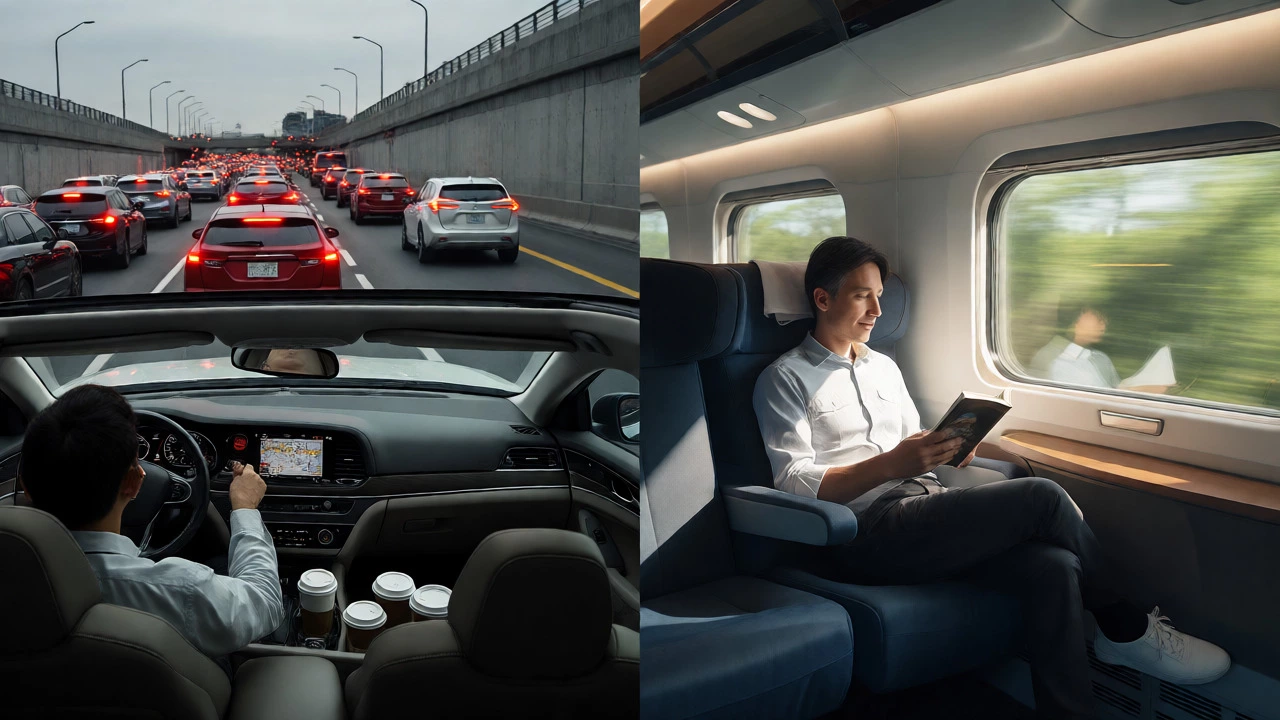
You’re standing in your driveway, keys in hand, staring at the highway that stretches out like a gray ribbon toward your destination. The GPS says it’s a four-hour drive. You know better. It’s going to be five hours with traffic, three stops for coffee and bathroom breaks, and enough stress to ruin your mood before you even arrive. Then you see the ad: Amtrak is a national passenger railroad service operating in the United States, offering an alternative to driving or flying. But here’s the million-dollar question everyone asks when they’re trying to escape the road: Is Amtrak actually faster than a car?
The short answer? It depends entirely on where you’re going and what you count as "time." If you look strictly at moving from point A to point B without stopping, a car usually wins on long distances. But if you factor in the hidden costs of driving-traffic jams, fatigue, parking hassles, and the inability to do anything else but steer-the train often comes out ahead in terms of effective time saved. Let’s break down why this comparison isn’t as simple as looking at a map.
The Speed Myth: Top Speeds vs. Average Speeds
People love to quote top speeds. They’ll tell you their car can hit 120 mph on an empty stretch of interstate. They’ll point out that some Acela Express trains reach speeds up to 150 mph (241 km/h) on specific Northeast Corridor tracks. But top speed is irrelevant to your actual travel time. What matters is average speed, which includes acceleration, deceleration, and those annoying little delays we all hate.
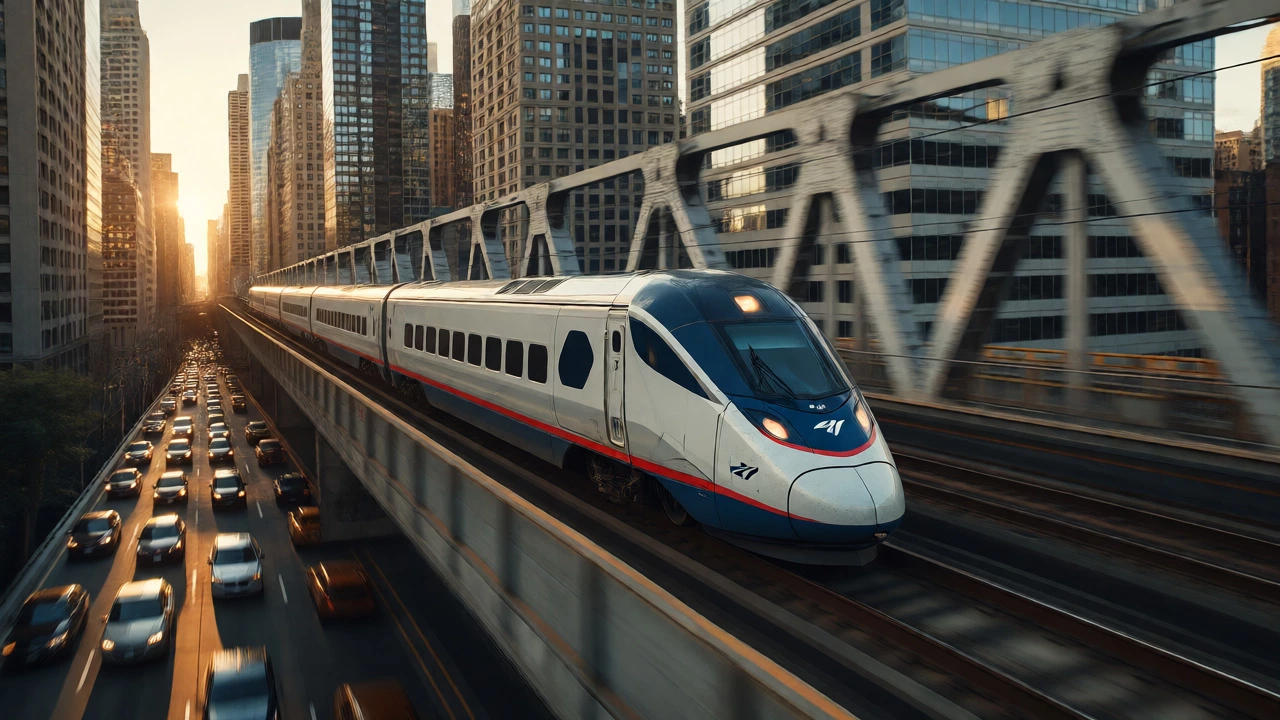
Cars are fast in bursts but slow in practice. In major metropolitan areas like Los Angeles, New York, or Chicago, the average speed during rush hour can drop below 30 mph. Add in construction zones, accidents, and mandatory rest stops, and that theoretical 60 mph cruise turns into a grueling crawl. Trains, by contrast, operate on dedicated rights-of-way in many parts of the country. While Amtrak shares tracks with freight trains in many regions (which causes delays), the train maintains a consistent pace. On the Northeast Corridor between Boston, New York, and Washington D.C., the train is consistently faster than driving because highways are choked with congestion.
Think about the last time you drove more than 200 miles. Did you really maintain 70 mph the whole way? Probably not. You slowed down for tolls, you sat in traffic around city centers, and you likely stopped for gas and food. A train doesn’t stop for gas. It doesn’t sit in traffic behind a truck blocking two lanes. It moves steadily, allowing you to read, sleep, or work while the scenery rolls by.
Door-to-Door Time: The Real Metric
This is where the debate gets interesting. When you compare travel modes, you have to measure door-to-door time, not just station-to-station or highway-mile markers. Driving requires you to get to your car, find parking at your destination, and navigate local streets. Taking the train requires getting to the station, waiting for boarding, and then finding transport from the station to your final stop.
In dense urban environments, train stations are often located right in the city center. Think about Penn Station in New York City. If you’re heading to Midtown Manhattan, taking the train drops you off steps away from your hotel or office. Trying to drive into Manhattan means dealing with the Lincoln Tunnel or Brooklyn Bridge, expensive parking garages, and confusing one-way streets. In this scenario, Amtrak is significantly faster because it eliminates the "last mile" problem that plagues drivers.
| Mode | Travel Time | Hidden Time Costs | Total Effective Time |
|---|---|---|---|
| Car | 4.5 - 5.5 hours | Traffic, Parking, Fatigue | 6+ hours |
| Acela Train | 3 hours | Station Transit, Security Check | 3.5 - 4 hours |
| Flight | 1 hour flight | Security, Boarding, Airport Transit | 4 - 5 hours |
As you can see, for the Northeast Corridor, the train beats both the car and the plane when you account for the hassle factor. The car loses time to congestion and parking logistics. The plane loses time to airport security lines and remote terminal locations. The train offers a middle ground that, paradoxically, saves the most time.
Where the Car Still Wins
Let’s be fair. Amtrak isn’t always faster. If you’re traveling across rural America or through regions with poor rail infrastructure, the car is king. Consider a trip from Denver to Salt Lake City. The drive takes about eight hours via Interstate 80. There is no direct high-speed rail link, and the available train options involve transfers and significantly longer durations due to track sharing with heavy freight traffic. In these cases, the flexibility of a car outweighs the comfort of a train.
Cars offer freedom. You can leave whenever you want. You can change your mind halfway there and take a detour to see a quirky roadside attraction. You don’t have to check bags or worry about seat assignments. For families with young children who need frequent breaks, or for groups carrying lots of gear, the car provides a level of control that trains simply can’t match. If your destination is a small town without a station, driving is your only real option unless you plan on renting a car upon arrival, which adds cost and time.
Also, consider the reliability factor. While cars deal with traffic, trains deal with mechanical issues and freight delays. Amtrak operates on tracks owned mostly by freight companies. If a freight train blocks the line, your passenger train waits. This can add unexpected hours to your journey. Drivers face unpredictable variables too, but they can sometimes choose alternate routes. Train passengers are stuck on the rails.
The Hidden Value of "Slow" Travel
Here is a perspective shift that might change your mind: speed isn’t just about how fast you move; it’s about how much you can do while moving. When you drive, you are captive to the road. Your brain is engaged in navigation, hazard detection, and vehicle control. You cannot effectively write a report, watch a movie without distraction, or nap safely. You are working, even if you aren’t paid for it.
On a train, you reclaim that time. An hour on Amtrak is worth more than an hour in a car because you can use it productively or restfully. Many business travelers prefer trains for this reason alone. They arrive at their destination less fatigued than if they had driven. Studies on commuter well-being suggest that passive commuting (like being a passenger) leads to higher job satisfaction and lower stress levels compared to active commuting (driving). If you value your mental energy, the "slower" train might actually help you achieve your goals faster once you arrive.
Cost vs. Time Trade-Offs
Time is money, but so are tickets. Amtrak prices vary wildly based on demand and how far in advance you book. Sometimes, a train ticket is cheaper than the gas and wear-and-tear on your car. Other times, especially for peak dates, it can be comparable to a budget airline ticket. However, when comparing to a car, you must include fuel, maintenance depreciation, and potential parking fees. For a solo traveler, the train often breaks even or comes out ahead financially when these hidden car costs are tallied.
For groups, the math shifts. Four people driving in one car split the fuel cost, making driving much cheaper per person. But does splitting the cost justify the shared misery of a cramped cabin and constant bickering over music choices? That’s a personal calculation. If you value peace and quiet, paying extra for a train seat might be worth the premium.
Regional Breakdown: Where Amtrak Shines
To give you a concrete guide, let’s look at specific corridors where Amtrak competes directly with cars:
- The Northeast Corridor (Boston-NYC-DC): Train is generally faster and less stressful than driving due to extreme highway congestion and difficult parking.
- California Zephyr (Chicago-Denver-San Francisco): Driving is significantly faster. The train takes days, while the drive takes under 24 hours. Here, the train is for sightseeing, not speed.
- Southwest Chief (Chicago-Los Angeles): Similar to the California Zephyr. Driving is much quicker, though tiring. The train is a leisure experience.
- Pacific Surfliner (San Diego-LA-SF): Competitive with driving, especially avoiding LA traffic. Great for coastal views without the stress of I-5.
If you live in the Midwest or East Coast, test the train. If you live in the West outside of California, stick to the car for speed, or fly for distance.
Practical Tips for Choosing Your Mode
So, how do you decide for your next trip? Use this quick checklist:
- Check the Distance: Under 300 miles? Train is competitive. Over 500 miles? Drive or fly.
- Check the Destination: Is it a major city center? Train wins. Is it rural? Car wins.
- Check Your Cargo: Bringing skis, dogs, or huge suitcases? Car is easier. Light packer? Train is fine.
- Check Your Schedule Flexibility: Can you leave anytime? Car wins. Do you have a fixed meeting time? Train schedules are predictable (mostly).
- Check Your Stress Tolerance: Hate traffic? Take the train. Hate waiting? Take the car.
Remember, the goal isn’t just to arrive quickly; it’s to arrive ready to enjoy your trip. If driving leaves you exhausted and irritable, you haven’t really saved time-you’ve just spent it differently.
Is Amtrak faster than driving in the Northeast?
Yes, typically. Due to heavy highway congestion and difficult parking in cities like New York and Philadelphia, the Acela or regional trains are often faster door-to-door than driving, especially during rush hours.
Why is Amtrak slower than European trains?
Most Amtrak tracks are owned by freight railroads. Passenger trains must yield to freight trains, causing significant delays. Additionally, the infrastructure is older and lacks the dedicated high-speed lines found in countries like France or Japan.
Can I bring a car onto Amtrak?
No, Amtrak does not carry private automobiles. You must drive to the station or use other transport. Some routes offer connections with bus services or rental car agencies at stations.
Is driving safer than taking Amtrak?
Statistically, train travel is safer than car travel regarding fatalities per mile traveled. However, car accidents are more common, while train incidents are rarer but can be severe. Personal safety also depends on driver behavior versus train operational records.
Do I need to book Amtrak tickets in advance?
Yes, booking early secures lower fares. Prices increase as the travel date approaches. Last-minute tickets are available but are usually the most expensive tier.