Best Time to Visit the Taj Mahal for Budget Travelers in 2025

- Dec, 1 2025
- 0 Comments
- Aaron Blackwood
Taj Mahal Visit Planner
Plan Your Visit
Enter your travel dates to check ideal timing based on weather, crowds, and budget
Enter dates to see your Taj Mahal visit score
There’s a reason millions of people show up at the Taj Mahal every year. But if you’ve ever stood in line at sunrise, sweating in 40°C heat, surrounded by tour groups shouting for photos, you know timing matters more than you think. The best time to visit the Taj Mahal isn’t just about weather-it’s about beating the crowds, saving money, and seeing the marble glow the way it was meant to.
Go at Sunrise-It’s Worth the Early Alarm
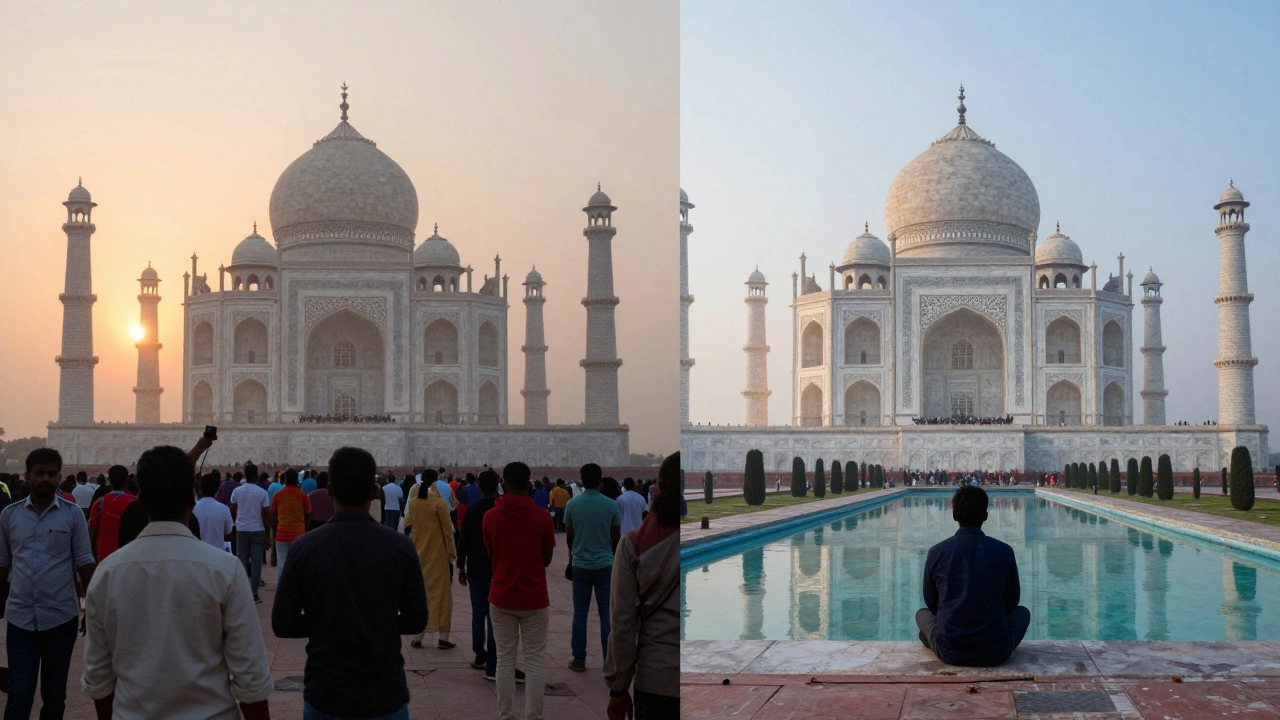
The Taj Mahal opens at 6 AM, and if you want the real experience, be there right when the gates open. The light hits the white marble just right-soft gold turning to pink, then blinding white as the sun climbs. No shadows. No crowds. Just you, the reflection pool, and the silence.
Most tourists arrive after 8 AM. By then, the temperature’s already climbing, the lines are long, and the selfie sticks are out in full force. At sunrise, you can walk around all four sides without bumping into anyone. You can sit on the edge of the pool and sketch the dome without ten people in your frame.
Indian nationals pay ₹50 for entry. Foreigners pay ₹1,100. But here’s the trick: if you go before 8 AM, you’re not just avoiding crowds-you’re avoiding the peak pricing window. Some private tour operators hike prices for sunrise slots. Buy your ticket directly at the gate. No middlemen. No scams.
Avoid These Months-They’ll Drain Your Budget and Patience
Don’t come between late March and June. It’s not just hot-it’s unbearable. Temperatures regularly hit 45°C. The marble gets so hot underfoot, you can’t walk barefoot even near the gates. And the haze? It turns the Taj into a blurry white smudge. No photos. No magic.
July through September? Monsoon season. The skies open up. The gardens turn to mud. The reflecting pool gets murky. And the humidity? It sticks to your clothes like a second skin. You’ll spend more time drying off than admiring architecture.
October to February is the sweet spot. Daytime temps hover between 15°C and 25°C. The air is clear. The sky is blue. The marble reflects the sun without glare. And yes, it’s peak season-but not the worst kind of peak. You can still get good deals on budget hostels in Agra if you book ahead.
Midweek Is Your Secret Weapon
Most travelers don’t realize the Taj Mahal is closed on Fridays. That means weekends-Saturday and Sunday-are packed. Locals take day trips. Families come out. Foreign tour groups schedule around them.
Go Tuesday through Thursday. You’ll cut the crowd by 60%. Not because it’s less popular-it’s because most people don’t plan that far ahead. Budget travelers who book hostels for three nights in Agra? They spread their visits across the week. You can do the same.
One traveler I met in a guesthouse near Agra Fort told me he came on a Wednesday at 6:15 AM. He had the entire west gate to himself for 20 minutes. He took 87 photos. None of them had strangers in the background.

How to Save Money on Tickets and Transport
You don’t need a guided tour to appreciate the Taj Mahal. In fact, skip them. Most cost ₹1,500-₹2,500 per person. You’ll hear the same script they’ve recited 100 times a day.
Instead, take a local train. From Delhi, the Gatimaan Express leaves at 8:10 AM and arrives in Agra at 10:20 AM. One-way fare: ₹1,200. Faster than driving. Cheaper than a private car. And you avoid the traffic jams on the Yamuna Expressway.
Once in Agra, hop on an auto-rickshaw. Negotiate a flat rate: ₹200 to the Taj Mahal, ₹150 back. Don’t agree to the first price. Ask for the “local rate.” Most drivers will drop it if you smile and say you’re staying at a budget guesthouse.
Entry tickets? Buy them at the official ticket counter. Not from touts. Not at the gate near the parking lot. Walk to the East Gate. It’s quieter. The lines are shorter. And the staff are less likely to upsell you on a “VIP viewing” that doesn’t exist.
What to Pack for a Budget-Friendly Visit
You don’t need fancy gear. Just these five things:
- Light, breathable clothes-cotton or linen. No jeans. They trap heat.
- A scarf or shawl. Women need to cover their heads when entering the mosque area. Men? It helps block dust and sun.
- Reusable water bottle. Fill it at your guesthouse. Bottled water costs ₹40-₹60 on-site.
- Sunglasses and a hat. The sun reflects off the marble like a mirror.
- Small change. ₹10-₹20 coins for the public restrooms. They’re clean, surprisingly, and better than the ones near the souvenir stalls.
Leave the big backpacks at your hotel. You can store them at the cloakroom near the East Gate for ₹20. No need to drag it through the gates.
When to Skip the Taj Altogether
Yes, sometimes the best decision is not to go.
If you’re visiting during Diwali (October/November) or Eid (dates vary), expect the Taj to be packed with domestic tourists. It’s not just crowded-it’s chaotic. Security checks take 45 minutes. The lines for the main mausoleum stretch back to the parking lot.
And if you’re on a tight schedule? Skip the Taj if you’re only in Agra for one day and have to rush to Delhi by evening. The travel time, security, and wait times eat up half your day. Better to spend that time in Fatehpur Sikri or the Agra Fort-both are stunning, less crowded, and cost half as much to enter.
Real Talk: The Taj Mahal Isn’t Just a Monument
It’s a place where time slows down. Where the marble remembers the love that built it. But that feeling? It doesn’t come when you’re jostling for a spot in front of the cenotaph with 20 other people.
Go early. Go midweek. Go in winter. Buy your own ticket. Walk slowly. Sit. Look up. Let the light change. That’s when the Taj Mahal stops being a postcard-and becomes something real.
Is it better to visit the Taj Mahal at sunrise or sunset?
Sunrise is better for most travelers. The light is softer, the crowds are smaller, and the air is cooler. Sunset is beautiful too-the marble turns golden-but it’s packed. Tour groups arrive in the late afternoon, and the exit lines can take over an hour. If you want quiet and clear photos, go at sunrise.
Can I visit the Taj Mahal at night?
Yes, but only on five nights a month: the full moon and the two nights before and after. Night viewing runs from 8:30 PM to 12:30 AM, in 30-minute slots. Tickets cost ₹510 for foreigners and ₹110 for Indians. It’s magical-the Taj glows under moonlight-but it’s not for everyone. The walk from the parking lot is long, and there are no food or drink vendors. Bring warm clothes-it gets chilly after dark.
How much time do I need at the Taj Mahal?
Two hours is enough for most people. Spend 45 minutes inside the main mausoleum, 30 minutes walking the gardens, and another 30 minutes taking photos from the reflecting pool and the nearby viewpoints. If you’re a photographer or history buff, add an extra hour to explore the mosque, guesthouse, and nearby museum.
Are there budget accommodations near the Taj Mahal?
Yes. Stay in the Taj Ganj neighborhood, just 1.5 km from the East Gate. Hostels like Zostel and The Backpacker’s Hostel offer clean dorm beds for ₹400-₹600 per night. Private rooms start at ₹1,200. Most include breakfast and free Wi-Fi. Avoid staying inside the tourist zone near the West Gate-prices double, and the area is noisy.
Is the Taj Mahal open every day?
No. The Taj Mahal is closed on Fridays for prayers at the mosque inside the complex. It’s open 6 AM to 7 PM every other day. Night viewing is only on full moon nights and the two nights before and after. Always check the official Archaeological Survey of India website before planning your trip.