How Long Should Your Honeymoon Actually Be? The Ultimate Guide

- Apr, 24 2026
- 0 Comments
- Aaron Blackwood
Honeymoon Duration Planner
Your Personalized Recommendation:
Quick Takeaways
- Short (7-10 days): Best for nearby trips or couples with limited PTO.
- Medium (14-21 days): The 'sweet spot' for international travel and deeper relaxation.
- Long (3+ weeks): Ideal for multi-city tours or remote destinations like the Maldives or Bora Bora.
- The Rule of Thumb: Add one day of rest for every 6 hours of flight time to avoid burnout.
The Short and Sweet: 7 to 10 Days
For many, a week is the standard. This is often the go-to for couples who have a strict work schedule or are opting for a destination within a few time zones. If you're heading to a spot where you don't have to deal with massive jet lag, ten days is plenty of time to feel the romance without feeling like you're neglecting your real-life responsibilities.
When you only have a week, the secret is to stay in one place. Don't try to see three cities in seven days; you'll spend half your honeymoon checking into hotels and hauling suitcases through train stations. Instead, pick one Boutique Hotel a small, luxury property typically emphasizing style and personalized service or a private villa and just exist there. Think of a coastal escape in Italy or a luxury retreat in the mountains. The goal here is quality over quantity.
A common mistake with short trips is the "vacation mindset"-trying to hit every tourist landmark. If you're only gone for seven days, pick two main activities and leave the rest of the time for slow mornings and long dinners. You want to return home feeling refreshed, not like you need a second vacation to recover from the first one.
The Sweet Spot: 14 to 21 Days
If you can swing it, two to three weeks is generally considered the ideal honeymoon length. Why? Because it allows for a natural transition from "wedding stress mode" to "romantic bliss mode." The first few days are usually spent sleeping in and recovering from the emotional exhaustion of the wedding. After the first week, you actually start to notice the scenery and engage with the culture.
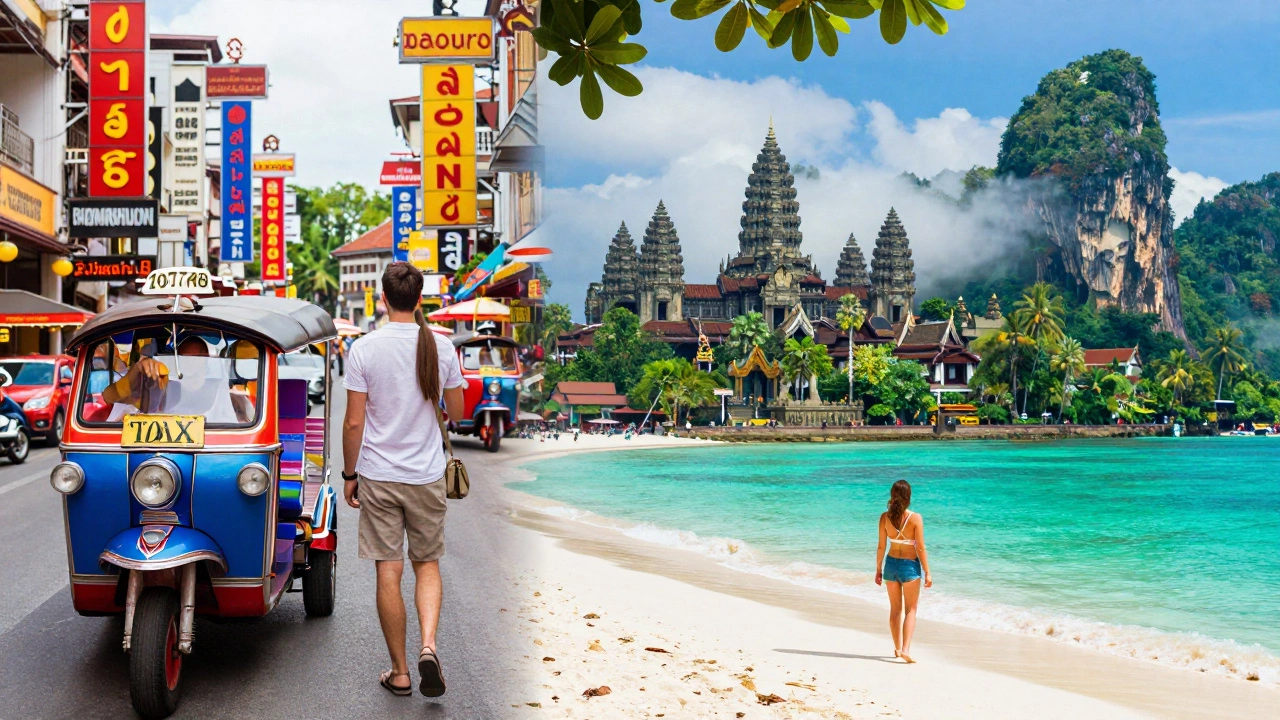
This timeframe opens up the world. You can realistically visit Southeast Asia a region of Asia comprising countries such as Thailand, Vietnam, and Indonesia without feeling rushed. You could spend five days in a bustling city like Bangkok, four days exploring temples, and the final week lounging on a beach in Koh Samui. This balance of activity and relaxation prevents the trip from becoming monotonous.
When you have 14+ days, you can also afford to build in "buffer days." These are days where absolutely nothing is planned. No reservations, no alarms, and no itineraries. Having a day where you just wander a local market or nap by the pool is what separates a standard vacation from a true honeymoon.
The Epic Journey: 3 Weeks and Beyond
Some couples decide to combine their honeymoon with a broader travel goal, like a "gap year" for newlyweds. If you're heading to the other side of the planet, a short trip is almost a waste of the airfare. If you're flying from New York to Bali a province of Indonesia known for its forested volcanic mountains and coastline, you're looking at nearly 24 hours of travel. Doing that for a one-week trip is a recipe for misery.
For these long-haul trips, the risk is "travel fatigue." Even the most beautiful beach becomes boring after 14 days of doing nothing. To keep the spark alive over a month, vary your environments. Start with a high-energy urban experience, move to an adventurous jungle or mountain trek, and end with total seclusion on a beach. This creates a narrative arc for your trip.
Budgeting for a month-long trip requires a different strategy. Instead of staying in five-star resorts every night, mix in high-end Airbnbs or boutique guesthouses. This keeps the costs manageable while giving you a more authentic taste of the local lifestyle. You'll find that the best memories often come from a random street food discovery rather than a gold-leaf dessert at a hotel.
Matching Duration to Destination
The destination should dictate the length, not the other way around. It's an expensive mistake to book a short trip to a far-off land. Here is a breakdown of how to match your time to your location:
| Region/Destination | Minimum Stay | Ideal Stay | Vibe |
|---|---|---|---|
| Domestic / Local | 4 Days | 7 Days | Quick Escape |
| Europe (Short Haul) | 7 Days | 14 Days | Cultural & Romantic |
| Caribbean / Mexico | 7 Days | 10 Days | Pure Relaxation |
| Asia / Africa / Oceania | 14 Days | 21+ Days | Epic Adventure |
The Hidden Cost of "Too Long"
It sounds counterintuitive, but you can actually have a honeymoon that is too long. When you spend a month or more in the "honeymoon bubble," the transition back to reality can be jarring. Some couples find that extended trips lead to friction-simply because spending 24/7 with someone in a foreign environment can test even the strongest bonds.
To avoid this, incorporate "independence windows." This doesn't mean going on separate vacations, but perhaps spending an afternoon alone reading a book while your partner goes for a swim or explores a nearby shop. This gives you something to talk about over dinner and prevents the feeling of claustrophobia that can set in after week three.
Additionally, consider your financial health. Many couples drain their savings on the wedding, only to overspend on a month-long trip, returning home to significant credit card debt. This financial stress can overshadow the romantic memories of the trip. A shorter, high-quality trip is always better than a long, stressful one where you're counting every penny for a meal.

Planning Your Recovery Period
One of the biggest mistakes people make is flying out the morning after the wedding. You will be exhausted. Your brain will be foggy, and your body will likely be aching. If possible, leave 2 to 3 days between the wedding and the departure. Use this time to return rental equipment, thank your vendors, and simply sleep.
If you can't wait a few days, make the first 48 hours of your honeymoon incredibly low-pressure. Do not book an expensive excursion or a non-refundable dinner reservation for the first night. Give yourselves a window to adjust to the time zone and recover from the social exhaustion of hosting a hundred people. The best honeymoons start with a slow pace and build up to the excitement.
Is one week enough for a honeymoon?
Yes, if the destination is relatively close or if you are staying in one location. A week is perfect for a beach resort in Mexico or a city break in Europe. However, it is usually too short for destinations in Asia or Africa due to travel time and jet lag.
When is the best time to leave for the honeymoon?
Ideally, wait 2-3 days after the wedding to recover and handle logistics. If you must leave immediately, ensure your first two days of the trip are completely free of scheduled activities to allow for rest.
How do I decide between a short and long trip?
Consider three factors: your available paid time off (PTO), your total budget, and the flight duration. If the flight is over 10 hours, aim for at least 14 days. If you are on a tight budget, a shorter, high-luxury trip often feels more "honeymoon-like" than a long, budget-constrained trip.
Can we do a "mini-moon" and a later honeymoon?
Absolutely. Many couples now do a short 3-4 day "mini-moon" immediately after the wedding to relax, and then plan a larger, more expensive international trip several months later. This allows you to save more money and plan the bigger trip with more care.
What happens if we feel bored on a long honeymoon?
Switch your scenery. Move from a resort to a city, or from a beach to the mountains. Changing your environment every 5-7 days keeps the experience fresh and prevents the "vacation burnout" that comes from too much of the same activity.
Final Steps and Troubleshooting
Once you've decided on your length, double-check your travel documents. If you're spending more than two weeks abroad, ensure your passport is valid for at least six months beyond your return date-some countries are very strict about this. Also, check if your destination requires a visa for longer stays; some tourist visas expire after 30 days.
If you find that your dream destination requires a longer stay than you have time for, consider a "hybrid' approach. Spend four days in a high-energy city and then fly to a nearby island for the remaining three days. You get the best of both worlds without needing a month of leave. Just remember to keep the logistics simple so you spend more time kissing and less time checking your email.