How Much Is $100 US in India? A 2026 Budget Travel Guide
- Jun, 2 2026
- 0 Comments
- Aaron Blackwood
$100 USD India Budget Simulator
Configure Your Trip
Estimated Travel Duration
Total Budget: ₹8,350 INR
Daily Breakdown Estimate:
- Accommodation ₹1,500
- Food & Drink ₹600
- Transport ₹300
- Activities/Fun ₹200
- Total Daily Cost ₹2,600
*Estimates based on mid-range travel in tourist hubs. Actual costs may vary based on specific choices and bargaining skills.
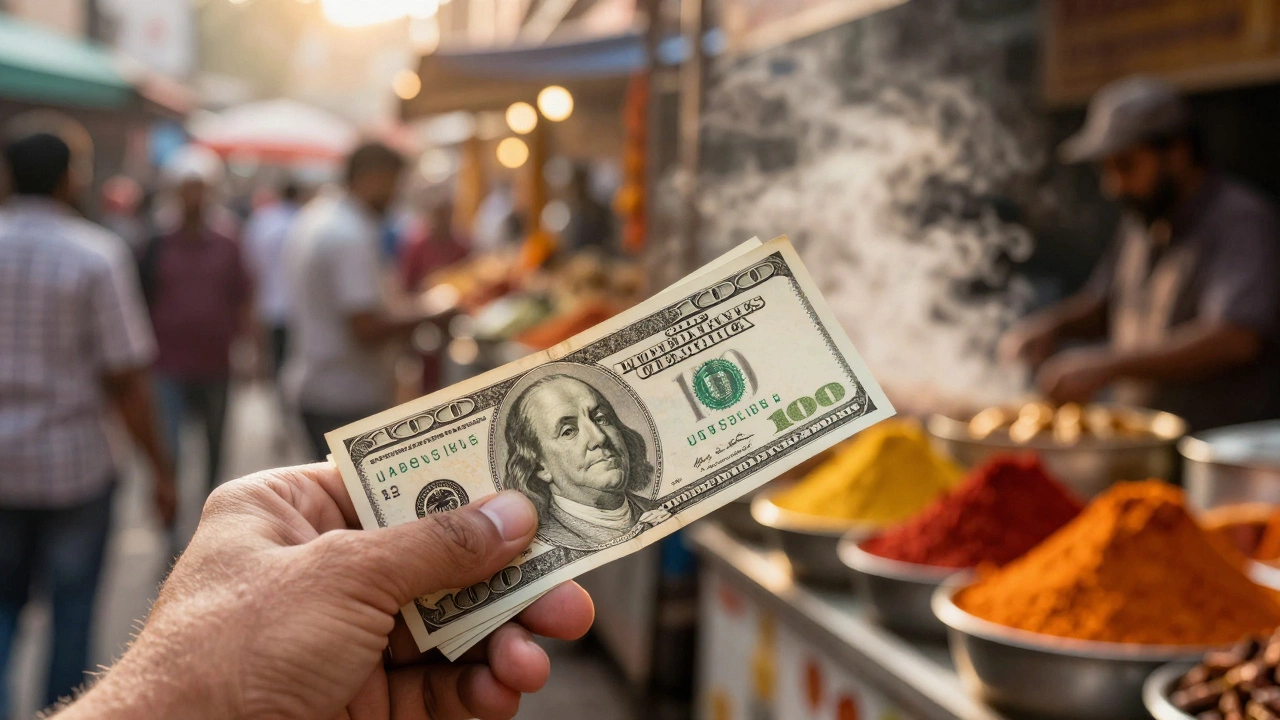
Picture this: you are standing at the entrance of a vibrant street food market in Delhi or sipping chai on a quiet terrace in Goa. You pull out a crisp $100 US bill, wondering what kind of experience that single note can buy you in India. In mid-2026, the answer is surprisingly generous. That hundred dollars converts to roughly ₹8,350 Indian Rupees (INR), depending on the exact daily exchange rate. But numbers on a screen don’t tell the whole story. The real value lies in understanding purchasing power parity-how far your money actually stretches when you spend it on the ground.
The Real Value of Your Money
Exchange rates fluctuate daily based on global economic factors, but for planning purposes, using a baseline of ₹83-₹84 per dollar is safe for June 2026. This means your $100 isn't just a number; it's a toolkit for survival and enjoyment. If you were to try spending $100 in New York, you might cover a decent dinner for two and a few coffees. In India, that same amount can cover three nights of comfortable accommodation, dozens of meals, local transport, and entry fees to historical sites.
The key difference is the cost of labor and local goods. Services like taxi rides, hotel stays, and guided tours are significantly cheaper because they rely on local wages. However, imported goods-like international brand clothing, electronics, or premium alcohol-will still cost you nearly the same as back home, minus any import duties. To get the most out of your budget, focus on experiences that leverage local services rather than imported products.
| Expense Category | Approximate Cost in INR | Approximate Cost in USD | Value Assessment |
|---|---|---|---|
| Mid-range Hotel (3 Nights) | ₹6,000 - ₹7,500 | $72 - $90 | High Value |
| Street Food Feast (10 Days) | ₹2,000 - ₹2,500 | $24 - $30 | Very High Value |
| Domestic Flight (Short Haul) | ₹3,500 - ₹5,000 | $42 - $60 | Moderate Value |
| Tuk Tuk Ride (Daily Commute) | ₹300 - ₹500 | $3.50 - $6 | Extremely High Value |
| Imported Jeans (Brand Name) | ₹3,000 - ₹4,500 | $36 - $54 | Low Value |
Smart Ways to Exchange Currency
Getting your money into rupees is the first hurdle. Many travelers make the mistake of exchanging cash at the airport upon arrival. While convenient, airport kiosks often offer poor rates, sometimes losing you 5% to 10% of your value compared to city centers. For the best deal, withdraw cash from ATMs linked to major banks like HDFC, ICICI, or State Bank of India. These ATMs usually provide the interbank exchange rate, which is the closest you will get to the true market value.
Another critical tip: avoid carrying large amounts of small bills if possible, but do carry some small denominations ($1, $5, $10) for tips and emergencies. Large $100 bills are harder to break in smaller towns and markets. Vendors may refuse them due to counterfeit concerns or simply lack of change. When you do exchange cash, look for authorized money changers with government licenses. Street vendors offering "better rates" are almost always scams involving counterfeit notes or short-changing you.
Digital payments have exploded in India. The Unified Payments Interface (UPI) allows instant bank-to-bank transfers via QR codes. While foreign cards don't link directly to UPI yet, many hotels and larger restaurants accept international credit and debit cards. Always choose to pay in the local currency (INR) when prompted by a terminal. Choosing USD triggers dynamic currency conversion, which adds a hefty hidden fee to your transaction.

Where Your 0 Goes Furthest
If you want to maximize the utility of your $100, consider these specific scenarios across different types of travel:
- The Backpacker: Hostels in cities like Jaipur or Varanasi cost around ₹600-₹800 per night. With $100, you can stay for ten nights. Add cheap dal baati churma meals at ₹100 each, and you have a full week of basic living expenses covered.
- The Cultural Explorer: Entry tickets to the Taj Mahal for foreigners are around ₹1,100. A guided tour of the Red Fort might cost ₹500. Your $100 covers entry to five major heritage sites plus a private guide for a half-day session.
- The Foodie: A thali (platter meal) at a reputable restaurant costs ₹300-₹500. You could eat well for twenty days. Alternatively, sample high-end street food like butter chicken wraps, pani puri, and mango lassi for under ₹200 a day.
In contrast, luxury experiences drain this budget quickly. A room at a heritage palace hotel in Udaipur might start at ₹15,000 per night-more than double your entire $100 budget. So, while India is affordable, it is not uniformly cheap. The disparity between budget and luxury is vast.
Pitfalls That Drain Your Wallet
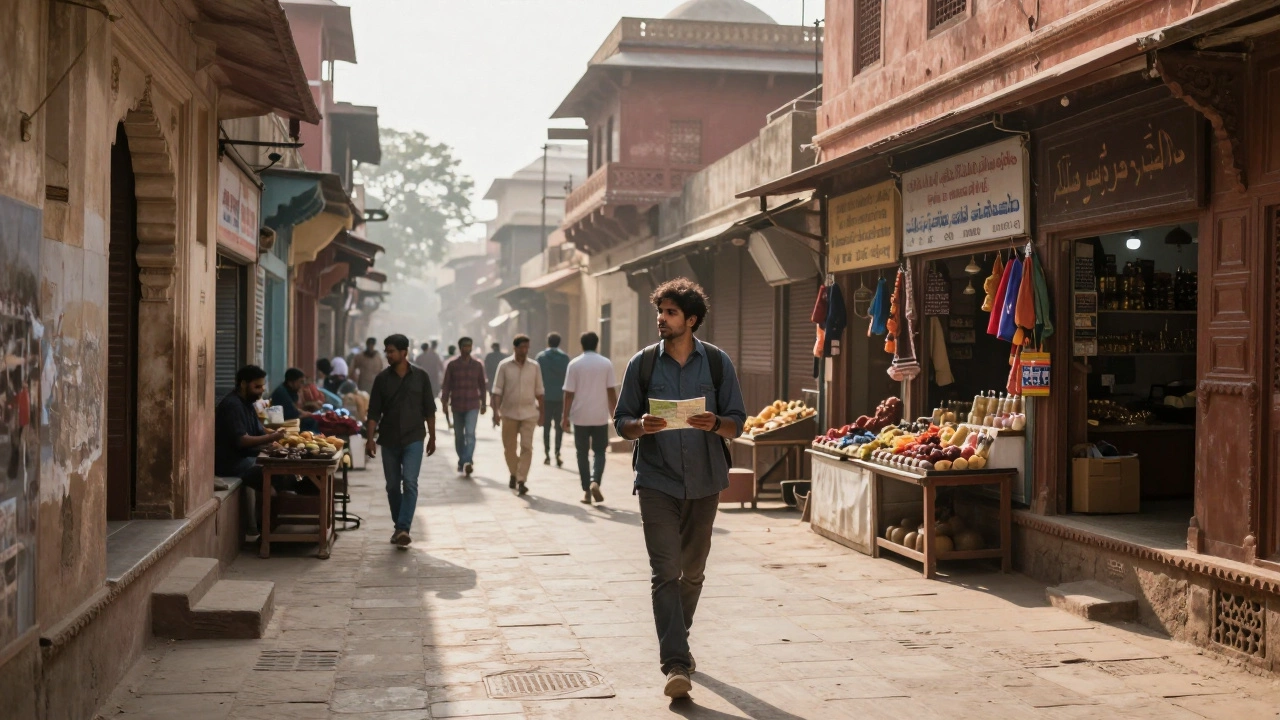
Even with a favorable exchange rate, tourists often lose money through ignorance. One common trap is overpaying for taxis. Always insist on using metered cabs or ride-hailing apps like Ola and Uber. Negotiating fares without a reference point leads to being charged 3x to 5x the standard rate. Another pitfall is buying souvenirs in tourist-heavy zones like Chandni Chowk in Delhi or Juhu Beach in Mumbai without haggling. Prices here are inflated for foreigners. Move one or two streets away from the main attraction, and prices often drop by 30%.
Also, be wary of "free" services. Some guides or shopkeepers may offer free assistance only to lead you to commission-based shops where you feel pressured to buy overpriced jewelry or carpets. Polite but firm refusal is essential. Remember, your $100 is meant for your enjoyment, not to subsidize someone else’s sales quota.
Regional Variations in Cost
Not all of India is priced equally. Metropolitan hubs like Mumbai, Bangalore, and Delhi have higher living costs. Accommodation and dining in South Mumbai or Central Delhi will eat up your budget faster. In contrast, regions like Rajasthan, Uttar Pradesh, and parts of South India (such as Kerala’s backwaters outside peak season) offer better value for money. Rural areas are even cheaper, but accessibility and comfort levels vary. If you are traveling with a fixed budget of $100 for a specific leg of your trip, plan to spend more time in lower-cost regions to stretch your funds.
Is it better to bring US Dollars or use a credit card in India?
A mix of both is ideal. Use a credit card for hotels, large purchases, and upscale restaurants to earn rewards and track spending. Carry some US Dollars in small bills for tipping, small vendors, and places that do not accept cards. Avoid bringing large stacks of cash for security reasons. Most travelers find that having $200-$300 in cash is sufficient for the first few days until they settle into their routine.
Can I use US Dollars directly for payments in India?
No, you cannot use US Dollars for everyday transactions. Only certain high-end hotels, large tour operators, or duty-free shops may accept USD, and the exchange rate they offer will be poor. Always convert to Indian Rupees (INR) for any purchase. Attempting to pay in dollars at a local market will likely result in confusion or refusal.
What is the best way to get Indian Rupees upon arrival?
The best method is to use an ATM at the airport or in the city center. Look for ATMs affiliated with major banks like HDFC or ICICI. They offer competitive exchange rates. Inform your bank before traveling to avoid frozen cards. As a backup, exchange a small amount at the airport kiosk for immediate transport needs, then switch to ATMs for larger withdrawals.
Does the $100 go further in North or South India?
Generally, North India (excluding Delhi) offers slightly lower costs for accommodation and street food compared to major South Indian metros like Bangalore or Chennai. However, tourism hotspots in both regions (like Kerala's backwaters or Rajasthan's forts) have similar pricing for tourists. Rural areas in both north and south are very affordable. The biggest cost driver is usually the city tier, not the geographic region.
Are there hidden fees when withdrawing cash from ATMs in India?
Yes, there are typically two fees. First, your home bank may charge an international withdrawal fee (often $3-$5). Second, the Indian ATM operator may charge a convenience fee (usually ₹20-₹25). To minimize costs, withdraw larger amounts less frequently rather than small amounts often. Also, check if your bank has partnerships with Indian banks that waive these fees.