How to Survive a Trip to South India: Practical Tips for First-Time Travelers
- Mar, 17 2026
- 0 Comments
- Aaron Blackwood
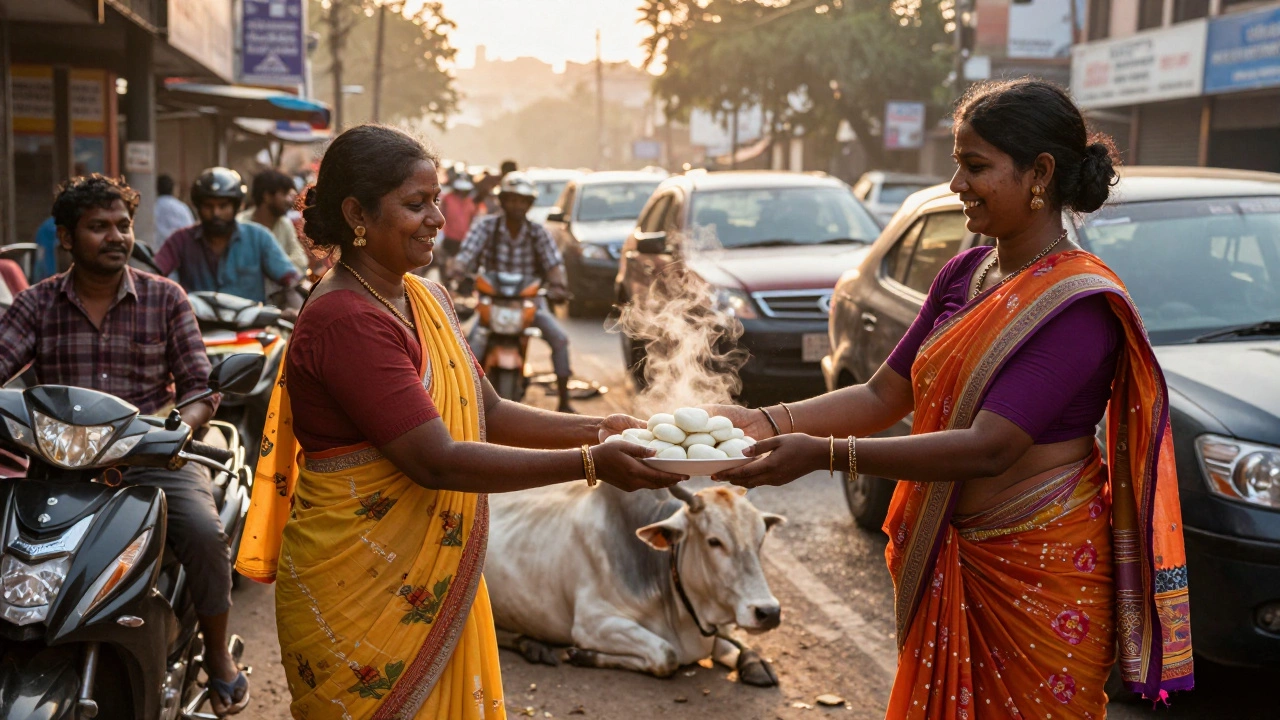
Going to South India isn’t like visiting any other country. It’s loud, colorful, overwhelming, and strangely beautiful all at once. You’ll be handed steaming idli at 7 a.m. by a stranger who smiles like they’ve known you for years. You’ll get stuck in traffic for three hours because a cow is napping in the middle of the highway. And yes, you’ll probably get sick once-maybe twice. But if you survive the first week, you’ll start to love it. Here’s how.
Know what to expect before you land
South India isn’t one place. It’s four states-Kerala, Tamil Nadu, Karnataka, and Andhra Pradesh-each with its own language, food, climate, and rhythm. Kerala is green and calm, with backwaters and Ayurvedic spas. Tamil Nadu is temple-heavy, with Chennai’s chaos and Madurai’s golden gopurams. Karnataka has Bangalore’s tech buzz and Mysore’s royal palaces. Andhra’s coast is where you find cheap seafood and quiet beaches. You can’t pack for all of them the same way. Bring light cotton, not heavy jackets. Rain gear for Kerala’s monsoons. Sunscreen for Chennai’s brutal sun. And don’t forget a scarf. Women aren’t required to cover up, but wearing one helps you blend in and avoid unwanted attention.
Food is not optional-it’s a test
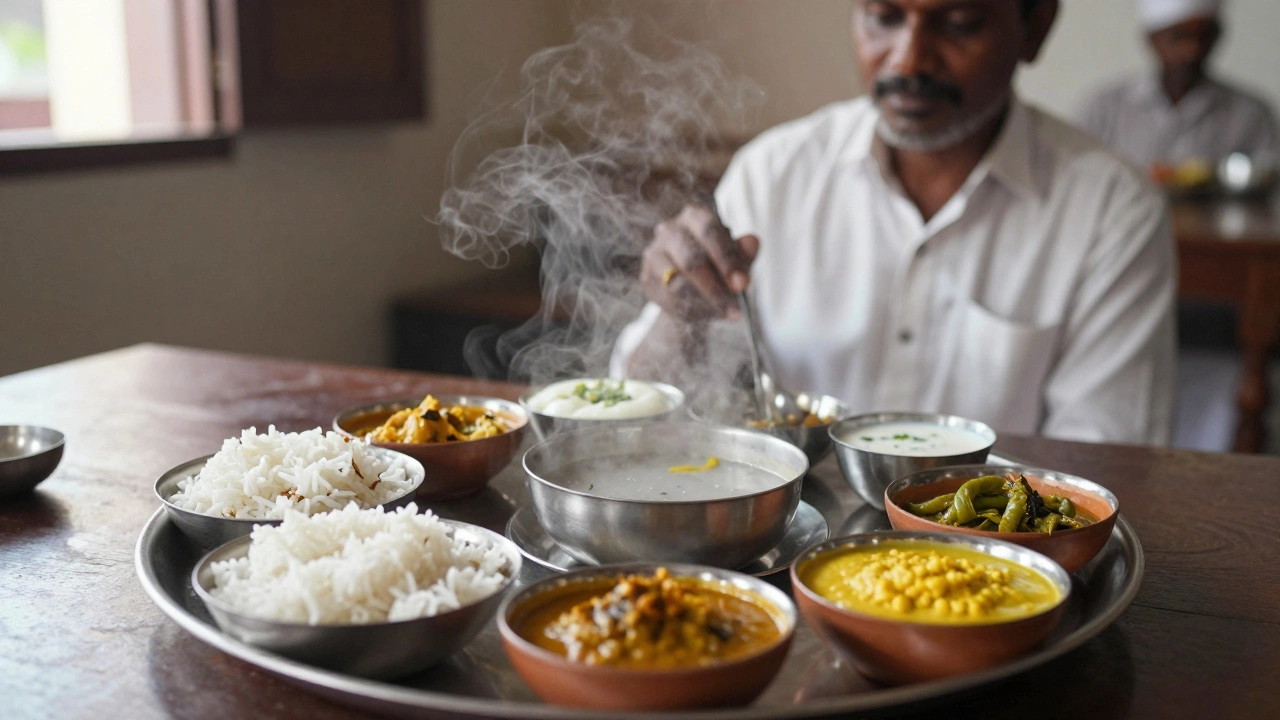
You will eat. A lot. And you will not always like it. That’s normal. The first time you try a spicy dosa in Mysore and your mouth burns for an hour, don’t panic. It’s not poison. It’s just chili. Local food is fresh, often cooked in front of you, and served with zero preservatives. That’s why your stomach might rebel. The trick? Start slow. Stick to street food that’s cooked hot and served immediately. Avoid raw salads, unpeeled fruit, and ice in drinks unless you’re sure it’s made with bottled water. Try the thali-five small plates of rice, dal, curry, yogurt, and pickle. It’s the best way to taste everything without overloading. And if you’re nervous, ask for "less spicy"-"thandi" in Tamil, "kamala" in Kannada. Most vendors will understand.
Transportation is a sport
Don’t rent a car. Seriously. Indian roads don’t follow rules-they follow instinct. Two-wheelers weave between buses. Trucks park on the shoulder. Cows, goats, and sometimes monkeys cross without warning. Trains are your best friend. South India’s rail network is reliable, cheap, and clean. Book AC 3-tier tickets online through IRCTC. They’re air-conditioned, have assigned seats, and even have charging ports. For shorter trips, use app-based cabs like Ola or Uber. They’re safer than hailing random taxis. Auto-rickshaws? Always negotiate the fare before you get in. Say "meter?" If they say no, walk away. A 10-minute ride should cost under 100 rupees (about $1.20). And always keep small bills. No one likes giving change for a 500-rupee note.
Hygiene isn’t what you think
Public restrooms? They’re not like home. Most don’t have toilet paper. You’ll find a bucket of water and a small scoop. Learn to use it. It’s cleaner than you think. Carry wet wipes and hand sanitizer. Drink only sealed bottled water. Even brushing your teeth with tap water can cause trouble. Hotels in tourist areas usually have filtered water. Ask. Don’t assume. And if you’re staying in a homestay, don’t be shy about asking where the water comes from. Locals are used to tourists asking.
Respect the rules-no matter how strange they seem
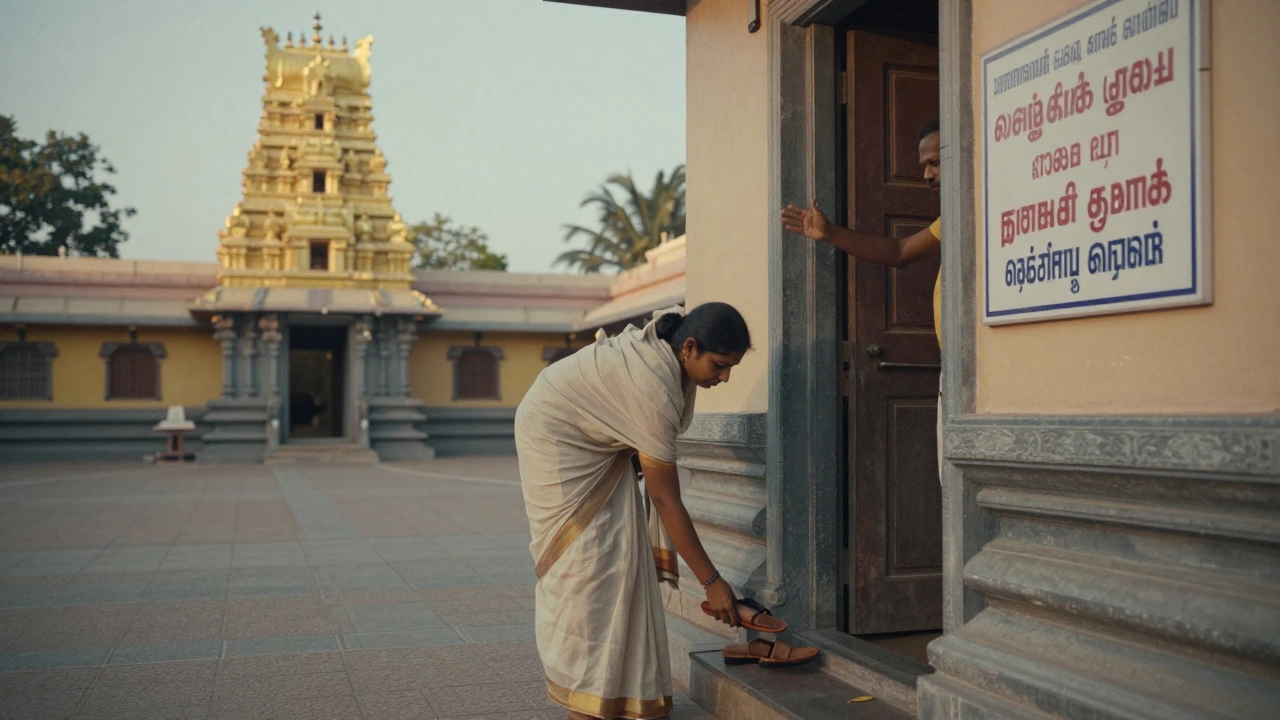
In temples, you’ll be asked to remove your shoes. Always. Even if you’re wearing expensive sneakers. In Kerala, some temples don’t allow non-Hindus inside. That’s not discrimination-it’s tradition. Don’t argue. Walk away and visit another. In Tamil Nadu, women shouldn’t wear shorts near temples. Men shouldn’t go shirtless. In Karnataka, you can’t take photos inside some shrines. Signs are usually in English and Tamil/Kannada. Read them. If you’re unsure, ask a temple attendant. Most are happy to explain. And never touch someone’s head. It’s considered sacred. Even if a child smiles at you and you want to pat their hair-don’t.
Money and scams
ATMs are everywhere. But don’t rely on them. Some rural areas have spotty connectivity. Carry cash. Rupees. No one takes US dollars. Change your money at banks or airport counters-avoid street changers. Scams? The most common one is the "broken meter" taxi. They say the meter’s broken, then charge triple. Always use app cabs. Another one: someone offers to be your "guide" for free, then takes you to a shop where they get a commission. Walk away. If you need a guide, book through your hotel. They’re vetted. And always ask for a receipt. Even for a 20-rupee snack.
Health and emergencies
Bring your own meds. Antibiotics, anti-diarrheal, and antihistamines. India’s pharmacies are good, but brands differ. If you get sick, head to a private clinic-not a government hospital. They’re faster, cleaner, and English-speaking. In cities like Bangalore or Kochi, clinics like Apollo or Fortis are everywhere. A doctor’s visit costs around 500 rupees. Travel insurance? Non-negotiable. Make sure it covers medical evacuation. And save the number for your country’s embassy. India has consulates in every major city. Keep them in your phone and on paper.
Connectivity and culture shock
You won’t have perfect Wi-Fi. Rural areas? Forget it. Buy a local SIM at the airport. Airtel or Jio are the best. A 10GB plan costs about 300 rupees ($3.50). It’s cheaper than your home plan. And yes, people stare. A lot. Not because you’re strange-they’re curious. A foreigner in a small village is rare. Smile back. Wave. Say "Namaste." It goes further than any phrase. Don’t take it personally. And if you feel overwhelmed? Find a quiet café. Order masala chai. Sit. Watch the world move. South India doesn’t rush. You’ll learn to stop rushing too.
What not to do
- Don’t wear revealing clothes in temples or rural areas.
- Don’t haggle aggressively over small things. It’s rude.
- Don’t take photos of people without asking. Especially women.
- Don’t assume everyone speaks English. Learn "thank you"-"Nandri" (Tamil), "Dhanyavad" (Kannada).
- Don’t drink tap water. Ever.
Surviving South India isn’t about avoiding discomfort. It’s about embracing it. The smells, the noise, the heat, the chaos-they’re not bugs. They’re features. And if you make it through the first week, you’ll come back. Not because it was easy. But because it was unforgettable.
Is South India safe for solo travelers?
Yes, especially for women. Cities like Kochi, Mysore, and Pondicherry are very safe. Rural areas require more caution, but locals are generally helpful. Avoid walking alone at night in unfamiliar neighborhoods. Use apps like Ola or Uber for late-night rides. Keep your phone charged and share your location with someone back home.
What’s the best time to visit South India?
October to March is ideal. The weather is dry and cool, especially in the hills of Coorg or Munnar. December and January are peak months-book ahead. Avoid June to September; that’s monsoon season. Heavy rain floods roads and closes some temples. But if you don’t mind the rain, Kerala’s backwaters are magical in the monsoon.
Do I need a visa to visit South India?
Yes. India requires a visa for most nationalities. Apply online through the Indian e-Visa portal. Tourist visas are valid for 180 days and cost about $100. You’ll get it in 3-5 days. Make sure your passport has at least six months left. And carry a printed copy-even if you have it on your phone.
Can I use my credit card in South India?
In cities, yes. Hotels, restaurants, and malls accept Visa and Mastercard. Outside tourist zones? Cash is king. Small shops, street vendors, and rural homestays don’t take cards. Always carry enough rupees. ATMs are common, but not always reliable. Withdraw cash during daylight hours.
How do I deal with the heat?
Wear loose, breathable cotton. Drink coconut water-it’s everywhere and cheap. Avoid midday sun. Plan sightseeing for early morning or late afternoon. Use a wide-brimmed hat and carry a small spray bottle with water. Fans are everywhere, but air-conditioning is rare in budget places. If you feel dizzy or nauseous, stop. Rest. Drink water. Heat exhaustion is common. Don’t push through it.