Is Angkor Wat Buddhist or Hindu? The Real History Behind the Temple
- Dec, 1 2025
- 0 Comments
- Aaron Blackwood
Angkor Wat Religious Identity Checker
What Do You See?
Select features you'd observe at Angkor Wat to see how Hindu and Buddhist elements coexist
Buddhist Practices
Saffron-robed monks, Buddhist prayers, Buddha statues
Hindu Elements
Vishnu carvings, Mount Meru design, Ramayana bas-reliefs
Temple Orientation
West-facing entrance (unusual for Hindu temples)
Offerings
Incense, flowers, and gold leaf for both traditions
Carvings
Untouched Hindu reliefs visible in upper galleries
Modern Visitors
Tourists taking photos of both Hindu and Buddhist sites
Both Religions Coexist
Angkor Wat embraces both traditions
Why this happens: The Khmer Empire didn't destroy Hindu heritage. They adapted it, creating a living space where both traditions coexist. This isn't unusual for Southeast Asia - see similar coexistence at Ayutthaya temples.
Your analysis shows why Angkor Wat is unique: it's not Hindu OR Buddhist, but both layered together like the stone carvings themselves.
Angkor Wat isn’t just a temple. It’s a 900-year-old stone question that still trips up travelers: Is it Hindu or Buddhist? The answer isn’t simple, and that’s exactly why it’s so powerful. You walk through its towering spires, carved with gods and demons, and you feel the weight of two religions layered over each other like paint on ancient stone. This isn’t a case of one replacing the other-it’s a story of coexistence, adaptation, and quiet transformation.
It Started as a Hindu Temple
Angkor Wat was built in the early 12th century by King Suryavarman II, ruler of the Khmer Empire. He didn’t build it to honor Buddha. He built it as a Hindu temple dedicated to Vishnu, one of the three main gods in Hinduism. The entire design was meant to represent Mount Meru, the cosmic center of the Hindu universe. The five central towers? Those are the peaks of Mount Meru. The surrounding moat? The cosmic ocean. The bas-reliefs along the galleries? Scenes from the Hindu epics-the Ramayana and the Mahabharata.
Look closely at the carvings. You’ll see Vishnu reclining on the serpent Ananta, floating on the sea of milk. You’ll see the churning of the ocean of milk, where gods and demons worked together to find the nectar of immortality. These aren’t decorative flourishes-they’re theological statements. This was a royal temple, meant to connect the king to the divine. Suryavarman II wasn’t just a ruler. He was seen as an earthly incarnation of Vishnu.
Then It Became Buddhist
By the late 13th century, things started to shift. The Khmer Empire began to decline. Trade routes changed. The population turned away from Hinduism and toward Theravada Buddhism, which had spread from Sri Lanka and Southeast Asia. Unlike the complex rituals of Hinduism, Theravada Buddhism focused on personal enlightenment, meditation, and simplicity. It resonated with ordinary people.
Angkor Wat didn’t get torn down. It got repurposed. Monks moved in. The statues of Vishnu were covered with paint or moved aside. Buddha images were placed in the inner sanctum. The carvings of Hindu gods weren’t destroyed-they were reinterpreted. The churning of the ocean of milk? Now it symbolized the struggle for enlightenment. The temple didn’t lose its meaning. It gained new layers.
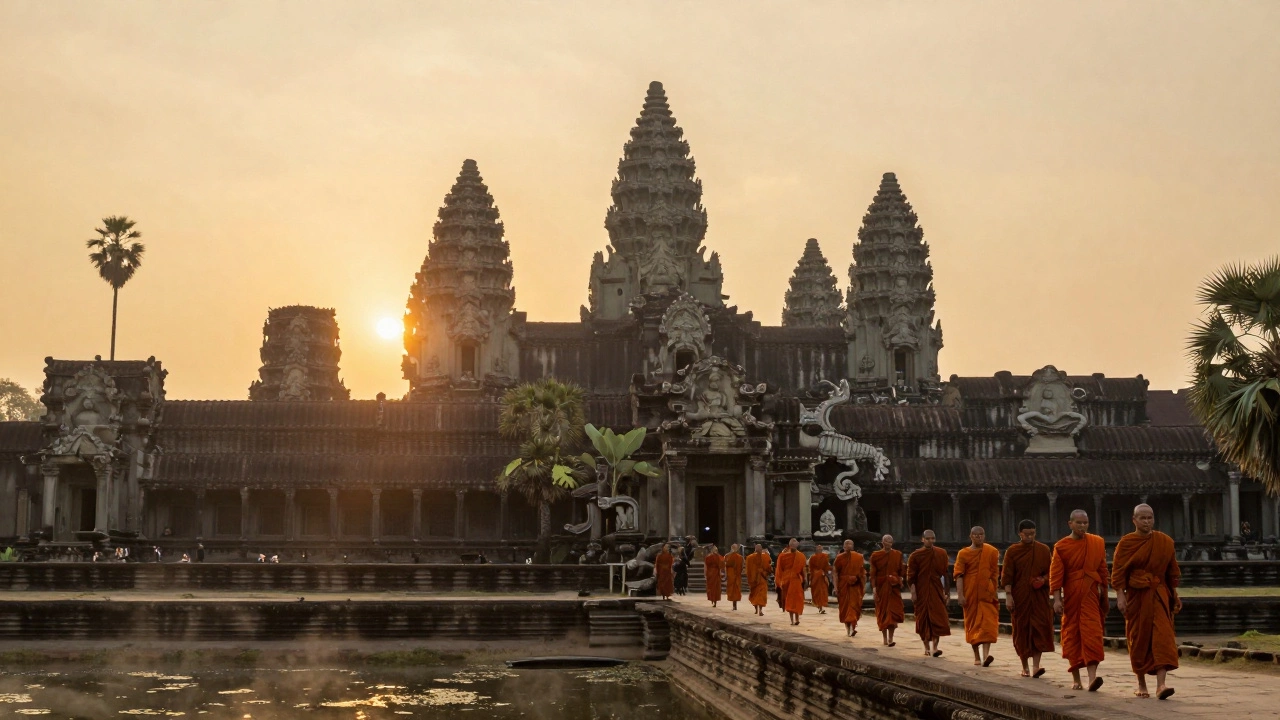
Today, you’ll see saffron-robed monks walking the same corridors where priests once chanted Vedic hymns. Offerings of incense and flowers sit beside statues of the Buddha, placed right where Vishnu once stood. It’s not a museum. It’s still a living place of worship.
Why the Confusion? It’s Both
Most guidebooks and travel blogs give you a yes-or-no answer: ‘Angkor Wat is Hindu’ or ‘Angkor Wat is Buddhist.’ That’s misleading. It’s both. And that’s what makes it unique.
Think of it like a house that’s been remodeled over generations. The foundation is still the same. The walls are still there. But the furniture changed. The wallpaper changed. The people living inside changed their routines. The house didn’t stop being a house-it just became something else too.
Angkor Wat is one of the few major religious sites in the world that was never abandoned or destroyed during a religious shift. It was transformed. Hindu deities still line the walls. Buddhist monks still chant prayers inside. Tourists take selfies with both. The temple doesn’t pick a side. It holds both.
What You’ll See Today
If you visit Angkor Wat now, you’ll notice subtle signs of its dual identity. The main entrance faces west-a rare orientation for Hindu temples, which usually face east. Why? Because in Hindu tradition, west is associated with death and the afterlife. Some scholars believe this was intentional, linking the king’s death to his divine union with Vishnu. But in Buddhist tradition, west is also the direction of the setting sun-symbolizing impermanence.
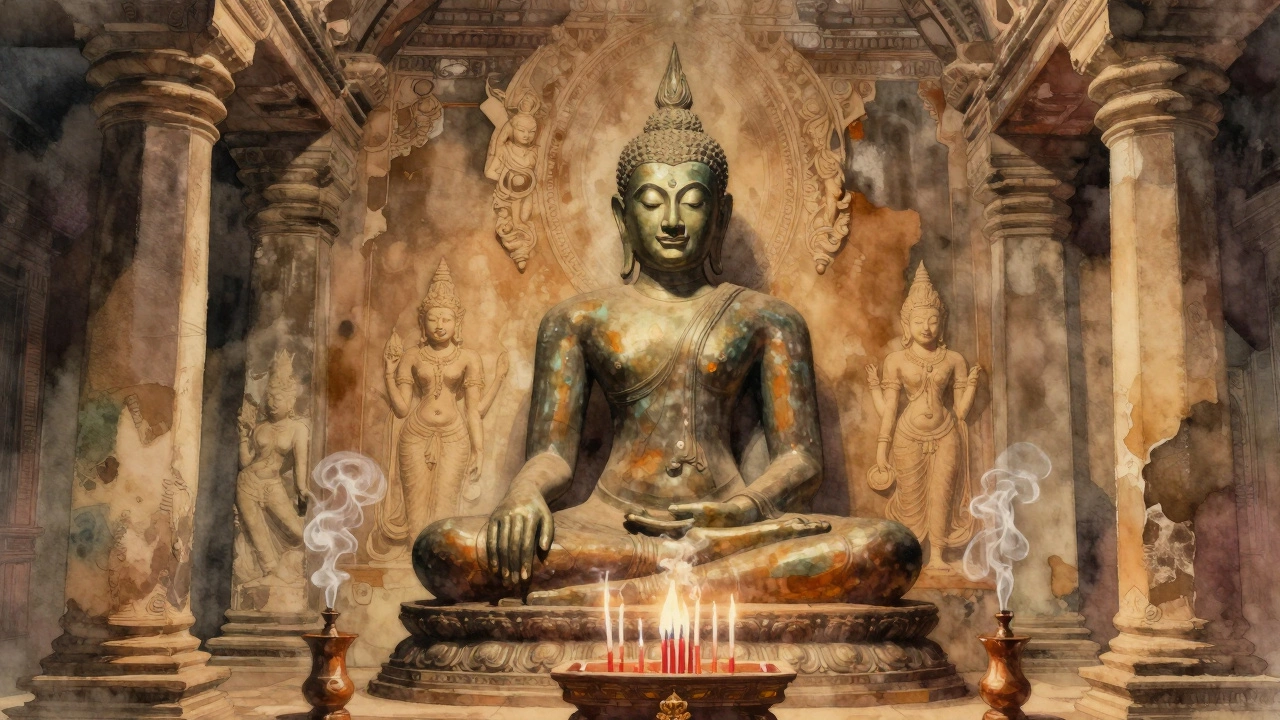
The central sanctuary now houses a large bronze Buddha statue. But if you climb to the upper level and look down, you’ll see the original Hindu bas-reliefs still intact. You’ll see the goddess Lakshmi, the god Indra, and the demon Ravana-all untouched, still carved in stone.
At sunrise, hundreds of people gather to watch the sun rise behind the towers. Some come for the photo. Others come to pray. You’ll see Hindu families lighting incense. You’ll see Buddhist pilgrims bowing before the Buddha. You’ll see tourists trying to figure out what’s going on. Everyone is right.
How It Compares to Other Temples in the Region
Angkor Wat isn’t alone in this blend. Across Southeast Asia, you’ll find similar layers. In Thailand, the ancient city of Ayutthaya had Hindu temples turned into Buddhist ones. In Java, Borobudur was built as a Buddhist monument, but later absorbed Hindu elements through local traditions.
But Angkor Wat is different. Most temples in India, like the Kashi Vishwanath Temple in Varanasi or the Meenakshi Temple in Madurai, stayed Hindu. They didn’t become Buddhist. Angkor Wat didn’t just survive change-it embraced it. That’s why it’s not just a temple. It’s a monument to religious tolerance.
If you’re on a temple tour through India and Southeast Asia, you’ll notice that Indian temples rarely change their primary deity. But in Cambodia, the story is fluid. The people didn’t reject the old gods. They honored them while adding new ones. That’s a cultural difference worth noticing.
Why This Matters for Travelers
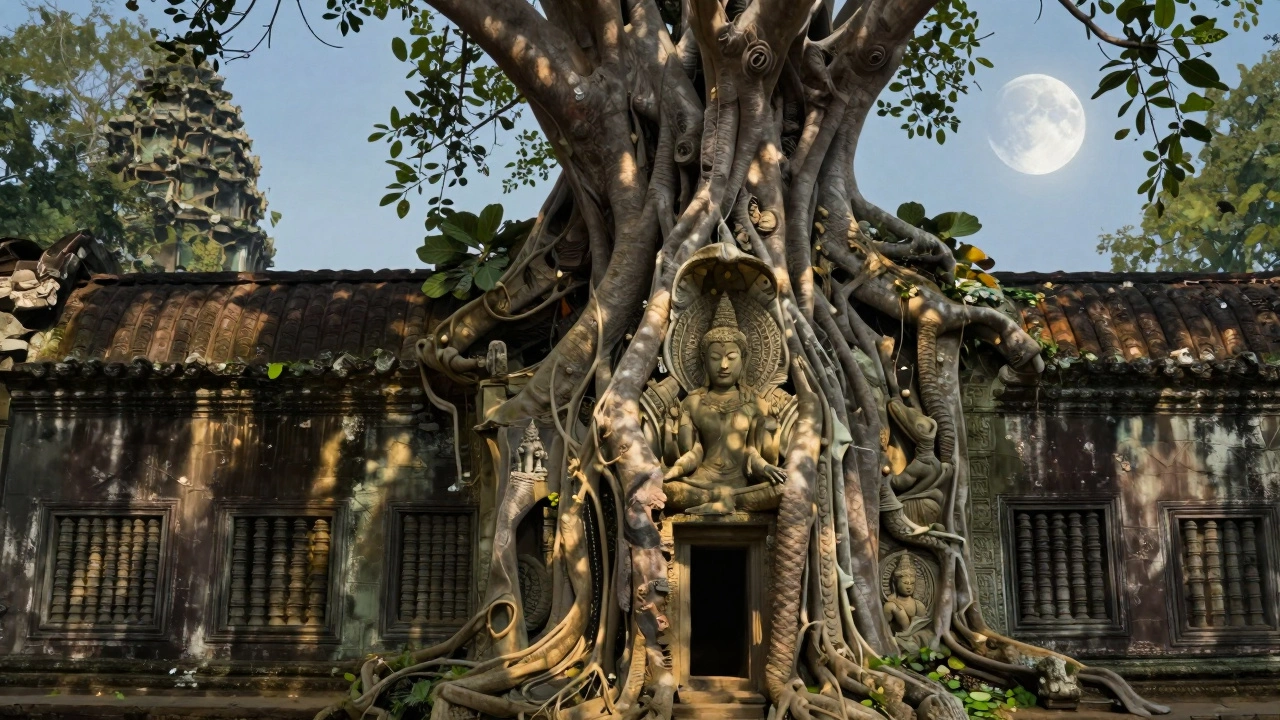
When you visit Angkor Wat, you’re not just seeing ruins. You’re walking through a living history of belief. If you only see it as Hindu, you miss the quiet devotion of the monks who still live there. If you only see it as Buddhist, you ignore the artistry of the Hindu carvings that took decades to complete.
Here’s what to look for on your next visit:
- Check the statues in the central chamber-is there a Buddha? Then it’s currently used as a Buddhist site.
- Look at the wall carvings-do they show Vishnu, Shiva, or scenes from the Ramayana? Then the original Hindu foundation is still visible.
- Notice the orientation of the temple-west-facing entrances are rare in Hindu architecture, but common in Buddhist ones.
- Watch the offerings-incense sticks, flowers, and gold leaf are used by both traditions.
Don’t ask ‘Is it Hindu or Buddhist?’ Ask ‘How did it become both?’ That’s the real story.
What Happened to the Hindu Gods?
They didn’t disappear. They were moved. Some statues were relocated to other temples. Others were covered with plaster and paint to make room for Buddha images. In some cases, the same statue was worshipped as both a Hindu deity and a Buddhist bodhisattva. This blending wasn’t accidental. It was practical. People didn’t want to lose the old gods-they just added new ways to honor them.
Today, you can still find Hindu deities in Cambodian homes and small village shrines. The same people who pray to Buddha on Monday might light a candle for Ganesh on Friday. Religion here isn’t about choosing one path. It’s about keeping the doors open.
Final Thought: A Temple That Changed With Its People
Angkor Wat didn’t fall because its religion changed. It survived because its people changed with it. The Khmer didn’t burn their past. They folded it into their future. That’s rare. Most empires erased what came before. The Khmer preserved it.
That’s why Angkor Wat isn’t just a tourist site. It’s a lesson. A reminder that sacred spaces don’t have to be frozen in time. They can evolve. They can hold more than one truth. And sometimes, the most powerful temples aren’t the ones that stayed pure. They’re the ones that learned how to change.
Is Angkor Wat officially a Hindu or Buddhist temple today?
Today, Angkor Wat is officially a Buddhist temple. Monks live and pray there daily, and it’s used for Buddhist ceremonies. But the original Hindu architecture, carvings, and symbolism remain untouched. It’s not one or the other-it’s both, layered together.
Why did the Khmer Empire switch from Hinduism to Buddhism?
The shift happened gradually, starting in the 13th century. Theravada Buddhism offered a simpler, more personal path to spiritual peace, unlike the complex rituals and caste system of Hinduism. It spread from Sri Lanka and Thailand, and ordinary people embraced it. The royal court followed the people’s lead, not the other way around.
Are the Hindu carvings still visible at Angkor Wat?
Yes, all the original Hindu bas-reliefs are still there-on the outer walls, galleries, and courtyards. Scenes from the Ramayana, Vishnu reclining on Ananta, and the churning of the ocean of milk are clearly visible. They were never destroyed, only reinterpreted by later Buddhist worshippers.
Can Hindus still worship at Angkor Wat?
Yes. Many Hindu pilgrims from India and Nepal visit Angkor Wat, especially during festivals like Diwali. They offer prayers to the Hindu deities still carved into the walls. The temple doesn’t restrict worship based on religion-it welcomes all who come with respect.
Is Angkor Wat similar to temples in India?
Architecturally, yes-Angkor Wat was inspired by South Indian temple styles, especially the Chola and Pallava designs. But unlike Indian temples, which usually stayed tied to one faith, Angkor Wat absorbed Buddhism without losing its Hindu roots. That makes it unique in the region.