Is It Illegal to Carry Cash in India? Budget Traveler’s Guide
- Jan, 2 2026
- 0 Comments
- Aaron Blackwood
India Cash Declaration Calculator
Check Your Cash Declaration Requirements
Enter your situation to see if you need to declare cash when traveling to India.
Carrying cash in India isn’t illegal-but there are strict rules you need to know if you’re traveling on a budget. Many backpackers and budget travelers assume cash is king in India, and they’re right. But carrying too much can land you in trouble with customs or local police. You don’t need to panic, but you do need to be smart.
How much cash can you legally carry into India?
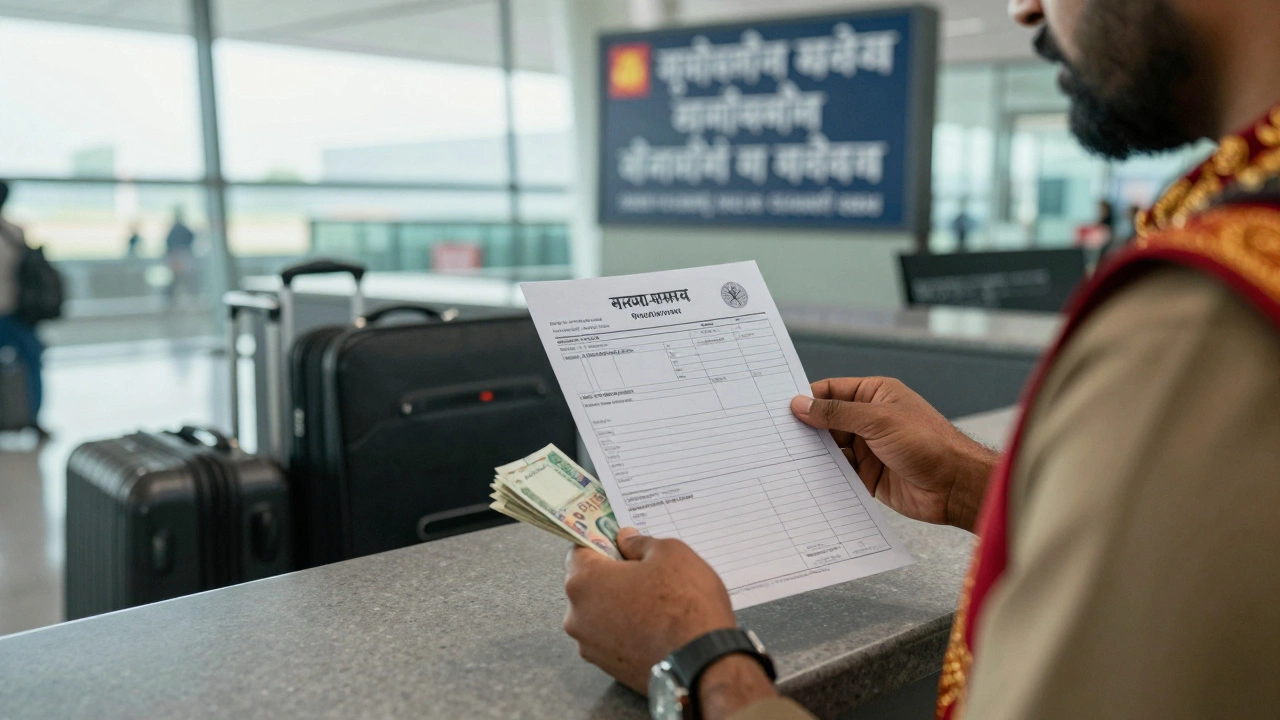
If you’re arriving from outside India, you can bring in any amount of foreign currency. But if you’re carrying more than $10,000 USD (or its equivalent in other currencies), you must declare it to customs using a Currency Declaration Form (CDF). This isn’t a tax-it’s just paperwork. Failure to declare can lead to fines, delays, or even seizure of your money.
For Indian citizens returning home, the limit is ₹25,000 in Indian rupees. That’s about $300. If you’re carrying more than that, you need to prove how you got it-like bank statements or receipts from foreign exchanges. This rule exists to stop money laundering, not to punish travelers.
What about carrying cash within India?
Inside India, there’s no legal cap on how much cash you can carry. You can walk into a train station with ₹500,000 in your backpack and no one will stop you. But here’s the catch: if police or tax officials ask why you’re carrying so much, you need to explain it. If you can’t, they can seize it under the Income Tax Act and start an investigation.
Real-world example: A couple from Delhi was stopped on a highway in Rajasthan. They had ₹8 lakh ($9,500) in cash because they were paying for a wedding gift. They had no receipts, no bank records, and no explanation. Their money was seized for 45 days. They eventually got it back-but only after hiring a lawyer and filing paperwork.
That’s why budget travelers should avoid carrying more than ₹50,000-₹100,000 at a time. It’s more than enough for hostels, buses, street food, and small hotels. If you need more, use ATMs or digital payments.
Why do Indian authorities care about cash?
India cracked down on unaccounted cash after the 2016 demonetization. The government removed ₹500 and ₹1,000 notes overnight to fight black money. Even though new notes came back, the suspicion around large cash transactions never went away.
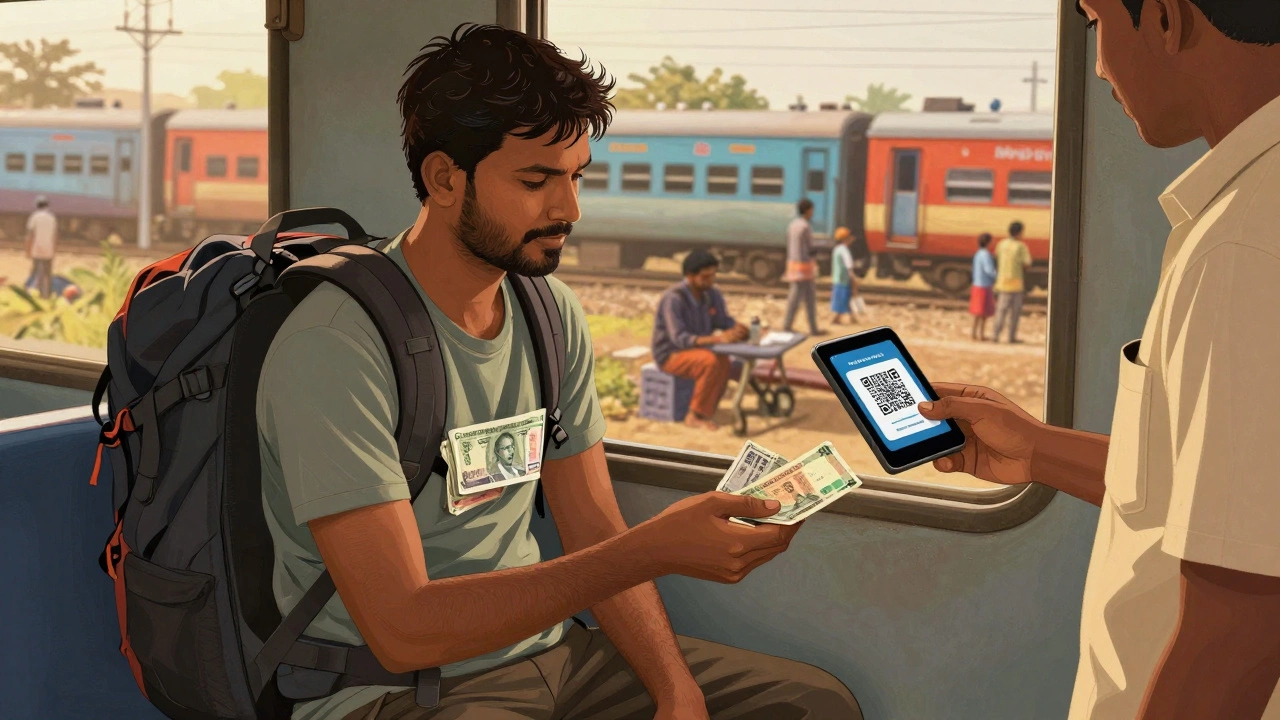
Today, cash is still king in rural areas, small shops, and train ticket counters. But in cities, UPI apps like PhonePe and Google Pay handle 90% of daily payments. Even street vendors have QR codes. So if you’re carrying huge wads of cash, you look out of place-and suspicious.
What’s the smart way to carry money in India?
Here’s a simple system that works for budget travelers:
- Carry ₹20,000-₹50,000 in cash for small purchases and places that don’t take cards.
- Use a debit card linked to a foreign bank account (like Revolut, Wise, or Charles Schwab) for ATM withdrawals. Avoid Indian bank ATMs-they charge steep fees.
- Keep your credit card for emergencies. Visa and Mastercard are accepted in most hotels and restaurants in tourist areas.
- Use UPI apps if you have an Indian SIM card. You can link them to foreign cards now through apps like Paytm or PhonePe.
- Never carry all your money in one place. Split cash between your bag, hotel safe, and a hidden money belt.
Pro tip: Withdraw ₹2,000 notes from ATMs. They’re easier to carry and harder to counterfeit than ₹500 notes. And avoid changing money on the street. Exchange only at banks or authorized counters like Thomas Cook or SBI.
What happens if you’re caught with too much cash?
If you’re stopped and can’t explain your cash, here’s what could happen:
- Your money gets seized temporarily while officials check its source.
- You might be asked to pay a penalty-usually 10-20% of the amount.
- If they suspect illegal activity, you could face a formal inquiry under the Income Tax Act.
- Foreigners rarely get arrested, but you’ll lose time, stress, and possibly your trip.
Most cases are resolved quickly if you’re polite, honest, and have some proof-like hotel bookings, flight tickets, or a travel itinerary showing you’re a tourist.
Is it safer to use cards or cash in India?
For budget travelers, it’s a mix. Cash is still needed for:
- Auto-rickshaws
- Small tea stalls
- Temple donations
- Local bus tickets
- Guesthouse deposits
But cards are better for:
- Hotels (even budget ones)
- Train bookings (IRCTC website)
- Pharmacies
- Supermarkets
- Online bookings
ATM fees in India are high-₹200 per withdrawal if you use a non-network ATM. So withdraw ₹10,000-₹15,000 at a time. Use ATMs inside banks or malls. Avoid those in isolated areas.
What about digital payments?
UPI is everywhere. Even in small towns, you’ll see QR codes on carts and stalls. If you have an Indian phone number, you can link your foreign card to UPI apps. It’s the cheapest way to pay. No fees. No exchange rate markups. Just scan and pay.
But if you don’t have an Indian SIM, you can’t use UPI. That’s why carrying a small amount of cash is still essential.

Final advice for budget travelers
You don’t need to carry thousands in cash to travel India on a budget. Most travelers spend ₹1,500-₹2,500 per day. That’s $18-$30. So you only need ₹50,000-₹75,000 for a month-long trip. Split it between your wallet, a money belt, and your hotel safe.
Always keep a receipt when you exchange money. Keep a photo of your cash in your phone. Write down serial numbers of large notes. These aren’t paranoid moves-they’re smart ones.
India is not a country where you get arrested for carrying cash. But it’s a country where you can lose it if you don’t know the rules. Stay calm. Stay prepared. And don’t let fear stop you from exploring.
Frequently Asked Questions
Can I carry Indian rupees out of India?
No, Indian residents and foreigners are not allowed to take Indian rupees out of the country. You must spend or exchange all your rupees before leaving. You can exchange them at authorized banks or currency counters at the airport. Don’t try to smuggle cash out-it’s illegal and can result in fines.
Are ₹2,000 notes still in circulation?
Yes, ₹2,000 notes are still legal tender and widely accepted. They were introduced in 2016 after demonetization and are still printed in limited quantities. They’re easier to carry than stacks of ₹500 notes, and most ATMs now dispense them. Avoid accepting damaged or torn ₹2,000 notes-they’re harder to exchange later.
Can I use US dollars or euros in India?
No, foreign currencies like USD or EUR are not accepted for everyday purchases. You must exchange them for Indian rupees. Some luxury hotels and tour operators might accept USD for deposits, but you’ll still pay in rupees at checkout. Always use official exchange counters, not street vendors.
Do I need to declare cash if I’m flying domestically within India?
No, you don’t need to declare cash when flying between cities in India. But if airport security or police ask why you’re carrying a large amount, you should be ready to explain. Carry your hotel bookings or itinerary as proof you’re a traveler, not a money transporter.
Is it safe to carry cash on trains in India?
Yes, but be cautious. Trains are generally safe, but pickpockets exist, especially in crowded sleeper classes. Keep your cash in a hidden money belt or zippered inner pocket. Don’t count money in public. Use ATMs at stations if you need more. Most trains now accept digital payments for meals and tickets via IRCTC’s app.
Next steps for budget travelers
If you’re planning a trip to India:
- Exchange $200-$300 before you leave for emergency cash.
- Get a travel debit card with low ATM fees (Wise or Revolut recommended).
- Download the IRCTC app to book train tickets without cash.
- Print out a copy of your itinerary and hotel bookings.
- Take a photo of your cash before you leave home-serial numbers included.
India rewards the prepared traveler. You don’t need to carry a fortune to experience its magic. Just carry enough-and know the rules.