Kerala vs Tamil Nadu for Tourism: Which South Indian State Wins?

- Mar, 13 2026
- 0 Comments
- Aaron Blackwood
South India Destination Finder
Answer 5 quick questions to discover which South Indian state matches your travel style best.
Kerala is your match!
Your preference for slow travel, mild flavors, and serene natural settings makes Kerala perfect for you. Enjoy peaceful backwaters, wellness retreats, and calm beaches while exploring the 'God's Own Country' at your own pace.
Tamil Nadu is your match!
Your love for history, bold flavors, and energetic experiences makes Tamil Nadu ideal. Explore ancient temples, vibrant festivals, and spicy street food while diving deep into South India's cultural heart.
When you’re planning a trip to South India, two names keep popping up: Kerala and Tamil Nadu. Both are rich in culture, history, and natural beauty. But which one actually gives you the better experience? It’s not about which is prettier-it’s about what kind of trip you want. Are you looking for backwaters and quiet beaches? Or ancient temples and spicy street food? Let’s cut through the noise and break it down.
What Kerala Offers
Kerala, often called "God’s Own Country," leans hard into relaxation. Its signature is the backwaters-a network of lagoons, lakes, and canals that stretch over 900 kilometers. Think of floating through calm waters in a traditional kettuvallam houseboat, coconut palms leaning over the edges, herons gliding past, and local villagers going about their day on the banks. It’s peaceful. It’s slow. It’s the kind of place where you forget your watch.
Beaches here aren’t crowded like Goa’s. Places like Varkala and Marari have soft sand, gentle waves, and yoga shacks tucked into the cliffs. The state’s eco-tourism is strong-try the Periyar Wildlife Sanctuary, where you can take a boat safari and spot elephants, tigers, and rare birds without the noise of a safari jeep.
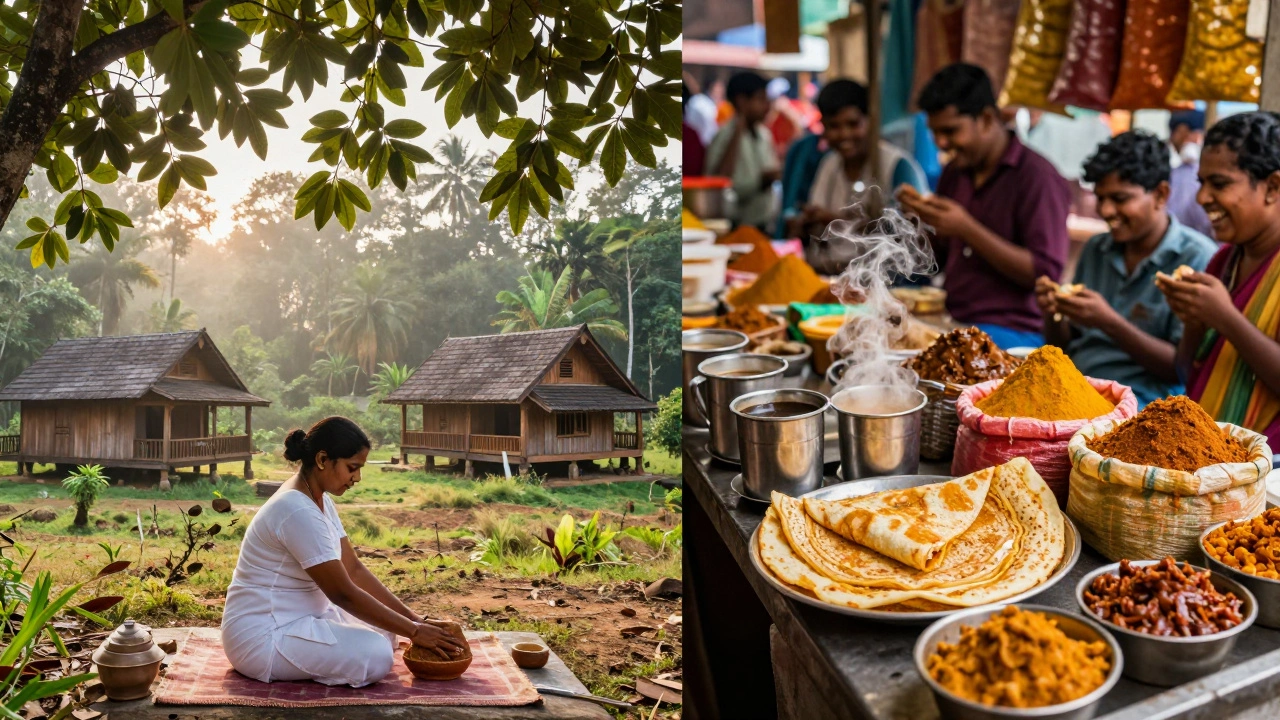
Food? Think coconut, rice, and seafood. Kerala’s meals are mild compared to other parts of India. Sadya, a traditional feast served on banana leaves, includes 12-15 dishes, all vegetarian and all delicious. If you’re into Ayurveda, Kerala is the place. It’s home to the oldest wellness centers in India, where treatments like abhyanga (oil massage) and panchakarma are done in quiet, forest-side retreats.
What Tamil Nadu Offers
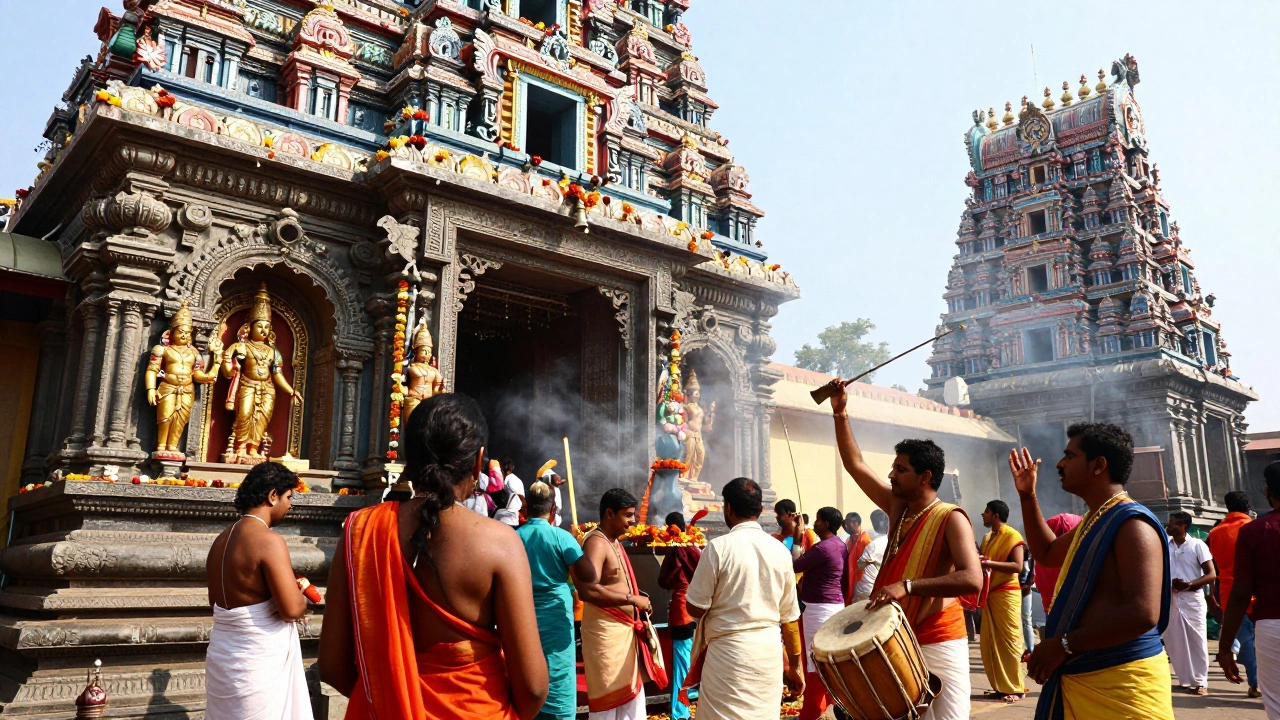
Tamil Nadu is where history doesn’t just sit in museums-it walks through the streets. The state has over 30,000 temples, many built between the 7th and 13th centuries. The Meenakshi Amman Temple in Madurai is a maze of towering gopurams (colorful towers), each covered in thousands of carved gods, animals, and mythological scenes. You don’t just visit it-you get lost in it, and that’s part of the magic.
Then there’s Mahabalipuram, where the Shore Temple stands right on the Bay of Bengal. It’s one of the oldest structural temples in India, dating back to the 8th century. Nearby, the Arjuna’s Penance rock carving is so detailed, you can spot every muscle in the figures. These aren’t reconstructed ruins-they’re alive with daily rituals, chants, and incense.
Food here is bold. Chettinad cuisine-spicy, aromatic, and loaded with black pepper, fennel, and star anise-comes from the region around Karaikudi. Dishes like pepper chicken and kuzhambu (tamarind-based stews) are served on banana leaves with steaming rice. Street food in Chennai? Don’t miss the idli-sambar, masala dosa, and filter coffee served in steel cups.
For nature lovers, Tamil Nadu’s Nilgiri Hills offer misty tea estates and hiking trails that lead to waterfalls like Hogenakkal. The state also has tiger reserves like Mudumalai and Anamalai, where you can book a safari and actually see leopards and elephants in the wild.
Temple Culture: Kerala vs Tamil Nadu
Kerala’s temples are older than most people realize-some date back to the 10th century-but they’re quieter. Rituals here are more subdued. You’ll see oil lamps, bells, and flower offerings, but not the loud drumming or massive crowds you find in Tamil Nadu.
In Tamil Nadu, temple festivals are events. The Chithirai Festival in Madurai draws over a million people. Deities ride on giant chariots pulled by devotees. The whole city transforms. In contrast, Kerala’s temple festivals like Thrissur Pooram are visually stunning-with elephants, fireworks, and traditional percussion-but they’re more controlled, more ceremonial.
If you’re drawn to spiritual intensity, Tamil Nadu delivers. If you want quiet reflection, Kerala’s temples offer that.
Beaches and Nature
Kerala’s beaches are for lounging. They’re clean, uncrowded, and lined with coconut trees. You can rent a hammock, read a book, and watch the sunset without being sold anything. The water is calm, perfect for swimming.
Tamil Nadu’s beaches are wilder. Rameswaram’s beach is sacred-you walk barefoot along the shore to reach the temple. Pamban Bridge, connecting the mainland to the island, is an engineering marvel. Havelock Island (though technically in the Andamans) isn’t here, but Kanyakumari, where the Arabian Sea, Bay of Bengal, and Indian Ocean meet, is a powerful sight. Sunrise here is legendary.
For wildlife, both states have strong reserves. Kerala’s Periyar is better for boat safaris. Tamil Nadu’s Mudumalai and Bandipur are better for jeep safaris. Both offer great chances to see tigers, leopards, and elephants.
Food: Mild vs Fiery
Kerala’s food is about balance. Coconut milk softens every dish. Fish curry is creamy. Banana chips are sweet and crispy. You’ll find no chili heat unless you ask for it.
Tamil Nadu? It’s spicy. Not just hot-complex. The chutneys alone can change your life. The sambar is tangy, the rasam is peppery, and the avial is a mix of nine vegetables in coconut paste. If you like bold flavors, Tamil Nadu wins. If you want comfort food with a gentle touch, Kerala’s your match.
Who Should Go Where?
- Choose Kerala if: You want peace, nature, wellness, and slow travel. Ideal for couples, solo travelers seeking calm, or anyone recovering from burnout.
- Choose Tamil Nadu if: You crave culture, history, food, and energy. Perfect for photographers, history buffs, foodies, and travelers who like crowds and chaos.
Many people do both. You can fly into Cochin (Kerala), spend 5 days on the backwaters and in Munnar, then take a 4-hour train to Madurai and spend the next week exploring temples, markets, and spice markets. The two states are only 300 kilometers apart. You don’t have to pick one.
Final Verdict
There’s no single answer. Kerala is the spa. Tamil Nadu is the festival. One soothes you. The other wakes you up. If you only have time for one, ask yourself: Do I want to unwind or dive deep? If you’re unsure, go to both. They’re not rivals-they’re partners in the same story.
Is Kerala safer than Tamil Nadu for solo travelers?
Both states are among the safest in India for solo travelers. Kerala has a lower crime rate and more English-speaking locals, especially in tourist areas. Tamil Nadu is also very safe, but larger cities like Chennai can feel busier and more chaotic. Solo women travelers report feeling comfortable in both, but Kerala’s slower pace and tighter-knit communities make it slightly easier for first-time visitors.
Which state has better public transportation?
Tamil Nadu has a more extensive and reliable public transport system. State-run buses connect even small towns, and trains run frequently between major cities like Chennai, Madurai, and Coimbatore. Kerala’s trains are clean and scenic, but bus services in rural areas can be infrequent. If you’re planning to hop between places without a car, Tamil Nadu gives you more flexibility.
Can I visit both Kerala and Tamil Nadu in one trip?
Absolutely. The two states are connected by well-maintained highways and frequent trains. A 10-day trip could include 4-5 days in Kerala (backwaters, Munnar, Kochi) and 5-6 days in Tamil Nadu (Madurai, Mahabalipuram, Kanyakumari). Many tour operators offer combined itineraries. The best time to do this is between October and March, when weather is dry and pleasant.
Which state is more affordable for budget travelers?
Tamil Nadu edges out Kerala for budget travelers. Accommodations, food, and local transport are generally cheaper. A basic room in Madurai costs ₹600-₹1,000, while a similar one in Alleppey might run ₹1,200-₹1,800. Street food in Chennai is incredibly cheap-₹30-₹50 for a full meal. Kerala’s eco-resorts and houseboats are pricier, but you can still find budget options if you avoid peak season.
Is one state better for families with kids?
Kerala is slightly better for families with young children. Its beaches are calm, its roads are cleaner, and many resorts have kid-friendly pools and activities. Tamil Nadu’s temples and crowded markets can be overwhelming for small kids, but older children will love the history and the chance to see elephants and temple chariots. If you’re traveling with kids under 8, Kerala offers more downtime. For teens interested in culture, Tamil Nadu delivers unforgettable experiences.