Should 70 Year Olds Travel? A Guide to Luxury Train Journeys
- Sep, 1 2026
- 0 Comments
- Aaron Blackwood
Senior Travel Compatibility Checker
Select your preferences and health considerations to see which travel mode offers the best balance of comfort, safety, and experience for travelers aged 70+.
Is seventy the new fifty, or is it a time to slow down? That’s the question many people ask when they hit that milestone birthday. The answer isn't a simple yes or no. It depends entirely on how you define "travel." If you picture backpacking through hostels with a heavy rucksack, maybe not. But if you picture gliding past scenic landscapes in a private cabin, enjoying five-star meals without lifting a finger, then absolutely. In fact, for many seniors, this might be the golden era of exploration.
Travel at seventy offers a unique blend of freedom and perspective. You’ve likely retired from the daily grind, meaning you have the most valuable commodity: time. You’re also more likely to appreciate culture, history, and comfort over adrenaline-fueled chaos. Luxury train journeys are arguably the perfect fit for this demographic. They eliminate the physical toll of driving, the stress of airport security, and the discomfort of cramped economy seats. Instead, they offer a moving hotel where the destination is as important as the journey itself.
The Physical Reality of Traveling at Seventy
Let’s be real about the body. At seventy, your joints might not forgive a twelve-hour layover in an uncomfortable plastic chair. Your stamina might not handle a ten-mile hike up a steep mountain path. But that doesn’t mean you stop exploring. It means you change the method. Accessible Tourism has grown significantly in recent years. Operators now understand that older travelers aren't just looking for discounts; they're looking for ease. This includes wider doorways, step-free access, and staff trained to assist with mobility aids.
Consider the alternative to flying. Air travel involves standing in lines, navigating terminals, and dealing with cabin pressure changes that can affect circulation and energy levels. For someone with arthritis or mild cardiovascular issues, these stresses add up quickly. Trains, by contrast, allow you to move around freely. You can stretch your legs in the corridor, visit the dining car at your own pace, and sleep in a proper bed rather than a reclining seat. The vibration of a train is often gentle enough to promote relaxation rather than fatigue.
| Feature | Air Travel | Cruising | Luxury Train |
|---|---|---|---|
| Physical Strain | High (security, walking distances) | Moderate (ship motion, stairs) | Low (minimal walking, stable ground) |
| Comfort Level | Variable (often cramped) | High (but can feel enclosed) | Very High (spacious cabins, views) |
| Pace Control | Fixed schedule | Fixed port stops | Flexible (stopovers available) |
| Social Aspect | Minimal interaction | High (crowded venues) | Intimate (smaller groups) |
Why Trains Are the Ultimate Senior-Friendly Transport
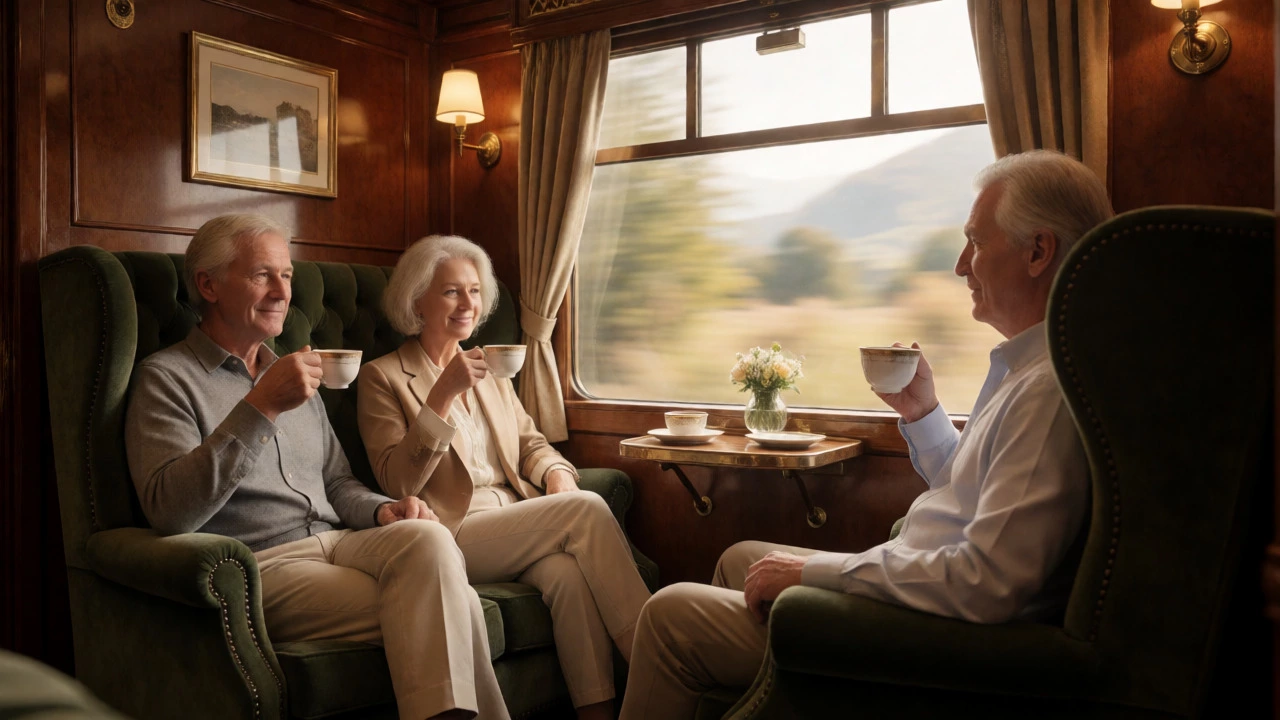
If you haven't considered a rail journey recently, you might be missing out on one of the most comfortable ways to see the world. The Venice Simplon-Orient-Express, for example, isn't just a ride; it's a time capsule. The carriages are restored to their 1920s glory, offering plush interiors and impeccable service. You don't need to rush to catch a bus or navigate foreign roads. You simply board, settle into your suite, and watch Europe unfold outside your window.
One major advantage is the ability to control your environment. On a plane, you’re stuck in a pressurized tube with recycled air. On a luxury train, you can open a window (in some models) or enjoy large panoramic windows that let in natural light. This helps regulate circadian rhythms, which can become disrupted during travel. Better sleep means better energy for sightseeing when the train stops.
Moreover, trains often stop in city centers, unlike airports which are usually miles away. This reduces the "last mile" problem-no need to book taxis or navigate public transport after a long day. You step off the platform and you’re there. For a seventy-year-old traveler, eliminating those extra transit steps can save hours of energy each day.

Health Considerations and Safety First
Before booking anything, have a frank conversation with your doctor. It’s not about getting permission to leave the house; it’s about planning for contingencies. Ask specific questions: How does my medication react to time zone changes? Do I need compression stockings for longer rides? What is my plan if I experience a medical issue while abroad?
Travel insurance is non-negotiable. Many standard policies exclude pre-existing conditions or have age caps. Look for providers specializing in senior travel who cover medical evacuation. This ensures that if you do get sick, you can be transported back home or to a specialized facility without financial ruin. Companies like Allianz Global Assistance or Cigna often have plans tailored for travelers over sixty-five.
Also, consider the climate. Extreme heat or cold can strain the cardiovascular system. If you’re traveling to India, for instance, aim for the cooler months between October and March. Avoid the peak summer heat unless you’re staying in hill stations. Planning around weather patterns protects your health and enhances enjoyment.
Choosing the Right Journey: Pace and Comfort
Not all trips are created equal. When selecting a itinerary, look for "slow travel" options. These involve fewer destinations but longer stays in each place. Instead of visiting five cities in seven days, visit two cities in seven days. This allows time for rest, digestion, and genuine immersion.
Check the accessibility details before booking. Does the train have elevators between decks? Are the bathrooms equipped with grab bars? Is there a wheelchair-accessible suite? Even if you don’t use a wheelchair now, knowing that facilities are available provides peace of mind. Some operators, like Belmond, provide detailed accessibility guides for each route.
- Look for inclusive pricing: Ensure meals, drinks, and excursions are included so you don’t have to manage complex budgets on the go.
- Check group size: Smaller groups (under 40 people) often mean more personalized attention and easier movement.
- Review cancellation policies: Life happens. Flexible booking terms reduce anxiety about unexpected health changes.

The Social and Mental Benefits
Travel isn’t just about seeing sights; it’s about staying engaged. Studies suggest that social interaction and novel experiences help maintain cognitive function in older adults. Luxury train journeys facilitate this naturally. Dining cars encourage conversation among passengers who share similar interests and life stages. You’re not shouting over loud music in a nightclub; you’re sharing stories over a glass of wine.
This sense of community combats isolation, a common challenge for retirees. Meeting fellow travelers can lead to lasting friendships. Plus, the intellectual stimulation of learning about new cultures, histories, and languages keeps the mind sharp. You’re actively processing new information, which is far better for brain health than passive television watching.
Practical Tips for a Smooth Trip
Preparation makes the difference between a stressful ordeal and a relaxing retreat. Here’s how to pack smart for your seventies adventure:
- Pack layers: Train temperatures can fluctuate. Bring a warm cardigan even for tropical routes.
- Keep meds handy: Store essential medications in your carry-on bag, never checked luggage. Include copies of prescriptions.
- Hydrate constantly: Dehydration affects balance and cognition. Drink water regularly, even if you don’t feel thirsty.
- Bring familiar comforts: A favorite pillow or eye mask can make unfamiliar beds feel like home.
- Digital detox partially: While staying connected is good, try to disconnect from news feeds to fully engage with your surroundings.
Finally, give yourself grace. If you miss a tour because you needed a nap, that’s okay. The goal is enjoyment, not ticking boxes. Travel should enhance your quality of life, not deplete it.
Is it safe for a 70-year-old to travel alone?
Yes, provided you choose safe destinations and stay aware of your surroundings. Solo travel builds confidence and independence. However, having a reliable communication device and sharing your itinerary with family members adds a layer of safety. Joining organized tours or luxury trains can also provide built-in social support networks.
What is the best type of accommodation for seniors?
Accommodations with single-level layouts, walk-in showers with grab bars, and elevators are ideal. Hotels located near attractions reduce the need for long walks. Bed and breakfasts can offer personalized service, while resorts provide on-site amenities like spas and pools, allowing for relaxation without leaving the property.
How can I manage jet lag at age 70?
Adjust your sleep schedule a few days before departure. Stay hydrated, avoid alcohol during flights, and expose yourself to natural sunlight upon arrival to reset your internal clock. Short naps (20 minutes) can help, but avoid sleeping immediately upon landing to prevent nighttime wakefulness.
Are luxury trains worth the cost for seniors?
For many, yes. The value lies in the convenience, comfort, and reduced physical exertion. All-inclusive pricing simplifies budgeting, and the high level of service minimizes stress. Compared to arranging multiple hotels, transfers, and activities independently, a curated luxury train journey often saves time and mental energy.
What vaccinations are needed for international travel?
Requirements vary by destination. Common recommendations include updates for Tetanus, Flu, and Shingles. Depending on the region, Hepatitis A/B, Typhoid, or Yellow Fever vaccines may be required. Consult a travel medicine specialist six weeks before departure to ensure immunity develops in time.