Ancient Indian Civilization: Roots of Culture, Temples, and Trade
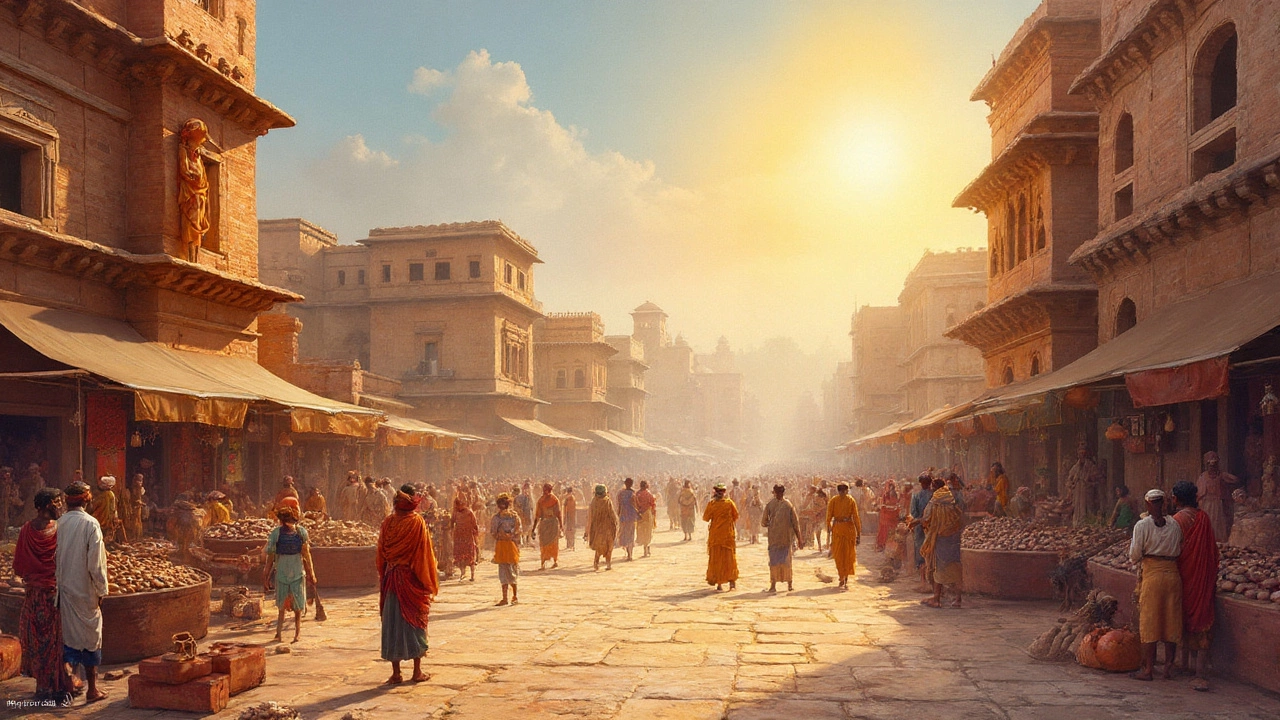
When we talk about ancient Indian civilization, one of the world’s earliest urban societies that flourished over 5,000 years ago along the Indus and Ganges rivers. Also known as the Harappan civilization, it laid the foundation for India’s enduring traditions in religion, architecture, and social organization. This wasn’t just a collection of villages—it was a network of planned cities with advanced drainage, standardized weights, and trade links stretching to Mesopotamia.
The Indus Valley Civilization, a highly organized society centered around cities like Mohenjo-Daro and Harappa thrived before the arrival of the Vedic people. Their cities had grid layouts and public baths, showing a level of urban planning unmatched in many parts of the world at the time. Then came the Vedic period, a cultural and religious transformation driven by oral traditions, rituals, and early Hindu scriptures. This era gave us the Vedas, the caste system’s early structure, and the spiritual ideas that still shape temple worship today.
What makes this civilization so powerful today? It’s not just ruins—it’s living culture. The Hindu temples, sacred spaces built with precise geometry and symbolic meaning you see in Varanasi, Madurai, or Khajuraho trace their design and purpose back to ancient texts and practices. Even the way people bathe in the Ganges, the chants during rituals, or the use of fire in ceremonies—all have roots in these early traditions. The trade routes that once moved spices, textiles, and gems across Asia began here, and today’s tourism in India still follows those same paths, drawn to the same places pilgrims visited millennia ago.
You won’t find ancient Indian civilization in textbooks alone. You’ll find it in the stones of the Taj Mahal, which sits on land once part of a larger cultural continuum. You’ll hear it in the chants at Kashi Vishwanath, where devotion hasn’t changed in centuries. And you’ll see it in the way Indian festivals like Diwali or Kumbh Mela still draw millions—not just as rituals, but as living connections to a past that never truly ended.
What follows are real stories from travelers who’ve walked these ancient paths—whether trekking to a forgotten temple in the Himalayas, standing silent before a 2,000-year-old carving, or trying to understand why a simple stone well in Rajasthan still holds water after 4,000 years. These aren’t just travel tips. They’re glimpses into a civilization that built the world we still walk through today.
- Aug, 3 2025
- 0 Comments
- Aaron Blackwood
Is India the World’s Oldest Living Culture? Tracing Ancient Roots & Timeless Traditions
Discover if India is truly the world’s oldest culture. Dive into ancient myths, living traditions, and archaeological finds that make India’s cultural heritage unique.
Read More