Bullet Train: What It Is, Where It Runs, and Why It Matters for Travelers
When you hear bullet train, a high-speed rail system designed to move passengers at over 250 km/h with precision and comfort. Also known as high-speed rail, it’s not just about speed—it’s about reliability, efficiency, and redefining what travel feels like. The term comes from its sleek, aerodynamic shape and how it seems to zip past stations like a bullet. But this isn’t science fiction. Japan’s Shinkansen launched the first one in 1964, and since then, countries from China to France have built their own networks. Today, over 50,000 kilometers of high-speed rail lines exist worldwide, carrying more than 2 billion passengers every year.
What makes a bullet train different from a regular train? It’s not just the speed. It runs on dedicated tracks, uses advanced signaling systems, and has no level crossings—meaning no delays from traffic or pedestrians. The ride is smooth, quiet, and often faster than flying when you factor in airport security and travel to and from terminals. In Japan, trains arrive within seconds of their scheduled time. In China, you can hop from Shanghai to Beijing in under five hours. And now, India is building its own version—the Mumbai-Ahmedabad High-Speed Rail Corridor—set to cut travel time between those cities from 8 hours to just 2.
This isn’t just about transportation. It’s about economy, environment, and urban planning. Bullet trains reduce road congestion, lower carbon emissions compared to cars and planes, and connect cities in ways that boost tourism and business. Think of it as a mobile highway for people, not just cargo. The Japan Shinkansen, the world’s first and most reliable high-speed rail network has carried over 10 billion passengers without a single fatal accident. Meanwhile, the luxury train travel, a different kind of rail experience focused on comfort, dining, and scenic routes you see in India or the U.S. is more about the journey than the destination—but the bullet train flips that. It’s about getting there fast, cleanly, and without fuss.
You’ll find posts here that talk about train journeys across India, from the Taj Mahal to remote pilgrimage sites. Some compare the cost of luxury rail trips. Others ask when’s the best time to visit North India or how much a honeymoon on a train might cost. But none of them ignore the bigger shift happening: rail is becoming the smart choice for modern travelers. Whether you’re planning a trip to Japan, dreaming of India’s upcoming bullet train, or just curious why trains in Europe feel so different, this collection gives you the real picture—not the brochures, not the hype. Just facts, context, and what it actually means to ride one.
- Feb, 8 2025
- 0 Comments
- Aaron Blackwood
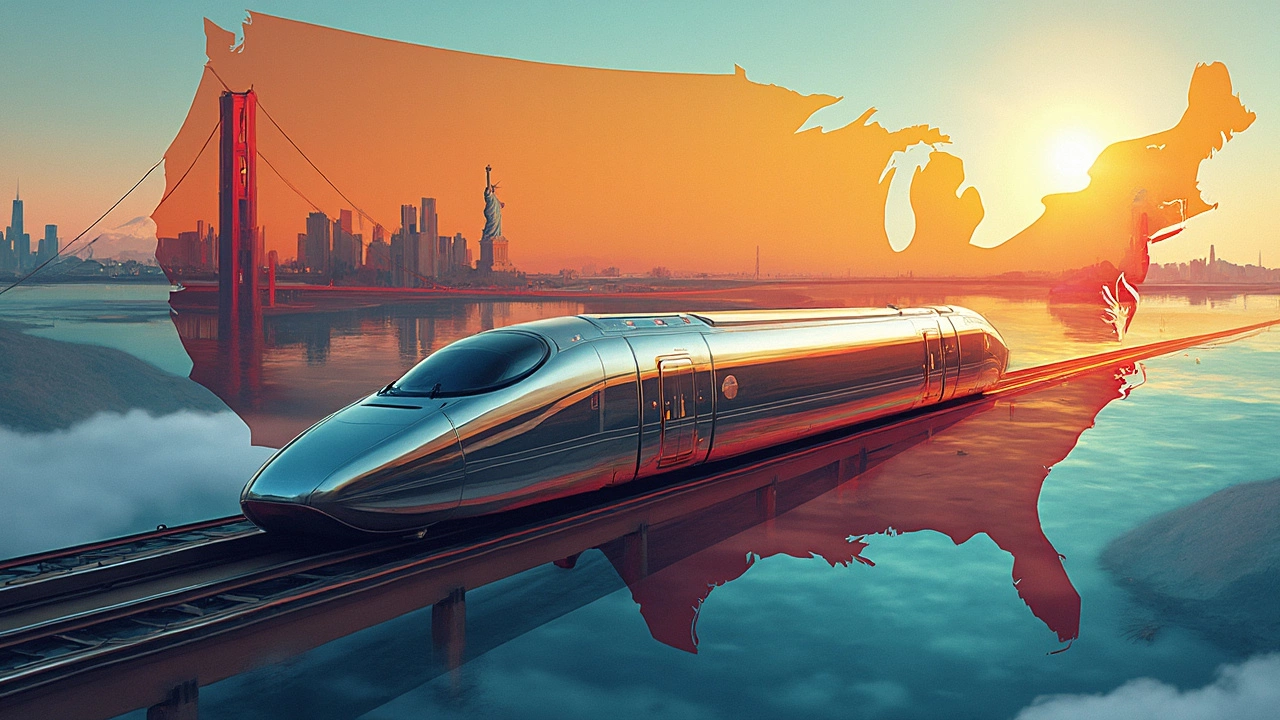
Bullet Train Journey: New York to California in Record Time
Imagine cruising across the country from New York to California in less time than a current flight. Bullet trains promise an exhilarating yet comfortable travel experience. This article unpacks the speed limits, potential routes, and time-saving magic a bullet train could offer. Learn how traveling coast-to-coast could transform with this high-speed rail innovation as we explore the possibilities for luxury train journeys.
Read More