Oldest City in India: Discover India’s Ancient Urban Roots
When we talk about the oldest city in India, a continuous urban settlement with deep cultural, religious, and historical significance dating back over 3,000 years. Also known as one of the world’s oldest continuously inhabited cities, it’s not just a place on a map—it’s a living archive of rituals, languages, and traditions that never stopped. This isn’t about ruins buried under sand. It’s about streets where priests still chant Vedic hymns, where merchants sell the same spices their ancestors did, and where pilgrims walk the same paths as they did in 1500 BCE.
Varanasi is the most widely recognized answer to the question of India’s oldest city, but it’s not alone. Patna, once known as Pataliputra, the capital of the Mauryan Empire under Emperor Ashoka. Also known as the ancient seat of Indian political power, it was one of the largest cities in the world during its peak, with stone roads, drainage systems, and a royal court that influenced the entire subcontinent. Then there’s Madurai, a Dravidian city older than many European capitals, home to the Meenakshi Temple and a thriving Tamil literary tradition since the Sangam period. Also known as the Athens of the East, it’s where poetry, trade, and temple rituals have flowed uninterrupted for millennia. These aren’t just tourist spots—they’re the reason India’s culture feels so layered, so deep, so alive.
What makes these cities different from others isn’t just their age—it’s how they’ve survived. While empires rose and fell, these places adapted. They didn’t get abandoned. They didn’t get rebuilt over old foundations. They grew. New temples rose beside ancient ones. Modern buses rolled past centuries-old stepwells. People still wake before dawn to bathe in the Ganges, just as their grandparents did. This continuity is rare in human history. You won’t find this kind of unbroken thread in Rome, Athens, or Beijing. In India, it’s everyday life.
And that’s why the oldest city in India isn’t just a trivia answer. It’s a doorway into understanding how culture sticks, how faith endures, and how a city can be both ancient and utterly modern at the same time. The posts below dig into these places—not as museum pieces, but as living, breathing worlds. You’ll find guides to walking their streets, tips for visiting their temples without getting lost in the crowds, and stories from locals who’ve spent their whole lives in these ancient spaces. Whether you’re planning a trip or just curious, these stories show you what it really means to walk where history never slept.
- Oct, 8 2025
- 0 Comments
- Aaron Blackwood
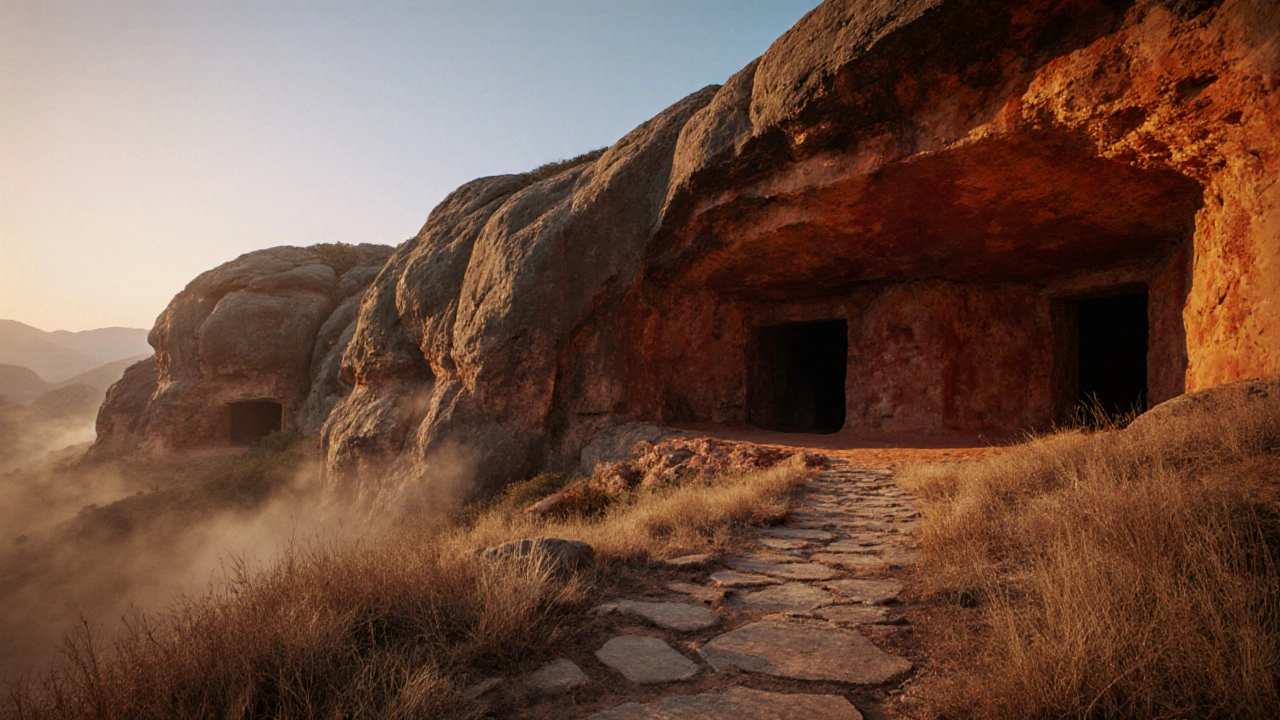
India's Oldest Archaeological Site: The Most Ancient Place Revealed
Discover why Bhimbetka Rock Shelters is India's most ancient place, its prehistoric art, how it's dated, and tips for visiting this UNESCO World Heritage site.
Read More