Temple Clothing Guidelines: What to Wear at Indian Temples
When you step into an Indian temple, a sacred space where devotion, tradition, and daily life intersect. Also known as mandir, it’s not just a building—it’s a living spiritual center where dress isn’t optional, it’s part of the ritual. Wearing the wrong thing won’t just make you stand out—it can offend, distract, or even get you turned away. This isn’t about rules for rules’ sake. It’s about showing respect where millions kneel every day.
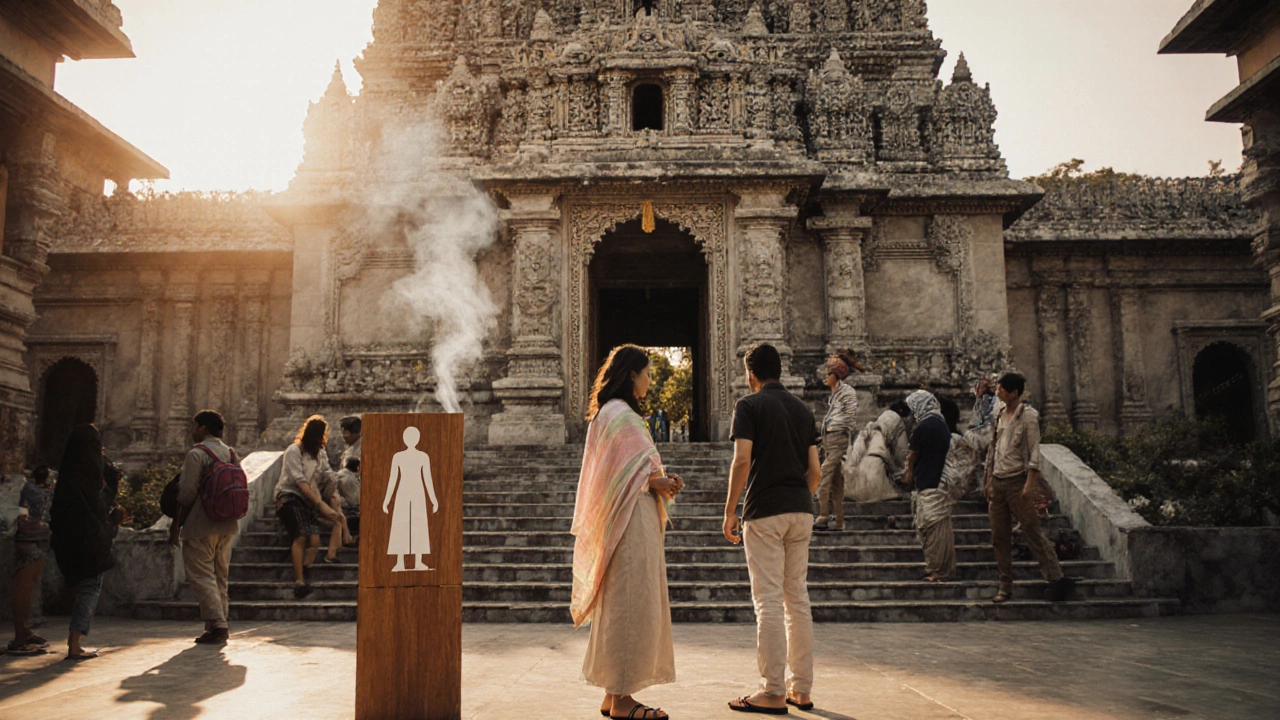
Most temples in India, whether in Varanasi, Rameshwaram, or Tirupati, expect modesty. That means covering shoulders, arms, and legs. For women, salwars, long skirts, or sarees are common. Men should wear long pants and avoid tank tops. Bare feet are often required inside the inner sanctum, so leave shoes outside—this isn’t just tradition, it’s hygiene and purity. Some temples, like the one in Sabarimala, have strict rules: no makeup, no jewelry, even no hair ties for certain pilgrims. These aren’t random. They’re tied to centuries-old beliefs about physical and spiritual cleanliness.
It’s not just about what you wear—it’s about what you carry. Bags with alcohol, leather, or meat are often banned. Even phones and cameras can be restricted in the main shrine. Why? Because temples aren’t tourist attractions. They’re active places of worship. A woman in a short dress walking through a crowd of devotees praying isn’t just inappropriate—it breaks the quiet focus everyone’s trying to hold. And yes, this applies to foreigners too. You don’t need to dress like a monk, but you do need to dress like someone who understands this isn’t a museum.
There are exceptions. Some modern temples in big cities are more relaxed, especially if they’re built for tourism. But if you’re heading to a pilgrimage site like Kashi Vishwanath or Tirumala Venkateswara, assume the strictest rules apply. Always check ahead—some temples have free loaner clothing at the entrance if you show up unprepared. And if you’re unsure? Cover up more than you think you need to. Better to feel a little warm than to feel guilty.
These temple clothing guidelines aren’t about control—they’re about harmony. They help keep the space sacred for those who come to pray, not to pose. When you follow them, you’re not just obeying a rule—you’re joining a quiet, ancient rhythm. You become part of the flow, not an interruption.
Below, you’ll find real stories and practical tips from travelers who’ve learned these rules the hard way. Some got turned away. Others were given saris on the spot. All of them walked away with more than just photos—they walked away with understanding.
- Oct, 15 2025
- 0 Comments
- Aaron Blackwood
Can I Wear Jeans to a Hindu Temple? Dress Rules Explained
Discover if jeans are acceptable in Hindu temples, learn proper attire, regional dress rules, and practical tips for respectful temple visits across India.
Read More