What to Wear to Temple: Dress Code Guide for Indian Temples
When visiting a temple, a sacred space in India where devotion, tradition, and culture come together. Also known as a mandir, it’s not just a building—it’s a living part of daily spiritual life. How you dress matters. Unlike museums or tourist spots, temples demand respect through modesty. Wearing shorts, tank tops, or revealing clothes won’t get you turned away with a warning—you might not even be allowed inside. This isn’t about rules for the sake of rules. It’s about honoring centuries of practice and the people who come here to pray.
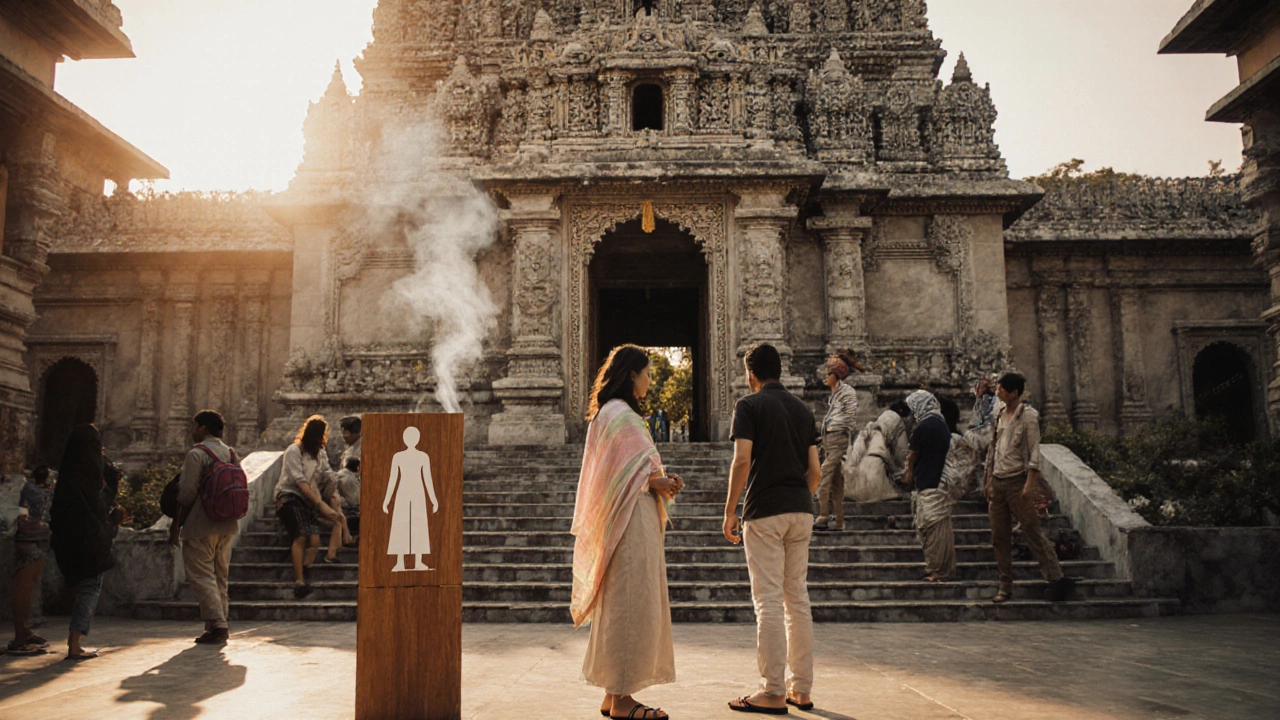
For women, those visiting Indian temples, the standard is simple: cover your shoulders and knees. A long skirt, salwar kameez, or even a saree works. If you’re wearing pants, make sure they’re loose and full-length. A light scarf or shawl is smart—it covers your head if needed, and you can drape it over your shoulders in a hurry. Men should wear long pants and a shirt that covers the chest. Bare feet are common at many temples, so slip-on shoes are ideal. You’ll often find shoe storage near the entrance. Don’t bring leather belts or wallets into some shrines—especially in South India, where even animal products are avoided in sacred spaces.
There’s no one-size-fits-all dress code across India. In Rameshwaram, a major pilgrimage site in Tamil Nadu, you’ll see men in dhotis and women in cotton sarees. In Kashi Vishwanath, the holy temple in Varanasi, you’ll find pilgrims in simple white or saffron clothes. But in big cities like Delhi or Jaipur, you’ll see tourists in jeans and t-shirts—and sometimes they’re turned away. The rule isn’t about fashion. It’s about blending in, showing humility, and keeping the space sacred. If you’re unsure, ask someone at the temple gate. Most staff will point you to a nearby shop where you can rent a dhoti or dupatta for a few rupees.
What you wear also affects your experience. When you dress respectfully, you’re treated differently. Priests are more likely to offer you prasad. Locals smile more. You feel less like an outsider and more like a guest. And when you walk into a temple with clean feet and covered arms, you’re not just following a rule—you’re stepping into a rhythm older than most modern cities. The posts below give you real examples: how to dress for the Kumbh Mela, what to wear in North India versus South India, and how to handle temple visits during festivals like Diwali. No fluff. Just what works.
- Oct, 15 2025
- 0 Comments
- Aaron Blackwood
Can I Wear Jeans to a Hindu Temple? Dress Rules Explained
Discover if jeans are acceptable in Hindu temples, learn proper attire, regional dress rules, and practical tips for respectful temple visits across India.
Read More