What is Considered a Weekend Trip? Defining the Short Break
- Oct, 20 2026
- 0 Comments
- Aaron Blackwood
Weekend Trip Classifier
Enter your travel details below to see how your upcoming getaway is classified according to standard travel industry definitions.
You pack your bag on Friday evening, drive for two hours, and check into a hotel. You spend Saturday exploring, maybe Sunday morning too, and then you’re back home by Monday lunchtime. Is that a vacation? A day trip? Or is it officially a weekend trip? The answer isn’t just about how many nights you sleep away from home; it’s about the psychological shift, the logistics, and the commitment involved.
Most people get this wrong because they confuse "duration" with "experience." A 24-hour stay might feel like a massive escape if you live in a dense city, while a three-night stay might feel rushed if you’re trying to see five different cities. So, what actually defines a weekend trip? It’s not just a calendar entry. It’s a specific type of travel behavior designed to maximize rest or adventure within the constraints of a standard work week.
The Core Definition: Time vs. Experience
At its simplest, a weekend trip is a short-term journey that begins and ends within a single weekend period. But "weekend" itself is flexible. For most corporate workers, that means leaving Friday afternoon or evening and returning Sunday night or Monday morning. However, the true marker isn’t the clock-it’s the separation from your daily routine.
If you sleep at home, even if you drive three hours to a museum, you’re likely taking a day trip. The defining feature of a weekend trip is the overnight stay. This creates a psychological boundary. When you wake up in a different bed, your brain registers that you are "off." You aren’t checking emails between brushing your teeth and making coffee. You are in a different mode.
Think about the difference between going to a nearby town for dinner and staying there. The dinner is an event. The stay is a trip. The luggage you bring-even if it’s just a backpack-signals intent. You’ve committed to being unreachable for a few hours. That commitment is the core of the weekend trip identity.
Duration Standards: How Long is Too Long?
There is no law governing trip lengths, but travel industry standards and behavioral patterns give us clear benchmarks. Here is how experts and frequent travelers categorize short breaks:
| Trip Type | Typical Duration | Key Characteristic | Best For |
|---|---|---|---|
| Day Trip | 6-10 hours (no overnight) | No luggage required; return same day | Cultural sites, nature walks, dining |
| Weekend Trip | 1-3 nights | Overnight stay; limited packing | Relaxation, local exploration, romantic escapes |
| Long Weekend | 3-4 nights | Often includes a public holiday | Distant destinations, deeper immersion |
| Short Vacation | 4-7 nights | Requires significant planning and time off | International travel, major holidays |
Notice the sweet spot for a weekend trip: one to three nights. If you go longer than three nights without taking extra leave days, you’re encroaching on what we’d call a "long weekend" or a mini-vacation. The magic of the weekend trip is its brevity. It’s low-risk. If you hate the hotel, you can leave early. If you love it, you can extend slightly, but the default plan is to be back by Monday.
Distance and Logistics: The Two-Hour Rule
How far do you have to go? There’s a common heuristic among travel writers called the "Two-Hour Rule." If a destination is within two hours of travel time (by car, train, or short flight), it qualifies as a viable weekend trip candidate for most people. Why? Because once you exceed that threshold, the cost of fatigue outweighs the benefit of the break.
Consider a traveler in Wellington, New Zealand. Driving to Nelson takes about four hours. Is that a weekend trip? Technically, yes, if you stay overnight. But practically, it feels more like a small expedition. You spend eight hours total in the car. Your actual leisure time shrinks dramatically. Compare that to driving to Kapiti Coast, which takes an hour. You gain six hours of pure relaxation for every hour spent traveling. That efficiency is key.
This doesn’t mean you can’t fly somewhere for a weekend. Flights to Sydney or Auckland from Wellington take under two hours. Add airport security and transit, and you’re looking at four to five hours door-to-door. That’s borderline. Many people do it, but it requires strict discipline. You need to book early flights and late returns to maximize ground time. If you miss your connection, the whole trip collapses. That fragility is part of the weekend trip DNA.

Packing and Preparation: The Minimalist Mindset
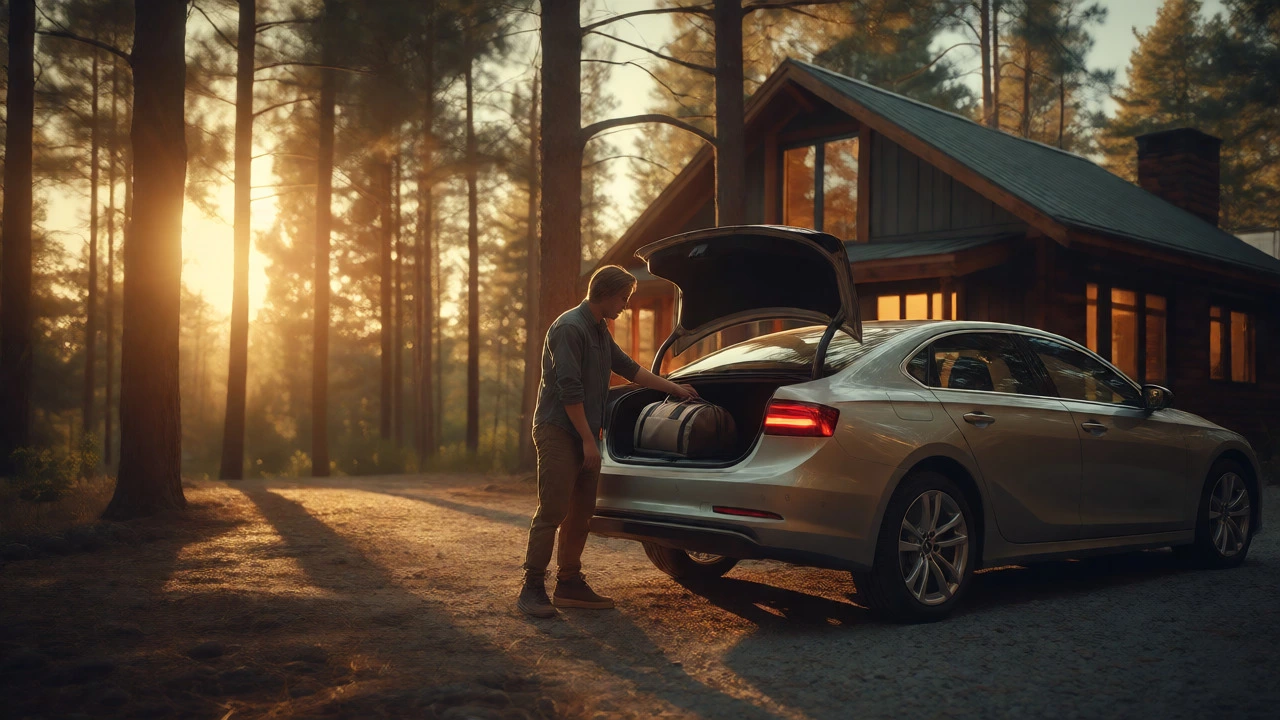
A weekend trip demands minimalism. You shouldn’t need checked baggage. If you’re dragging a large suitcase, you’re probably over-packing for a short break. The ideal weekend trip involves a carry-on, a duffel bag, or a sturdy backpack. Everything fits in the overhead bin or the trunk of a sedan.
This constraint forces better decision-making. You pick one outfit for dinner, one for activities, and essentials for hygiene. You don’t pack "just in case" items. You research the weather. You know exactly what you’ll wear. This reduction in cognitive load is actually a huge part of the appeal. In our daily lives, we make hundreds of decisions. On a weekend trip, those decisions are pre-made. You arrive, unpack quickly, and start living.
- Luggage Size: Carry-on only (under 10kg/22lbs).
- Clothing: Mix-and-match basics; one statement piece for evenings.
- Tech: Phone, charger, maybe a camera. Leave the laptop unless necessary.
- Documents: ID, booking confirmations saved offline.
If you find yourself packing a full-size toiletry kit or three pairs of shoes, reconsider your itinerary. Are you trying to do too much? A weekend trip should feel light, physically and mentally.
The Psychological Component: Why We Need Them
Why do we obsess over these short breaks? It’s not just about seeing new places. It’s about breaking the cycle. Work weeks can feel repetitive. Wake up, commute, work, commute, eat, sleep. Repeat. A weekend trip interrupts this loop. Even if you go to a place that looks similar to home, the change in environment resets your attention span.
Psychologists refer to this as "attention restoration theory." Natural environments or novel urban settings allow your directed attention mechanisms to rest. You don’t have to hike a mountain to get this benefit. Sitting in a café in a neighboring town where nobody knows you allows your brain to disengage from professional roles. You become just a person having coffee, not an employee having a meeting.
Moreover, weekend trips offer high ROI (Return on Investment) for happiness. Studies suggest that experiences bring more lasting joy than material goods, but long vacations require saving months in advance. A weekend trip costs less, plans faster, and provides immediate relief. It’s accessible joy. You don’t need to wait for December to feel alive.

Common Misconceptions About Weekend Trips
People often dismiss weekend trips as "not real travel." They think you need to cross an ocean or visit a UNESCO World Heritage site to count. This is nonsense. Travel is defined by movement and mindset, not passport stamps.
Another myth is that weekend trips must be relaxing. For some, sitting still for two days causes anxiety. They prefer adventure. Biking trails, kayaking, or visiting multiple museums in rapid succession can define their weekend. The goal isn’t always rest; sometimes it’s stimulation. Both are valid forms of escape.
Finally, there’s the idea that you need a partner or group. Solo weekend trips are increasingly popular. They offer ultimate freedom. You wake up when you want. You eat what you want. You change your mind halfway through the day without negotiating. For many introverts, a solo weekend trip is the only way to truly recharge.
Planning Your First Successful Weekend Getaway
If you’re new to this, here’s a simple framework to ensure your first attempt doesn’t turn into a stress-fest.
- Choose a Destination Within Reach: Pick a place less than two hours away. Proximity reduces friction.
- Book Early: Secure accommodation by Tuesday or Wednesday. Last-minute bookings spike prices and limit options.
- Plan One Anchor Activity: Don’t schedule every hour. Pick one thing you really want to do (a concert, a hike, a specific restaurant). Build the rest around it loosely.
- Set a Budget Cap: Decide how much you’ll spend before you go. This prevents "vacation spending creep" where you buy things you don’t need just because you’re out.
- Disconnect: Turn off non-essential notifications. Check email only once a day, if at all.
Remember, the goal is not perfection. If it rains, read a book. If the museum is closed, walk around. Flexibility is your superpower. Unlike a ten-day tour with rigid itineraries, a weekend trip allows you to pivot instantly.
Frequently Asked Questions
Is a one-night stay considered a weekend trip?
Yes, absolutely. A one-night stay is the minimum requirement to distinguish a trip from a day outing. Sleeping away from home creates the psychological separation needed to qualify as a weekend trip, even if the duration is short.
How much money should I budget for a weekend trip?
Costs vary wildly based on location and style. Locally, you might spend $150-$300 USD covering gas, a modest hotel, and meals. Flying domestically could push this to $500-$800. The key is to set a cap beforehand. Remember, expensive doesn't mean better; a cozy cabin nearby often beats a luxury resort far away.
Can I take a weekend trip alone?
Definitely. Solo weekend trips are highly recommended for self-discovery and complete autonomy. You control the pace, the food, and the activities. Many hotels and hostels cater specifically to solo travelers, offering safe and social environments if you wish to meet people, or quiet corners if you prefer solitude.
What is the biggest mistake people make on weekend trips?
Overpacking and overscheduling. Trying to see everything leads to burnout. You end up exhausted rather than refreshed. Stick to one main activity per day and leave room for spontaneity. Also, avoid bringing work laptops unless absolutely critical; the mental disconnect is vital.
Does a weekend trip count as PTO (Paid Time Off)?
Usually not, unless you take a Friday or Monday off. Standard weekend trips utilize existing free time. However, combining a weekend with one PTO day creates a "long weekend," which significantly expands your options for distance and depth of experience.