Where Do Indian Tourists Travel the Most in North India?
- Mar, 10 2026
- 0 Comments
- Aaron Blackwood
North India Trip Cost Calculator
Plan your North India domestic tour with this calculator based on the article's key destinations. Choose your preferred destination, season, and budget level to estimate total costs.
Golden Triangle
Delhi, Agra, Jaipur
Temple Trails
Varanasi, Vaishno Devi, Char Dham
Winter Getaways
Shimla, Manali, Mussoorie
What Your Cost Includes
Travel Tip
According to the article, 68% of North Indian tourists say hill station trips are their only time unplugged. Consider choosing a destination that offers both sightseeing and relaxation!
Every year, millions of Indian tourists hit the road, trains, and airports-not to escape the country, but to explore its own soul. And when it comes to where they go most, one region stands out above all: North India. It’s not just about famous landmarks. It’s about history that breathes, temples that hum with prayer, and cities that feel like stepping into another time. For most Indian families, a trip to North India isn’t a vacation-it’s a ritual.
The Golden Triangle: Delhi, Agra, Jaipur
If you ask any Indian traveler where they’ve been, the answer often starts with the Golden Triangle. It’s not a tourist trap-it’s a cultural heartbeat. Delhi, Agra, and Jaipur form a loop that nearly every Indian family visits at least once. Why? Because this route packs centuries of history into a single week.
Delhi isn’t just the capital. It’s a layered city where Mughal forts sit beside modern markets. Visitors walk through Humayun’s Tomb, then eat parathas at Paranthe Wali Gali. They visit the Red Fort, where Indian independence was declared, and then pray at the Akshardham Temple. It’s not one experience-it’s ten.
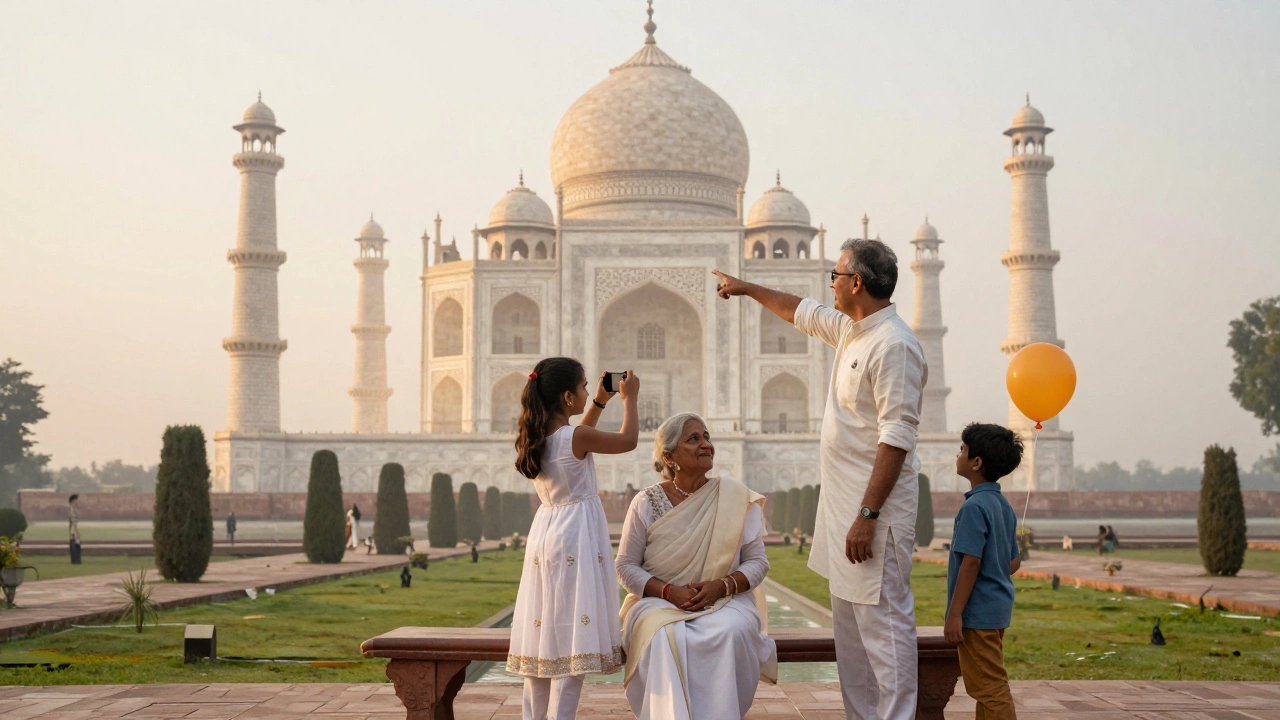
Agra? That’s where the Taj Mahal pulls people in. Not just foreigners. Indians come here in droves. Parents bring their kids. Couples renew vows. Grandparents sit quietly in the gardens, remembering their own first visit decades ago. The Taj isn’t just a monument. It’s a shared memory. Over 6 million Indians visited Agra in 2025 alone, according to Uttar Pradesh tourism data.
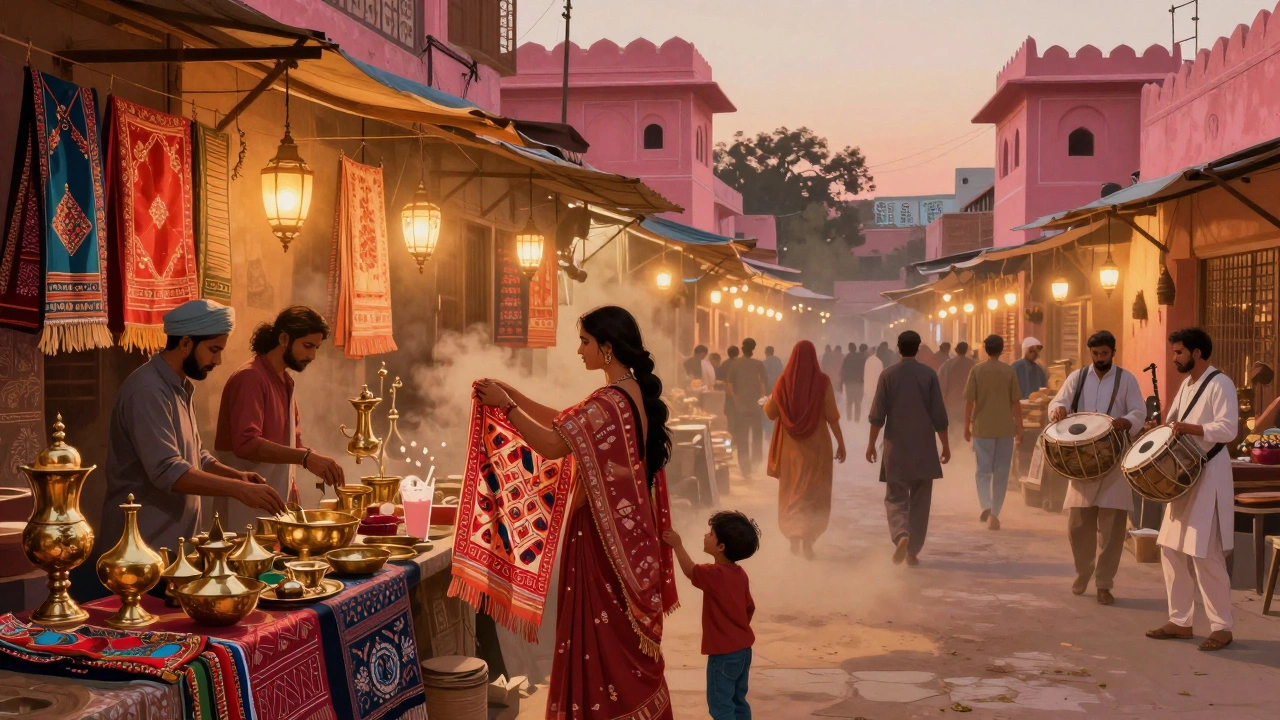
Jaipur, the Pink City, is the final stop. Amber Fort, City Palace, Hawa Mahal-it’s all here. But what draws Indian tourists isn’t just the architecture. It’s the bazaars. Johari Bazaar for jewelry. Bapu Bazaar for textiles. People come to buy silk, brassware, and block-printed fabrics. Many return every year, not for sightseeing, but for shopping.
Temple Trails: The Spiritual Pull
North India is home to some of the most visited religious sites in the country. And for Indian tourists, pilgrimage isn’t optional-it’s expected. The Char Dham Yatra (Yamunotri, Gangotri, Kedarnath, Badrinath) draws over 1.2 million pilgrims each year. Most start from Haridwar or Rishikesh, then head into the Himalayas.
But it’s not just the Himalayas. Varanasi, though technically in Uttar Pradesh, is often grouped with North India tourism. Thousands of Indians come here to bathe in the Ganges, light diyas, and perform last rites for loved ones. It’s not a tourist attraction-it’s a spiritual necessity.
Shri Mata Vaishno Devi in Jammu is another massive draw. Over 8 million pilgrims visited in 2025. The trek up the mountain is tough, but families make it together. Many book tickets months in advance. The temple doesn’t just welcome visitors-it becomes part of their family story.
Winter Getaways: Shimla, Mussoorie, Manali
When December hits, Indian families pack their winter coats. Not for a beach holiday, but for snow. Shimla, Mussoorie, and Manali become packed with travelers from Delhi, Punjab, Haryana, and even Mumbai.
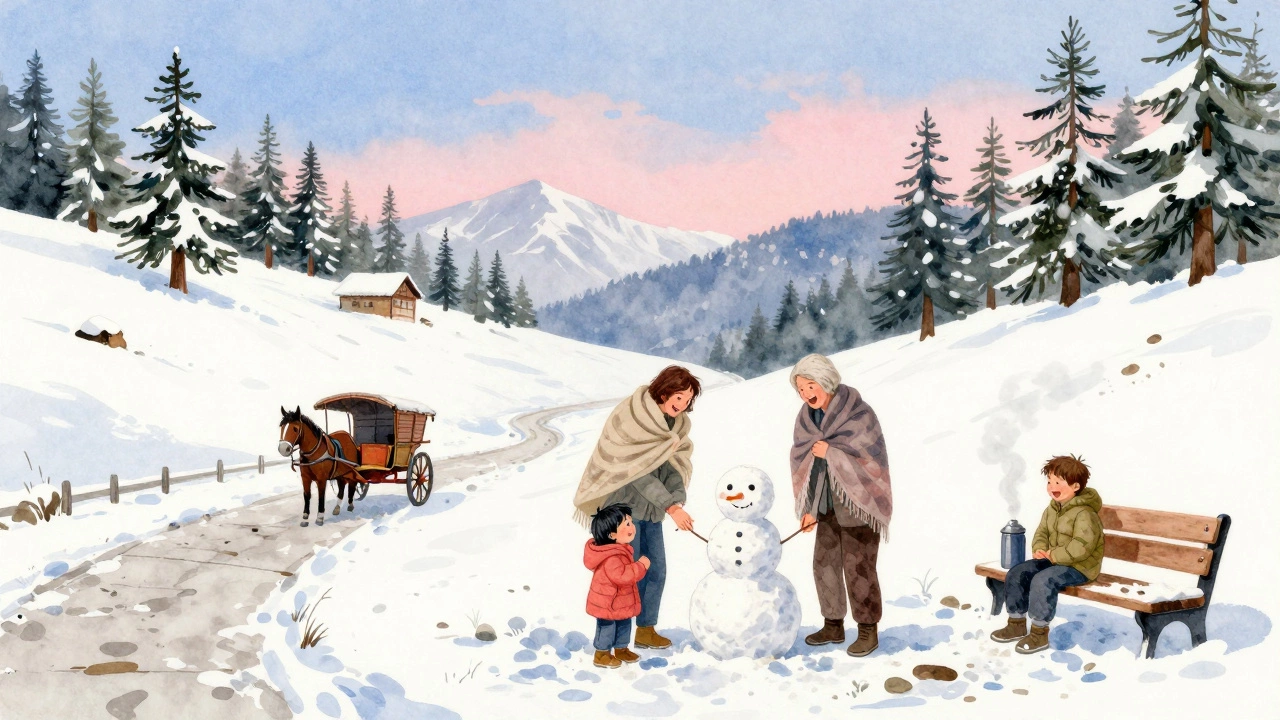
Why? Because snow is rare in most of India. A child in Jaipur may never see snow until they’re 12. So families plan trips to Kufri or Narkanda. They build snowmen, ride pony carts, and sip hot chocolate in cozy cafés. Manali’s Solang Valley turns into a winter sports hub. Skiing, paragliding, zorbing-it’s all here.
And it’s not just about fun. These hill stations are where families reconnect. No phones. No work. Just quiet mornings and long walks. A 2025 survey by the Indian Institute of Tourism and Travel Management found that 68% of North Indian tourists said their hill station trips were the only time they truly unplugged.
Historic Forts and Forgotten Towns
Beyond the well-known spots, Indian tourists are rediscovering quieter corners. Ranthambore isn’t just for wildlife-it’s for history. The fort there, built in the 10th century, is now a popular weekend stop. Families climb its walls, watch the sunset, and learn about the Rajput kings who once ruled here.
Chandigarh, planned by Le Corbusier, is a favorite among educated urban travelers. It’s clean, green, and calm. People come for the Rock Garden, Sukhna Lake, and the Open Hand Monument. It’s not flashy, but it’s deeply satisfying.
And then there’s Alwar in Rajasthan. Less crowded than Jaipur, but full of charm. Bhangarh Fort, one of India’s most haunted sites, draws curious tourists. The City Palace, with its museum of royal artifacts, is often overlooked-but not by Indian families who value heritage.
Why North India? The Real Reasons
It’s easy to say Indians travel here because it’s famous. But the truth is deeper.
First, accessibility. North India has the best rail and road links. Trains like the Shatabdi and Rajdhani connect cities in under 6 hours. Flights are cheap and frequent. You can fly from Lucknow to Delhi in 90 minutes.
Second, affordability. A 7-day trip to the Golden Triangle costs under ₹15,000 per person-including stays, food, and transport. That’s less than a smartphone payment. For middle-class families, it’s doable.
Third, cultural familiarity. You don’t need to learn a new language. The food tastes like home. The customs feel familiar. Even the crowds feel comforting.
And fourth-emotional connection. These places are in textbooks, TV shows, and family stories. Visiting them feels like completing a chapter in your life.
What’s Changing in 2026?
Indian tourists are shifting. More are skipping group tours. They’re choosing private drivers, homestays, and offbeat routes. Agra is still packed, but now people are adding Fatehpur Sikri, Sikandra, or the lesser-known Itmad-ud-Daulah tomb to their itinerary.
Temple tourism is growing too. The Kashi Vishwanath Corridor in Varanasi, completed in 2023, now handles over 100,000 visitors daily. Many Indian families now plan their entire trip around temple visits.
And eco-tourism is creeping in. Jim Corbett National Park now offers solar-powered lodges. Nainital’s lakeside trails are being restored. Indian tourists are starting to care about sustainability-not because it’s trendy, but because they want these places to last for their kids.
What You Won’t See in Brochures
Most travel guides focus on the Taj or the forts. But the real magic? It’s in the small moments.
A grandmother teaching her granddaughter how to fold a prayer flag in Rishikesh.
A father and son sharing a plate of dal baati churma in Jaisalmer.
A group of college friends singing Bollywood songs on a train to Shimla.
These aren’t tourist activities. They’re life moments. And that’s why North India remains the top destination for Indian travelers. It’s not just a place. It’s a feeling.
What are the top 3 destinations for Indian tourists in North India?
The top three are Delhi, Agra, and Jaipur-the Golden Triangle. Delhi for its history and diversity, Agra for the Taj Mahal, and Jaipur for its forts and markets. Together, they account for over 40% of all domestic tourist visits in North India.
Why do Indian tourists prefer North India over South India?
North India is closer to major population centers like Delhi, Punjab, and Uttar Pradesh. It’s easier to reach, cheaper to travel, and more familiar culturally. The language, food, and religious sites are more aligned with the majority of Indian households. South India has its own appeal, but for first-time travelers, North India feels more accessible.
Is North India safe for family travel?
Yes. North India is one of the safest regions for domestic tourism. Cities like Jaipur, Shimla, and Rishikesh have low crime rates and strong tourism infrastructure. Most hotels and train stations have dedicated family sections. Local guides are trained to assist Indian tourists, and emergency services are reliable.
When is the best time to visit North India?
October to March is ideal. The weather is cool and dry. Summer (April-June) is too hot for most travelers, especially in Delhi and Agra. Monsoon (July-September) brings heavy rain, especially in the hills. Winter is peak season-but book early. December and January are the busiest months.
How much does a typical North India trip cost?
A 7-day trip for two people, including accommodation, food, transport, and entry fees, typically costs between ₹20,000 and ₹35,000. Budget stays start at ₹800/night. Mid-range hotels cost ₹2,500-₹4,000. Train tickets (AC 3-tier) from Delhi to Agra are around ₹500-₹700. Many families save up for months to make this trip.