Which City Is Called the Blue City of India? Jodhpur’s Iconic Blue Homes Explained
- Dec, 9 2025
- 0 Comments
- Aaron Blackwood
Blue Paint Calculator
Jodhpur's Traditional Blue Paint Calculator
Calculate how much natural paint you'd need for your home
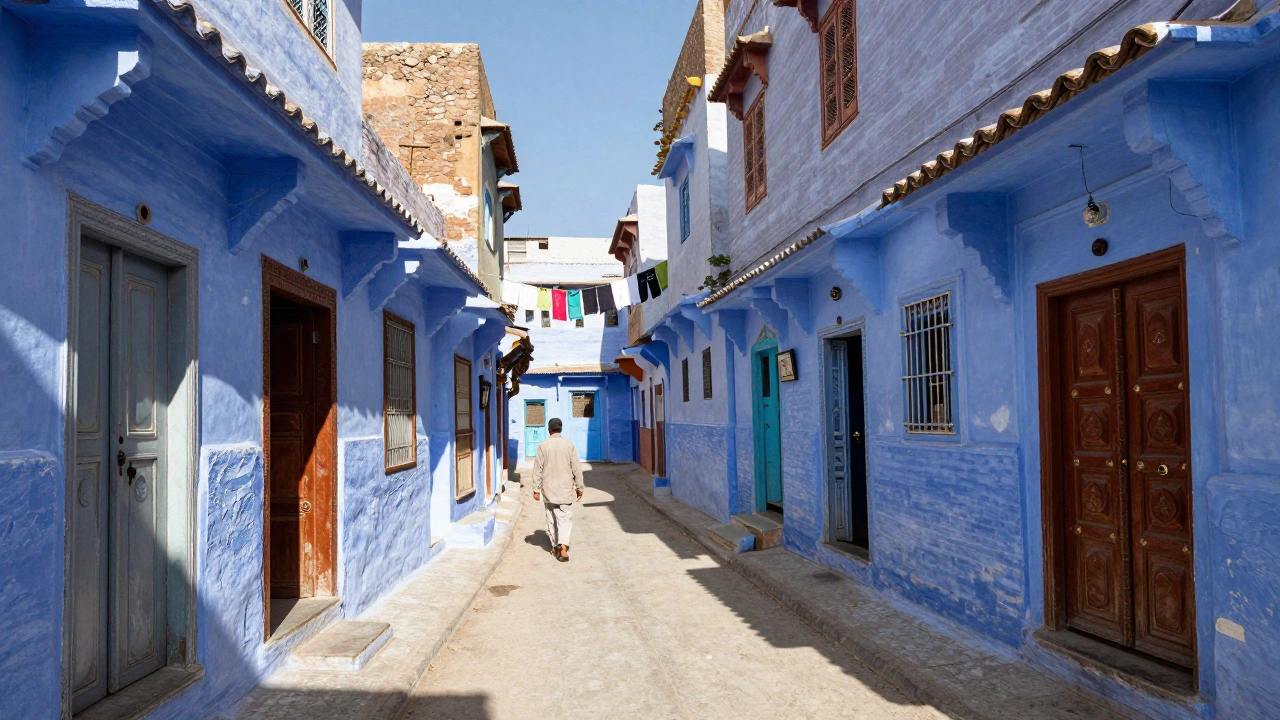
Walk through the narrow alleys of Jodhpur, and you’ll feel like you’ve stepped into a painting. Every wall, every door, every rooftop is painted in shades of blue-deep indigo, sky blue, turquoise. This isn’t just decoration. It’s history, culture, and climate all rolled into one. Jodhpur is known as the Blue City of India, and it’s not just a nickname-it’s a living identity.
Why Jodhpur Turned Blue
The blue color isn’t random. It started with the Brahmins, the priestly caste in Hindu society, who painted their homes blue to signal their status. Over time, others followed. By the 19th century, blue had become a symbol of protection, not just for social rank but for practical reasons too.
Jodhpur sits in the Thar Desert, where temperatures regularly hit 45°C in summer. Light colors reflect heat, and blue, especially when mixed with lime, helps keep homes cooler. The lime also acts as a natural disinfectant, keeping insects and mold away. What began as a caste marker became a smart, climate-responsive design choice.
Today, over 80% of homes in the old city-especially around the Mehrangarh Fort-are painted blue. Locals still maintain the tradition. It’s not a tourist gimmick. It’s a cultural practice passed down through generations.
The View from Mehrangarh Fort
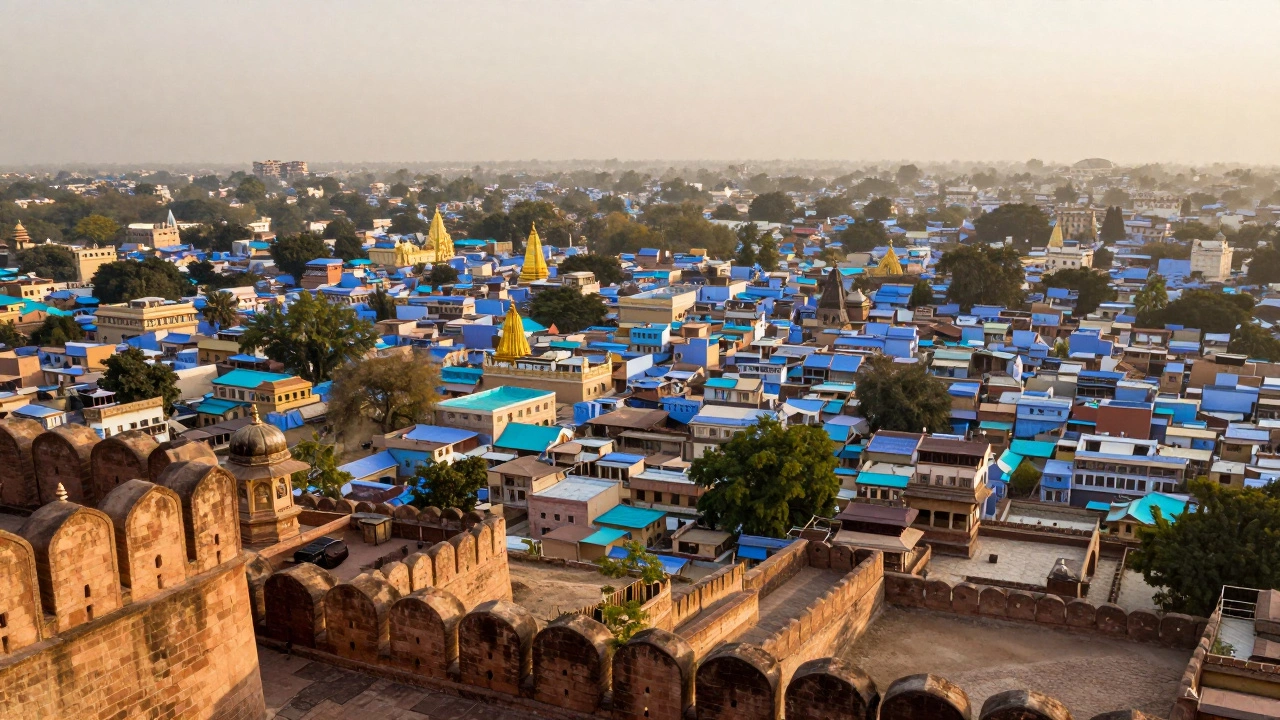
The best way to see the Blue City is from the top of Mehrangarh Fort. Built in 1459, this massive stone fortress towers over the city. From its ramparts, you look down into a sea of blue rooftops, broken only by the golden spires of temples and the occasional green of a tree.
The fort itself is a museum of Rajasthani royalty. Inside, you’ll find ornate palaces, weapons from medieval battles, and hand-painted murals. But the real show is the view. On a clear day, the blue houses stretch out for miles, fading into the dusty horizon. It’s one of the most photographed scenes in India-and for good reason.
Who Lives in the Blue Houses?
It’s easy to assume the entire city is blue, but it’s not. The blue zone is mostly concentrated in the old city, near the fort. Newer areas, especially on the outskirts, are painted in modern colors. The blue homes are mostly owned by families who’ve lived there for decades, sometimes centuries.
Many of these homes are now guesthouses or small museums. Locals run tea stalls in alleyways, sell hand-block printed textiles, and offer guided walking tours. You won’t find chain hotels here. Instead, you’ll stay in a restored haveli with carved wooden doors and rooftop views.
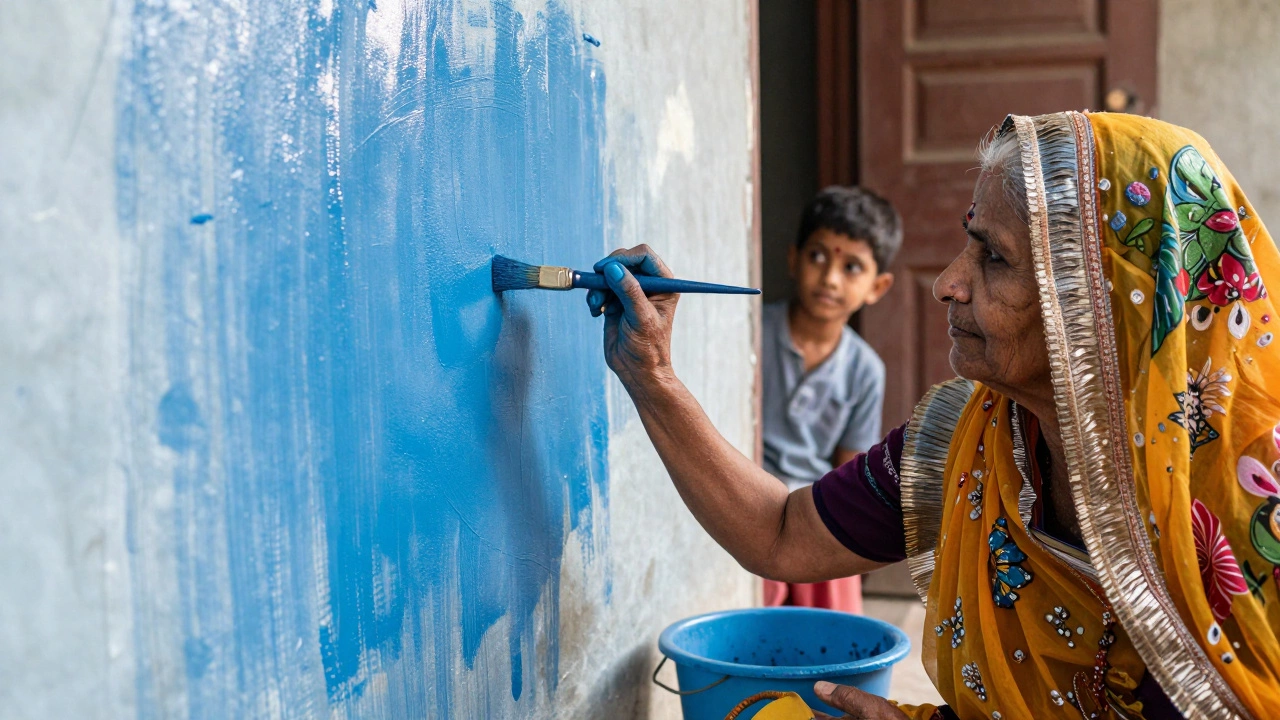
Visitors often ask if the blue paint is fading. It isn’t. Families repaint their homes every two to three years. The paint is made from natural ingredients-lime, indigo, and sometimes cow dung for binding. It’s cheap, effective, and eco-friendly.
How Jodhpur Compares to Other Colorful Cities in India
India has other colorful towns, but none match Jodhpur’s scale or consistency.
- Varanasi is known for its ghats and golden sunrises, not painted walls.
- Jaipur is the Pink City, but the pink is mostly on government buildings and major roads.
- Chennai has colorful street art, but it’s scattered and temporary.
- Goa has Portuguese-style pastel houses, but they’re spread out and not part of a unified tradition.
Jodhpur is unique because the blue isn’t curated for tourists. It’s organic, community-driven, and maintained without subsidies or government programs. That’s why UNESCO included it in its tentative list of World Heritage Sites.
What to Do in Jodhpur Beyond the Blue
While the blue houses draw crowds, Jodhpur has more to offer.
- Umaid Bhawan Palace: One of the world’s largest private residences, still home to the royal family. Part of it is a luxury hotel, part is a museum.
- Osian Temples: A cluster of ancient Jain and Hindu temples, 65 km from the city. These 8th-11th century ruins are quieter and just as stunning as those in Khajuraho.
- Bazaar Shopping: The Sardar Market is where you’ll find leather goods, silver jewelry, and handwoven carpets. Bargaining is expected-and part of the experience.
- Desert Safaris: Just outside the city, camel rides into the Thar Desert end at sunset camps with live folk music and Rajasthani thali dinners.
Many travelers combine Jodhpur with a visit to Udaipur (the City of Lakes) or Pushkar (the Holy Lake Town). The three form a classic Rajasthan triangle. But Jodhpur stands out because it’s the only place where color isn’t just a backdrop-it’s the story.
When to Visit
October to March is the best time. Temperatures are mild, the sky is clear, and the blue looks brighter against the dry landscape. Avoid May and June-heat can be unbearable.
November’s International Desert Festival is the highlight. Camels wear ornate saddles, folk dancers perform all night, and locals wear their brightest traditional clothes. The blue houses glow under festival lights.
Why the Blue City Matters
Jodhpur’s blue isn’t just pretty. It’s a rare example of a community choosing to preserve its identity over modernization. In cities like Delhi or Mumbai, old neighborhoods get bulldozed for high-rises. In Jodhpur, families still repaint their homes the same way their grandparents did.
There’s no tourism board pushing this. No ads. No hashtags. Just generations of people deciding, day after day, that blue is home.
If you want to understand India beyond temples and tuk-tuks, come here. Walk the alleys. Talk to the shopkeepers. Watch the light change on the walls as the sun sets. You’ll see why this city isn’t just called the Blue City of India-it’s the soul of Rajasthan.
Why is Jodhpur called the Blue City of India?
Jodhpur is called the Blue City of India because thousands of homes in its old city are painted blue. The tradition began with Brahmin families to mark their status, but over time, the color became popular for practical reasons-it keeps homes cool in the desert heat and repels insects. Today, the blue walls are a cultural symbol, maintained by residents without government help.
Is Jodhpur the only blue city in India?
Yes, Jodhpur is the only city in India where an entire neighborhood is uniformly painted blue as a long-standing cultural tradition. Other cities like Jaipur (Pink City) or Jaisalmer (Golden City) have color nicknames, but the color is not as widespread or deeply rooted in daily life as it is in Jodhpur.
Can you stay in a blue house in Jodhpur?
Yes, many blue houses have been converted into guesthouses and boutique hotels. Staying in one lets you experience the city from the inside-waking up to blue walls, eating breakfast on a rooftop with views of Mehrangarh Fort, and walking through alleys where the paint is still being refreshed by local families.
Is the blue paint in Jodhpur natural?
Yes, traditional blue paint in Jodhpur is made from lime, indigo, and sometimes cow dung as a binder. It’s affordable, eco-friendly, and lasts for years. Modern paints are now used too, but many families still prefer the old recipe for its cooling effect and durability.
How do I get to Jodhpur?
Jodhpur has its own airport with direct flights from Delhi, Mumbai, and Jaipur. It’s also well-connected by train-overnight trains from Delhi take about 10 hours. By road, it’s a 6-hour drive from Udaipur and 8 hours from Jaipur. The city is a major stop on the Golden Triangle tourist circuit.