Which City Is Known as the Cultural Capital of India? The Definitive Answer
- Jun, 12 2026
- 0 Comments
- Aaron Blackwood
Find Your Perfect Cultural Destination
Answer these 4 questions to discover which city aligns with your travel style.
Your Match:
Why this fits you:
- Key Vibe:
- Must Do:
- Best For:
Quick Facts
Focus:
Top Attraction:
Ask any traveler or historian which city holds the title of India's "cultural capital," and you will get a room full of arguments. Some will shout Kolkata, pointing to its literary giants and colonial architecture. Others will defend Varanasi, citing its spiritual weight that has persisted for millennia. Then there are those who champion Delhi or Mumbai for their modern artistic pulse.
The truth is messy because India doesn't have just one center of gravity. It has several. However, if we look at historical continuity, artistic output, and spiritual significance, two cities rise above the rest: Kolkata and Varanasi. But they represent two very different kinds of culture. One is the intellectual heartbeat; the other is the spiritual soul. Understanding the difference helps you decide where your next trip should go.
The Intellectual Heartbeat: Why Kolkata Claims the Title
If you define culture by literature, art, cinema, and political thought, Kolkata (formerly Calcutta) is the undisputed heavyweight champion. Located in West Bengal, this city was the capital of British India until 1911, but its cultural identity predates the British arrival. It is often called the "Cultural Capital of India" in academic and media circles because it produced some of the nation's most influential minds.
Rabindranath Tagore, the first non-European to win the Nobel Prize in Literature, lived here. Satyajit Ray, whose films changed global perceptions of Indian cinema, worked here. The city hosts the Durga Puja festival on a scale that feels less like a religious event and more like an open-air museum of sculpture, music, and community art. In 2017, UNESCO recognized Kolkata's Durga Puja as an Intangible Cultural Heritage of Humanity, cementing its status not just locally, but globally.
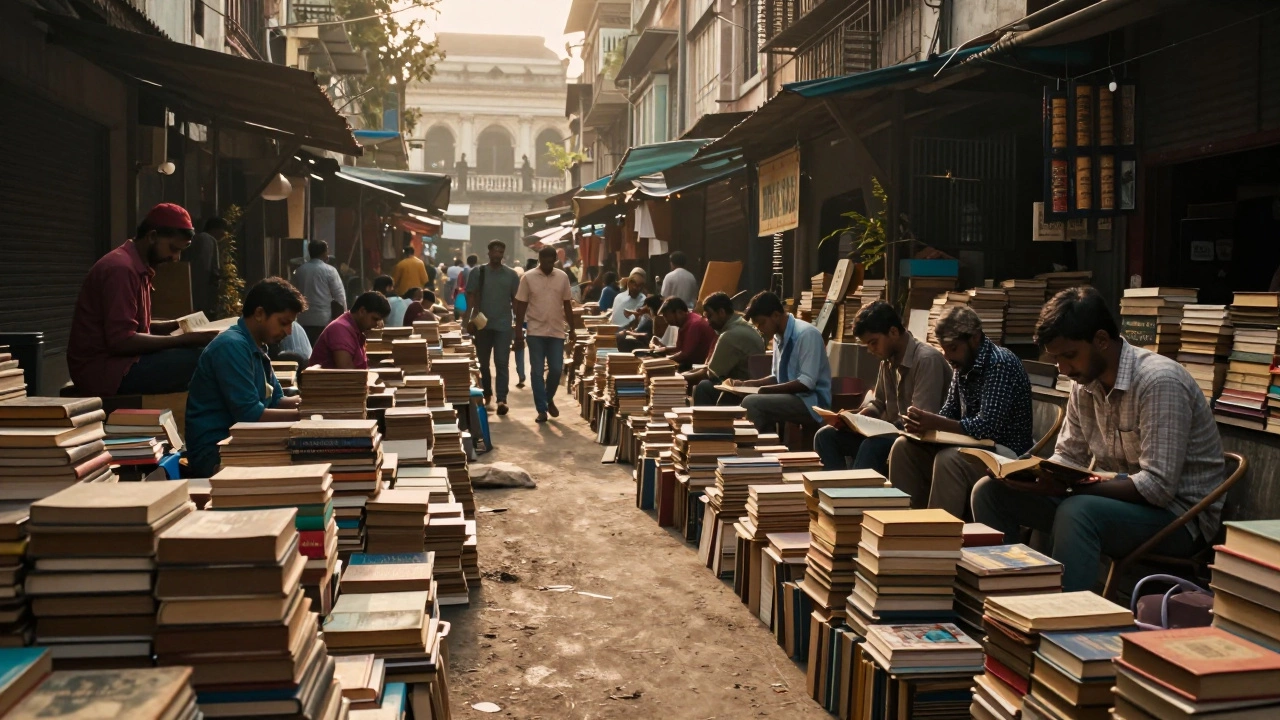
Walking through North Kolkata, you aren't just seeing buildings; you're walking through layers of history. The College Street area, known as Boi Para (Book Market), is the largest open-air book market in Asia. You can find rare manuscripts from the 18th century sitting next to new releases. This density of intellectual life creates a specific vibe. Cafes like Peter Cat Cafe or Addis Club aren't just places to drink coffee; they are stages where debates about politics, poetry, and philosophy happen daily. For a traveler seeking museums, theaters, and literary history, Kolkata offers a depth that few other cities can match.
The Spiritual Soul: Varanasi’s Timeless Pull
While Kolkata represents the mind, Varanasi represents the spirit. Located in Uttar Pradesh on the banks of the Ganges River, Varanasi is widely considered the oldest continuously inhabited city in the world. Its claim to fame isn't books or paintings, but its unbroken chain of Hindu tradition dating back over 3,000 years.
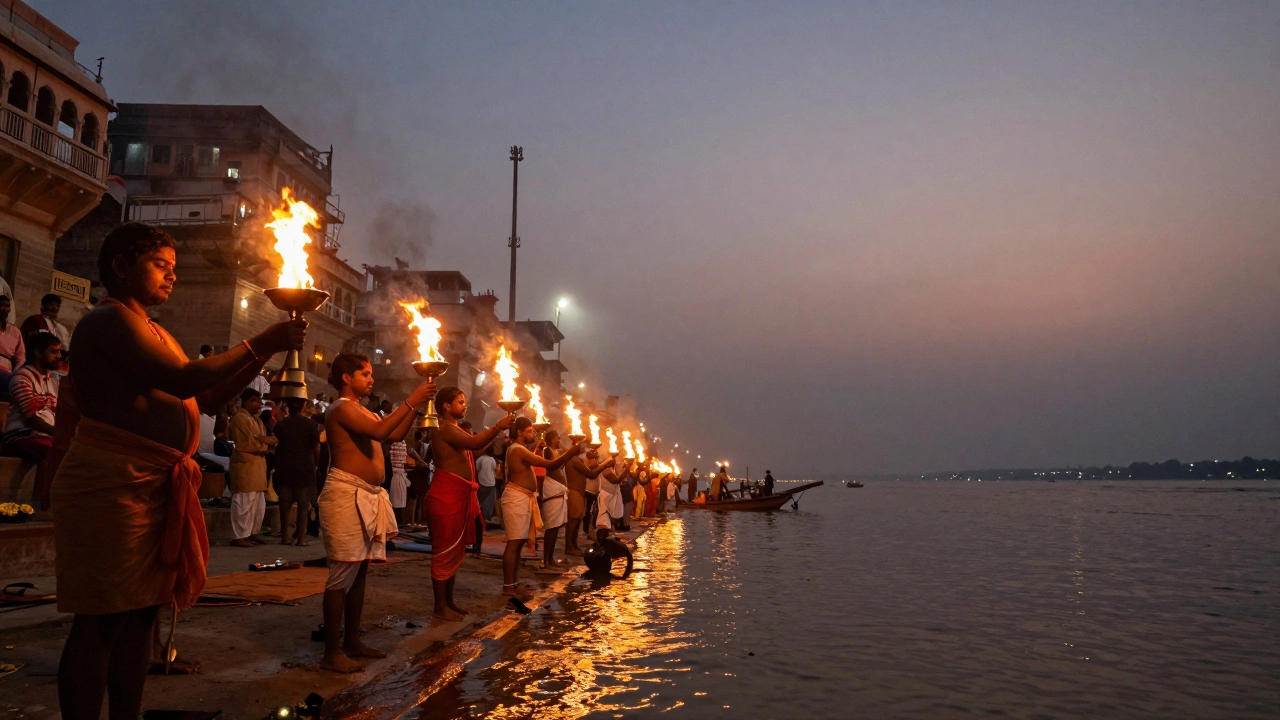
In Varanasi, culture isn't something you observe in a gallery; it's something you witness in the streets. The evening Ganga Aarti at Dashashwamedh Ghat is a theatrical display of devotion involving priests, fire, bells, and thousands of spectators. It is raw, intense, and deeply moving. The city is also the birthplace of classical Indian music and dance forms like Kathak. If you want to understand the roots of Indian spirituality, yoga, and meditation, Varanasi is the source code.
The narrow lanes of the old city, known as galis, are a labyrinth of temples, silk weaving shops, and ancient homes. The Benarasi saree industry alone supports thousands of families and represents a craft technique passed down through generations. Unlike the planned boulevards of Kolkata, Varanasi feels organic and chaotic. It challenges visitors. It demands respect. For many Indians, a trip to Varanasi is a rite of passage, making it culturally significant in a way that goes beyond tourism.
The Modern Canvas: New Delhi and Mumbai
You cannot talk about Indian culture without mentioning its modern engines. New Delhi, the national capital, acts as a melting pot. Because it is the seat of government, every state in India sends people here. This makes Delhi a microcosm of the entire country. You can eat authentic Punjabi food in Chandni Chowk, experience Mughal architecture at the Red Fort, and attend contemporary art exhibitions at the National Gallery of Modern Art all in one day.
Delhi’s culture is fast-paced, political, and diverse. It hosts the India International Centre, a hub for intellectuals, and the Qutub Minar, a symbol of medieval power. It is the place where traditional Indian values clash and merge with modern globalization. If you want to see how India interacts with the world today, Delhi is the window.
Mumbai, on the other hand, is the cultural engine of entertainment. As the home of Bollywood, it shapes pop culture across the subcontinent. But Mumbai’s culture is deeper than movies. It is a city of migrants, built on the energy of people coming from all corners of India to make a living. The street food scene-vada pav, bhel puri-is iconic. The blend of Portuguese, British, and indigenous Maratha influences creates a unique urban culture that is distinct from the north or east. Mumbai is loud, expensive, and incredibly vibrant. It defines what it means to be "modern Indian."
Honorable Mentions: Jaipur, Madurai, and Bhubaneswar
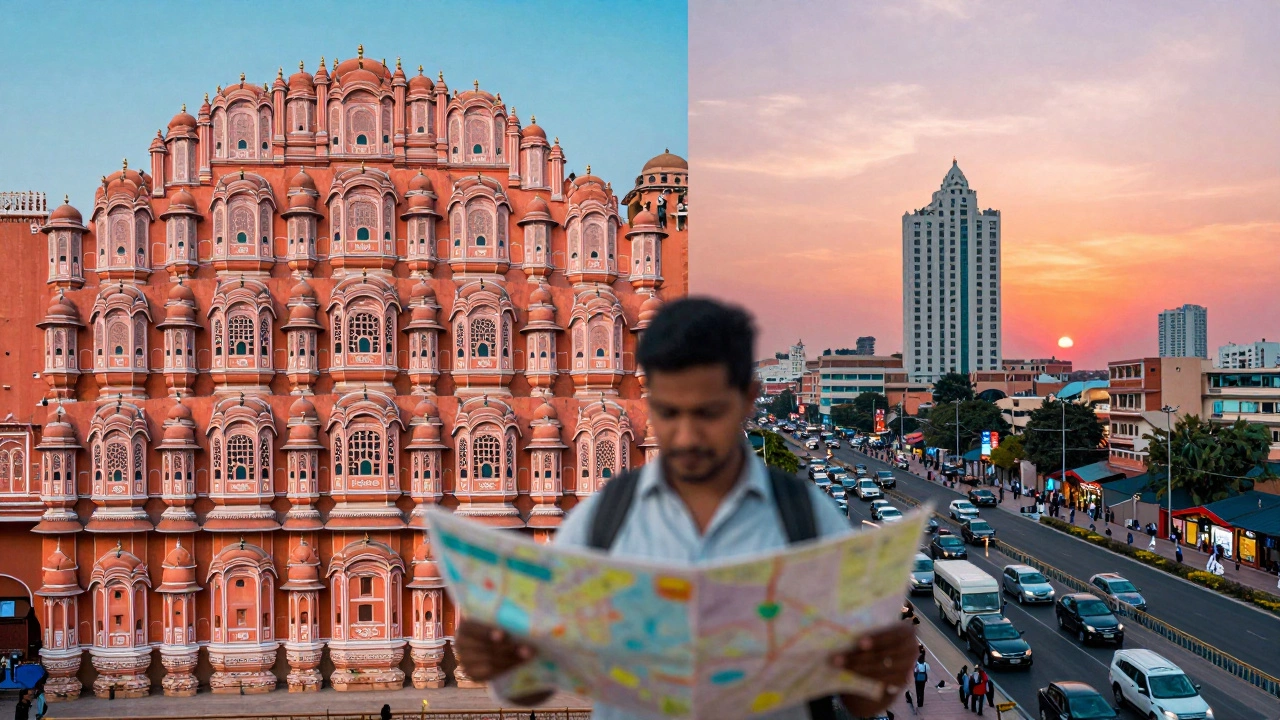
While Kolkata and Varanasi lead the debate, other cities punch above their weight. Jaipur, the Pink City, offers a concentrated dose of Rajput and Mughal culture. Its forts, palaces, and festivals like Teej and Gangaur showcase royal traditions that have been preserved meticulously. If you are interested in architecture and folk arts, Jaipur is essential.
In the south, Madurai in Tamil Nadu stands as a testament to Dravidian culture. The Meenakshi Amman Temple is not just a religious site but a masterpiece of stone carving and temple architecture. The surrounding region has a rich tradition of Carnatic music and Bharatanatyam dance that dates back centuries. Madurai feels timeless, much like Varanasi, but with a completely different aesthetic and linguistic flavor.
Bhubaneswar, the capital of Odisha, is often overlooked by international tourists but is a treasure trove for those interested in temple architecture and tribal arts. Known as the "Temple City of India," it houses the Lingaraja Temple and numerous other structures that define the Kalinga style of architecture. The Chhandiya Dance Festival here is one of the oldest continuous dance festivals in the world.
| City | Primary Cultural Focus | Key Attractions | Best For |
|---|---|---|---|
| Kolkata | Literature, Arts, Festivals | Durga Puja, Victoria Memorial, Book Markets | Intellectuals, Art Lovers |
| Varanasi | Spirituality, Tradition | Ganga Aarti, Sarnath, Old City Lanes | Spiritual Seekers, Historians |
| New Delhi | History, Politics, Diversity | Red Fort, Qutub Minar, Museums | First-Time Visitors, History Buffs |
| Mumbai | Cinema, Urban Life | Gateway of India, Bollywood Tours, Street Food | Pop Culture Fans, Foodies |
| Jaipur | Royal Heritage, Architecture | Amber Fort, Hawa Mahal, Textiles | Architecture Enthusiasts, Shoppers |
How to Choose Your Cultural Destination
Deciding which city to visit depends entirely on what kind of culture you want to consume. If you love reading, debating, and seeing high-art expressions of religion, go to Kolkata. If you want to confront mortality, practice mindfulness, and see ancient rituals performed exactly as they were 2,000 years ago, go to Varanasi.
For a broader overview, start with Delhi. It gives you the best introduction to the diversity of India. From there, you can branch out. Don't try to do them all in one trip unless you have months. Each city requires time to decompress. The sensory overload in Varanasi or the intellectual stimulation in Kolkata can be exhausting if you rush.
Also, consider the season. Kolkata is pleasant in winter (November to February). Varanasi is hot and humid in summer, so winter is again the best time. Delhi can be extremely cold in December and January, while Mumbai remains warm year-round. Timing your visit correctly enhances the cultural experience significantly.
Practical Tips for Cultural Travelers
Respect is currency in these cities. In Varanasi, dress modestly. Cover your shoulders and knees when visiting ghats and temples. Remove your shoes before entering any sacred space. In Kolkata, tipping is appreciated but not always mandatory in small eateries. Learning a few phrases in Bengali or Hindi goes a long way in building rapport with locals.
Use local transport. Taking a tram in Kolkata or a cycle-rickshaw in Varanasi provides a better cultural immersion than air-conditioned taxis. Talk to the drivers. Ask them about their favorite spots. They often know hidden gems that guidebooks miss. Eat where the locals eat. The best cultural experiences often happen around a plate of food, whether it's a fish curry in Kolkata or a thali in Jaipur.
Is Kolkata officially the cultural capital of India?
There is no official government designation for "cultural capital." However, Kolkata is widely referred to as such in media, academia, and tourism due to its rich history in literature, art, and cinema. It hosted the British Raj's capital for decades and remains the center of Bengali cultural production.
Why is Varanasi considered more important than Kolkata spiritually?
Varanasi is one of the seven sacred cities in Hinduism and is believed to be the abode of Lord Shiva. It is considered a place where death leads to liberation (moksha). While Kolkata has deep religious sentiments, Varanasi's primary identity is spiritual, making it a pilgrimage site for millions, whereas Kolkata is more of an intellectual and artistic hub.
Which city is better for first-time visitors to India?
New Delhi is generally recommended for first-timers. It offers a mix of history, modernity, and accessibility. The infrastructure is better, English is widely spoken, and you can see a wide range of Indian cultures in one place. After Delhi, travelers often move to Agra or Jaipur for the Golden Triangle tour.
What is the best time to visit cultural cities in India?
The winter months, from October to March, are the best time to visit most cultural cities in North and East India, including Delhi, Varanasi, and Kolkata. The weather is cool and dry, making sightseeing comfortable. Summers can be extremely hot, especially in Varanasi and Jaipur.
Can I visit multiple cultural cities in one trip?
Yes, but plan carefully. A common route is Delhi to Agra to Jaipur (Golden Triangle). Another popular route is Kolkata to Varanasi via train or flight. Combining too many cities can lead to burnout. Allow at least 3-4 days per major city to truly absorb the culture rather than just ticking boxes.