Which Dham is Best in India? Top 5 Sacred Pilgrimage Sites Explained
- Jan, 13 2026
- 0 Comments
- Aaron Blackwood
Sacred Dham Finder Quiz
Find Your Sacred Dham
Discover which pilgrimage site resonates with your spiritual journey
Your Sacred Dham
Why this site?
This Dham resonates with your spiritual needs and physical capabilities.
When people ask which Dham is best in India, they’re not really looking for a single answer. They want to know where to go that feels right-where the air changes, the noise fades, and something inside you shifts. India has four major Dhams, but dozens more sacred sites that draw millions each year. The truth? The best Dham isn’t the most famous one. It’s the one that meets you where you are.
The Four Char Dhams: More Than Just a List
The Char Dham-Badrinath, Dwarka, Puri, and Rameswaram-are the most traditional pilgrimage circuit in Hinduism. Each one is tied to a cardinal direction and a divine form. But calling them a "top five" list misses the point. These aren’t tourist spots. They’re spiritual anchors.
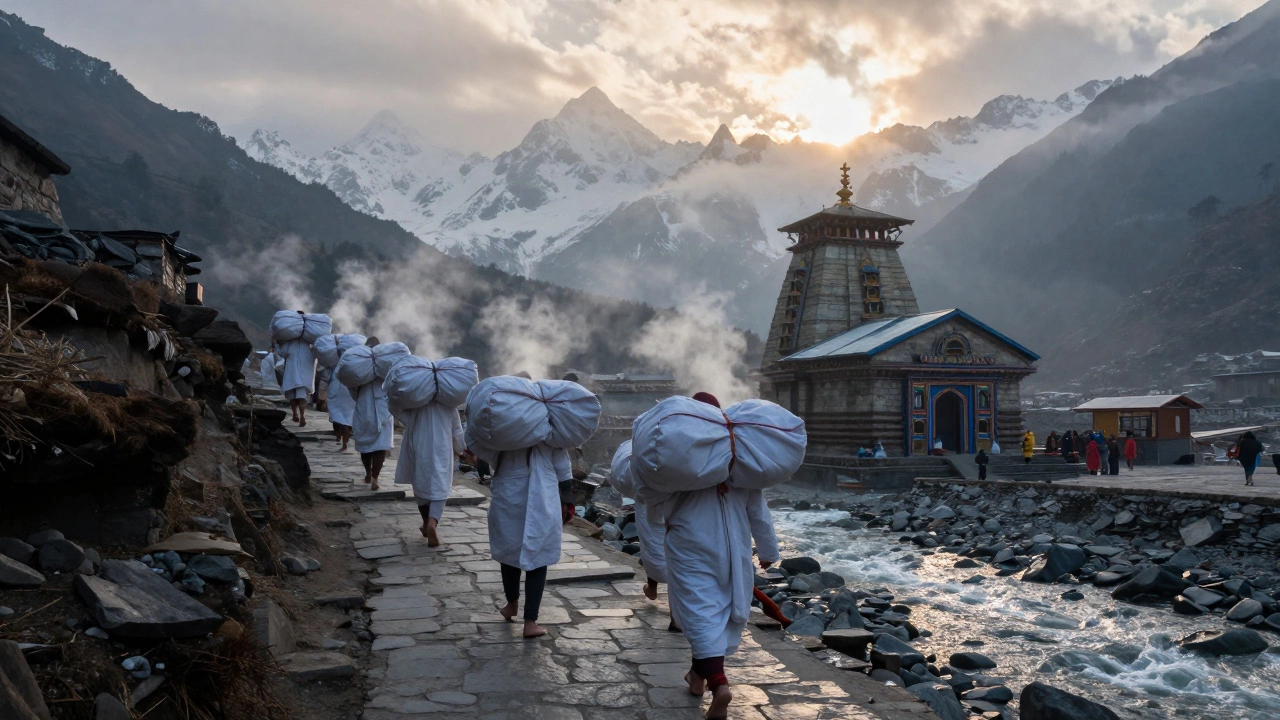
Badrinath, nestled in the Himalayas at 3,133 meters, is dedicated to Lord Vishnu. The journey there is brutal-narrow roads, thin air, sudden rains. But that’s the point. You don’t visit Badrinath to check a box. You go because the climb strips you down. Pilgrims walk for days, some barefoot, carrying little more than a cloth and a prayer. The temple itself sits beside the Alaknanda River, cold and clear, where water doesn’t just flow-it sings.
Dwarka, on Gujarat’s western coast, is the ancient city where Krishna ruled. Unlike Badrinath, Dwarka is warm, coastal, and alive with traders and temple bells. The Dwarkadhish Temple rises above the Arabian Sea, its spire visible from miles away. Locals say Krishna still walks its streets at dawn. You won’t see him-but you’ll feel the weight of centuries in the stone carvings and the chants echoing off the walls.
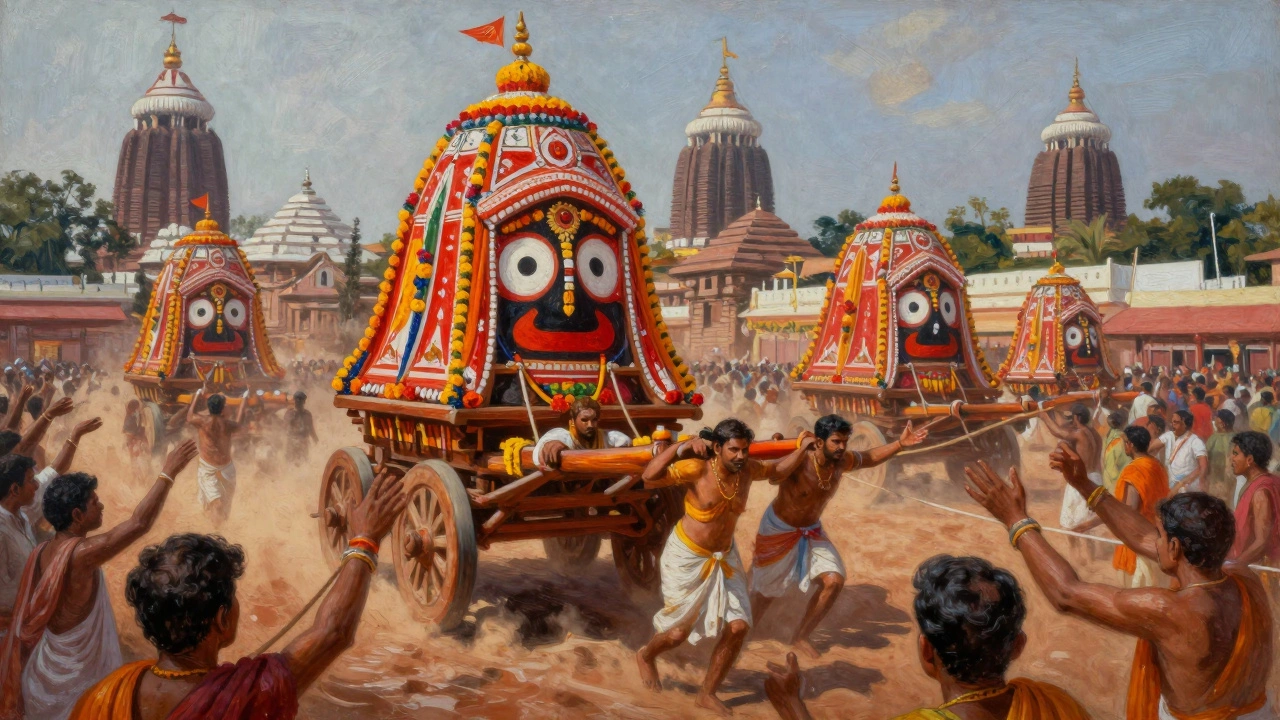
Puri, in Odisha, is home to the Jagannath Temple and the world’s largest chariot festival. The deities of Jagannath, Balabhadra, and Subhadra are pulled through the streets on towering wooden chariots by thousands. The energy here isn’t quiet. It’s loud, messy, and alive. Devotees touch the chariot ropes hoping for blessings. Some even throw themselves under the wheels-not out of despair, but devotion. It’s not for everyone. But for those who need to feel part of something bigger, Puri delivers.
Rameswaram, at the southern tip of India, is where Rama built a bridge to Lanka. The temple complex has 22 holy wells, each with water believed to have been blessed by Rama himself. Pilgrims bathe in all 22 before entering the main shrine. The sea here is calm, the sand white, and the air thick with incense. Unlike the mountain chill of Badrinath or the coastal heat of Dwarka, Rameswaram feels like a pause. A breath. A moment to sit still.
Why Jyotirlingas Matter More Than You Think
If you’re looking for the deepest spiritual pull in India, skip the Char Dham for a moment and head to the 12 Jyotirlingas. These are not temples. They’re manifestations of Shiva as a column of light. Each one is tied to a legend, a miracle, a moment when the divine broke through.
Varanasi’s Kashi Vishwanath is the most powerful. It’s not the biggest temple. It’s not the newest. But it’s the oldest continuous place of worship on Earth. Pilgrims come here to die. Not because they want to end their lives, but because they believe dying in Varanasi means breaking free from the cycle of rebirth. The ghats along the Ganges burn day and night. Ashes float downstream. People sit on the steps, chanting, crying, meditating. You don’t visit Kashi-you surrender to it.
Shivlinga in Somnath, Gujarat, was destroyed seven times by invaders. Each time, it was rebuilt. Today, the temple glows gold at sunset. The sound of conch shells carries for miles. Locals say the sea itself bows when the tide turns. You don’t need to believe that to feel it. The resilience here isn’t just architectural-it’s spiritual.
Try this: Go to a Jyotirlinga without expectations. Don’t go to "see" it. Go to let it see you.
The Hidden Dhams: Places the Brochures Don’t Mention
Most guides list only the big four. But India’s sacred geography runs deeper. In the hills of Uttarakhand, the Panch Kedar temples-Kedarnath, Tungnath, Rudranath, Madhyamaheshwar, and Kalpeshwar-are a trekking pilgrimage older than the Char Dham. Kedarnath sits at 3,583 meters, accessible only by foot or helicopter. The temple is made of stone, shaped like a cow’s hump. Locals say it moved here on its own when the Pandavas came looking for Shiva.
In Tamil Nadu, the 108 Divya Desams are Vishnu temples mentioned in ancient Tamil hymns. Tirupati’s Venkateswara Temple draws over 50,000 pilgrims daily. The line to enter can stretch for hours. But the wait isn’t a nuisance-it’s part of the ritual. You stand in the sun, shoulder to shoulder with strangers, and slowly, the noise fades. What’s left is silence. And then, the darshan.
And then there’s Amarnath. The ice lingam forms naturally each summer, growing and shrinking with the moon. To reach it, you climb 48 kilometers through snow and rock. Some die on the way. But thousands still come. Why? Because they believe the lingam isn’t just ice-it’s Shiva’s breath.
How to Choose Your Dham
Here’s the real question: What are you running from? Or running toward?
If you’re seeking peace, go to Rameswaram. The sea will calm you. The water will wash you. The silence between chants will speak.
If you’re searching for strength, head to Kashi. Let the smoke of burning bodies remind you that life is fleeting-and that’s okay.
If you need to be part of something wild, loud, and alive, Puri will shake you awake. The chariots won’t wait. Neither will your heart.
If you’re tired of noise, of screens, of schedules-Badrinath will force you to slow down. The cold air will make you breathe. The climb will make you humble.
There’s no ranking. No official best. The only rule? Go when you’re ready. Not when your Instagram feed says to.

Practical Tips for Pilgrims
- Plan ahead, but stay flexible. Pilgrimage routes change with weather, festivals, and crowds. Check temple websites for darshan timings-some open as early as 3 a.m.
- Carry only what you need. No fancy bags. No electronics. A water bottle, a shawl, and a small cloth for offerings are enough.
- Respect the silence. Phones are often banned inside temples. Use them before you enter, not after.
- Walk barefoot where allowed. It’s not just tradition-it’s connection. The ground holds memory.
- Don’t rush the darshan. Waiting is part of the journey. The longer you wait, the more you notice: the smell of marigolds, the sound of bells, the way light hits the idol just right.
What You’ll Take Home
You won’t bring back a statue or a souvenir. You’ll bring back a quietness. A new way of breathing. A memory of standing in a crowd of strangers, all silent, all waiting-for something, anything, to move.
That’s the real gift of the Dhams. They don’t give you answers. They teach you how to sit with the questions.
Is there an official ranking of the best Dham in India?
No, there is no official ranking. The four Char Dhams are traditionally considered the most important pilgrimage circuit, but many Hindus believe the 12 Jyotirlingas hold deeper spiritual power. The "best" Dham depends on personal faith, physical ability, and spiritual need-not popularity or tourism numbers.
Can I visit all four Char Dhams in one trip?
Yes, many pilgrims complete the Char Dham Yatra in one season, usually between April and November. The route typically starts in the west (Dwarka), moves to the south (Rameswaram), then east (Puri), and ends in the north (Badrinath). It takes about 10-15 days depending on travel pace and weather. Helicopter services are available for Badrinath and Kedarnath to save time.
Do I need a guide or tour package for temple visits?
Not at all. Many pilgrims travel alone or with family. However, if you’re unfamiliar with the routes, language, or rituals, a local guide can help with logistics-like booking darshan slots or arranging transport. Avoid expensive "luxury pilgrimage" packages that promise VIP treatment. The essence of a Dham visit is simplicity.
What’s the best time of year to visit these Dhams?
The ideal window is between April and November. Badrinath and Kedarnath open after the winter snow melts, usually in late April or early May. Rameswaram and Puri are accessible year-round, but avoid monsoon season (June-September) if you’re traveling by road. For Amarnath, July-August is the only safe window due to the ice lingam’s formation.
Are these temples crowded? How do I avoid the worst crowds?
Yes, they’re crowded-especially during festivals like Shravan Month (July-August) and Navratri. To avoid the worst lines, visit on weekdays, arrive before sunrise, or use the temple’s official online darshan booking system. Some temples, like Tirupati and Kashi, offer paid priority passes. But the real trick? Go when others don’t. Early morning or late evening darshan is quieter and more meaningful.