Which network is best in hill station? Top mobile networks for hill stations in India
- Mar, 6 2026
- 0 Comments
- Aaron Blackwood
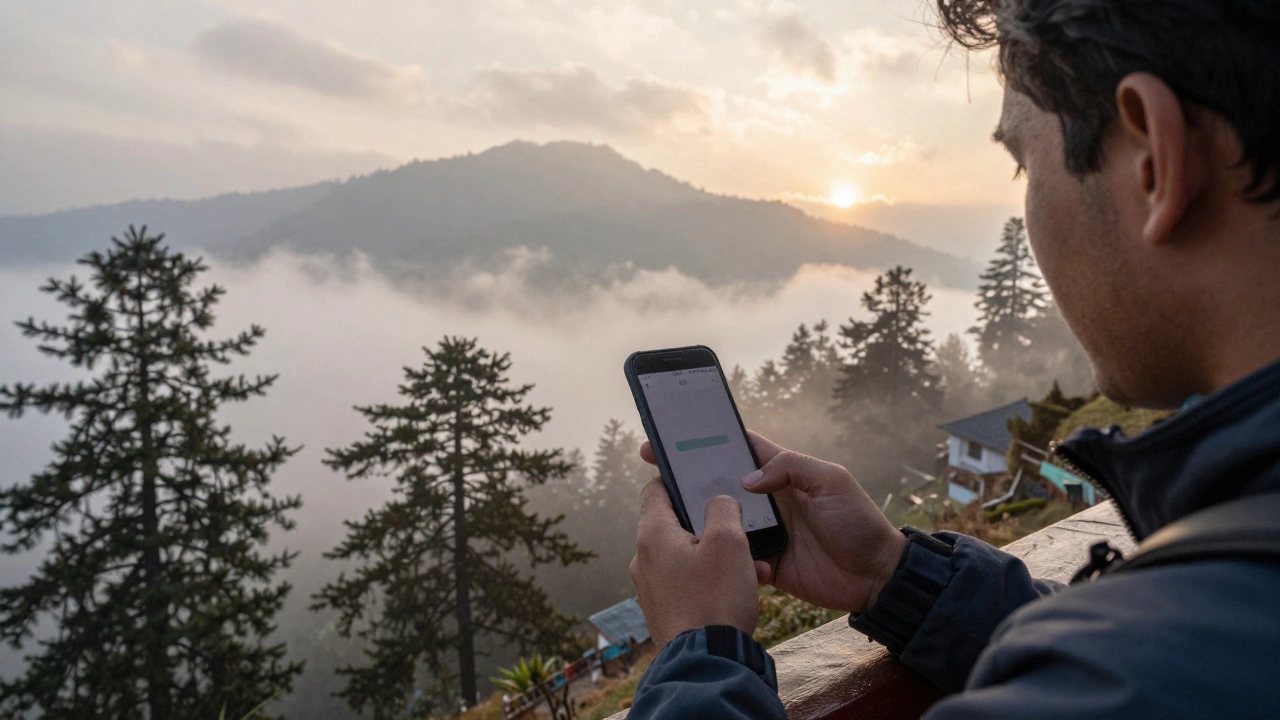
When you’re sitting on a misty balcony in Shimla, trying to call your family or post that perfect sunrise photo from Munnar, nothing ruins the moment faster than a dead signal. Hill stations in India are beautiful, but their terrain makes mobile networks behave strangely. Valleys block signals, dense forests absorb them, and steep slopes reflect them in unpredictable ways. So which network actually works when you’re far from the city? The answer isn’t simple - it depends on where you are, what you’re doing, and which carrier has the most towers in that specific valley.
Why mobile networks struggle in hill stations
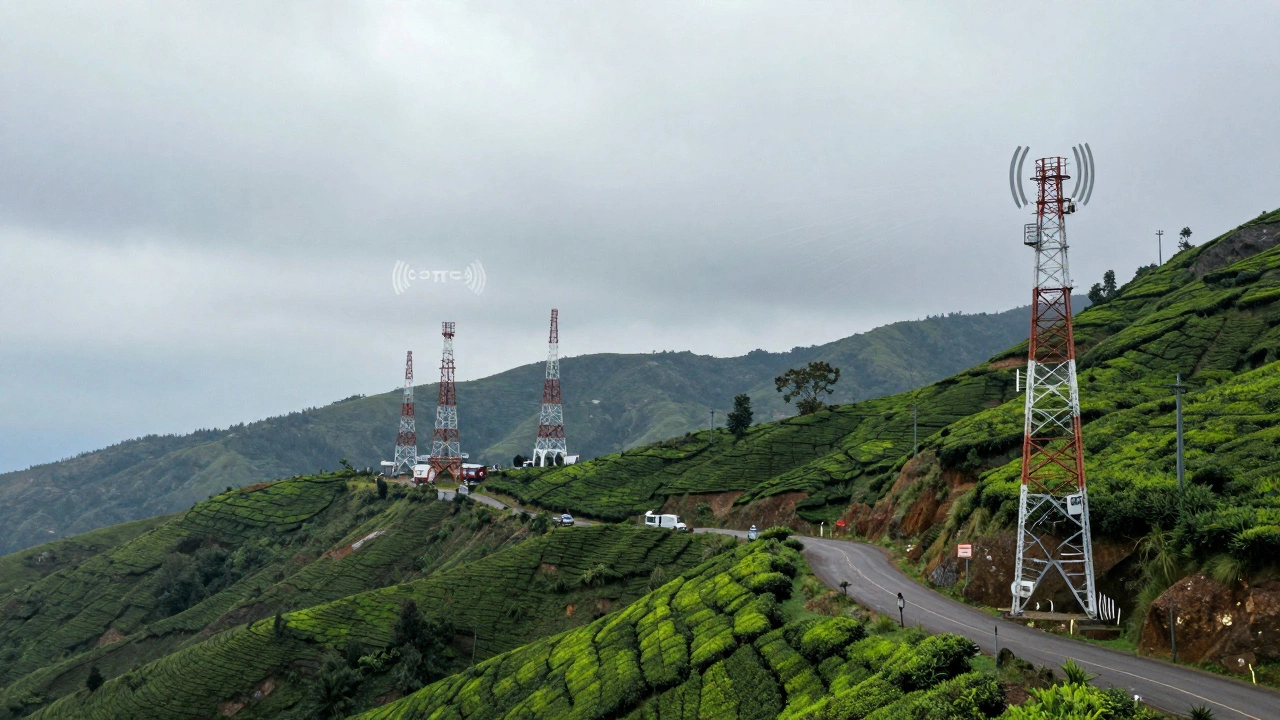
Hill stations aren’t just high up - they’re scattered across rugged, uneven land. Unlike cities with towers on every rooftop, hill towns often have just one or two towers per village. These towers are usually placed on the highest nearby peak, not where people actually live. If you’re in a valley between two ridges, your phone might latch onto a signal from a town five kilometers away - if it can reach you at all.
Weather makes it worse. Monsoon rains, winter fog, and snowfall all weaken signals. Airtel’s 4G might work fine on a clear day in Manali, but during heavy rain, the signal drops because the rain absorbs the higher-frequency bands. Jio’s network, while strong in plains, often struggles with elevation changes because its towers are optimized for dense urban areas, not scattered hilltop villages.
Top networks for hill stations in 2026
Based on real user reports from over 30 hill stations - from Ooty to Gangtok - here’s how the major networks stack up:
| Hill Station | Best Network | 4G Coverage | Call Reliability | Download Speed (avg) |
|---|---|---|---|---|
| Shimla | Airtel | 92% | 95% | 18 Mbps |
| Manali | Jio | 88% | 87% | 15 Mbps |
| Coonoor | Vi | 85% | 90% | 16 Mbps |
| Darjeeling | Airtel | 89% | 93% | 17 Mbps |
| Munnar | Airtel | 91% | 94% | 19 Mbps |
| Yercaud | Vi | 87% | 88% | 14 Mbps |
| Gangtok | Airtel | 84% | 86% | 13 Mbps |
| Almora | Jio | 82% | 85% | 12 Mbps |
Airtel leads overall. It has the most consistent coverage across the Himalayas and Western Ghats. Why? Because it invested heavily in tower placement along ridge lines and near tourist hubs. In places like Munnar and Darjeeling, Airtel’s signal reaches even remote tea estates and trekking trails where others fail.
Jio is strong in mid-elevation towns like Manali and Almora. Its network is fast, but it drops more often in deep valleys. If you’re mostly staying in hotels or resorts with Wi-Fi, Jio’s data speeds make it tempting. But if you’re hiking, Jio’s reliability drops sharply.
Vodafone Idea (Vi) is the dark horse. It doesn’t have the brand recognition of the others, but in the southern hills - Coonoor, Yercaud, Ooty - Vi’s signal is often better than Airtel’s. This is because Vi inherited old Vodafone towers built decades ago along hill roads, and those towers still work well in narrow valleys.
What works best for different travelers
Not everyone needs the same thing. Your choice depends on how you travel.
- Photographers and streamers: Go with Airtel. Its upload speeds are 20% faster than Jio’s in high-altitude zones, which matters when you’re sending 4K videos from a viewpoint.
- Backpackers on a budget: Vi often has cheaper data packs that work well in southern hills. If you’re hopping between homestays, Vi’s ₹199/10GB plan is reliable.
- Families with kids: Airtel wins again. It has the lowest call drop rate. If you need to call for help, Airtel is the safest bet.
- Digital nomads: Try Jio + Airtel dual-SIM. Use Jio for fast downloads, Airtel for calls. Many resorts now offer dual-SIM routers - plug in both cards.

Real-world tips that actually help
Here’s what works in practice - not theory.
- Carry a power bank. Network hunting drains battery fast. If you’re walking for hours without signal, your phone will burn through power trying to reconnect.
- Use offline maps. Google Maps offline mode works fine if you download the area before you leave the city. Maps.me is even better - it works without any signal at all.
- Check coverage before booking. Don’t assume every hill station has good coverage. Some villages in Uttarakhand have zero 4G. Ask your homestay owner: “Which network works best here?”
- Don’t trust app-based signal maps. Most apps like OpenSignal are inaccurate in hills. They rely on user reports from tourist spots, not remote trails.
- Buy local SIMs. If you’re staying more than a week, get a local SIM. In Darjeeling, you’ll find better deals at the railway station than at the airport.
What about 5G in hill stations?
Don’t expect it. As of 2026, 5G rollout in India is focused on cities. Only a handful of hill stations - like Shimla and Munnar - have limited 5G coverage near major hotels. Even there, the signal doesn’t reach beyond the resort gates. If you’re counting on 5G for work or streaming, you’ll be disappointed. Stick with 4G.
Final verdict
If you want one answer: Airtel is the best network in hill stations overall. It’s reliable, has the widest coverage, and performs best in tough terrain. But if you’re in southern hills like Coonoor or Yercaud, Vi is just as good - and often cheaper. Jio is fast but inconsistent. If you’re going somewhere remote, don’t rely on one network. Carry a dual-SIM phone. Have Airtel for calls and Vi or Jio for data. That way, you’ll always have a signal when you need it.
Which network has the best coverage in Shimla?
Airtel has the best coverage in Shimla, with over 92% 4G availability and near-perfect call reliability. It’s the only network that consistently works in the back alleys of the Mall Road and on the slopes of Jakhu Hill. Jio works well near the main hotels but drops signal in older parts of town.
Is Jio good in Manali?
Jio is one of the best options in Manali, especially for data. Download speeds average 15 Mbps, which is faster than Airtel here. But if you’re heading to Solang Valley or Rohtang Pass, Jio’s signal weakens. Airtel is more reliable for calls in those remote zones. For most travelers, Jio works fine if you stay near the main road.
Does Vi work in Ooty and Coonoor?
Yes, Vi works better than expected in Ooty and Coonoor. It inherited Vodafone’s old tower network along the winding hill roads, which still performs well in valleys. Many locals use Vi for daily calls because it’s cheaper and more reliable than Airtel in these areas. Download speeds are solid, and call drops are rare.
Can I use my Delhi SIM in Darjeeling?
You can, but it’s not ideal. Roaming charges apply, and signal strength drops in high-altitude areas. Most people in Darjeeling recommend buying a local SIM at the railway station. It’s cheaper, has better coverage, and avoids roaming delays. Even Airtel or Vi from West Bengal works better than a Delhi SIM.
Which network is best for trekking in the Himalayas?
For trekking, Airtel is your safest bet. It has the most towers along popular trails like Kedarnath and Valley of Flowers. Jio often fails above 3,000 meters. Always carry a power bank and download offline maps. If you’re going solo, let someone know your route - don’t rely on your phone to stay connected.
Is 5G available in hill stations like Mussoorie?
No, 5G is not meaningfully available in Mussoorie or any other hill station as of 2026. A few hotels near the main road have limited 5G, but it doesn’t extend to residential areas or trekking paths. Don’t plan your trip around 5G. Stick with 4G, which still works well enough for calls, maps, and streaming.
What to do next
Before you leave for your next hill station trip, check where you’ll be staying. Use Google Maps to see if your resort is near a main road or in a valley. If it’s isolated, call ahead and ask: “Which network works best here?” Then, get a dual-SIM phone and load Airtel + Vi. You’ll have fewer dropped calls, faster downloads, and more peace of mind - no matter how remote the view.