Why Are Sleeper Trains So Expensive? The Real Costs Behind Luxury Rail Travel
- Jan, 16 2026
- 0 Comments
- Aaron Blackwood
Sleeper Train vs. Flight Cost Calculator
How Much Does Luxury Train Travel Cost?
Enter your trip distance to see how luxury sleeper trains compare to flights in cost and experience.
Your Journey
What You're Paying For
Why sleeper trains cost so much:
- Custom Interiors - Handcrafted wood, artisan bedding, premium materials
- 24/7 Service - Staff-to-guest ratio of 1:2, luxury hotel standards
- Gourmet Dining - Michelin-starred chefs, multi-course meals
- Exclusive Experience - Private cabins, no competition
- Sustainability - 70% less CO2 than flights
Comparison Results
Flight
$
Basic transportation only
Luxury Train
$
Moving 5-star hotel experience
What You're Getting
For the same $ value, you'd get:
- 1 flight ticket vs. 2.5-4 sleeper train tickets
- 30 minutes travel time vs. 12-24 hours journey
- Minimal service vs. full hotel service
Luxury trains emit % less CO2 than flights
Ever looked at the price tag on a sleeper train ticket and thought, sleeper trains are crazy expensive? You’re not alone. A night on the Indian Railways’ Maharaja Express or Europe’s Venice Simplon-Orient-Express can cost more than a week in a five-star hotel. But why? It’s not just about the bed. It’s not even mostly about the bed. What you’re paying for is an experience built over decades, wrapped in history, and run with precision that most airlines would kill for.
It’s Not a Train. It’s a Moving Hotel.
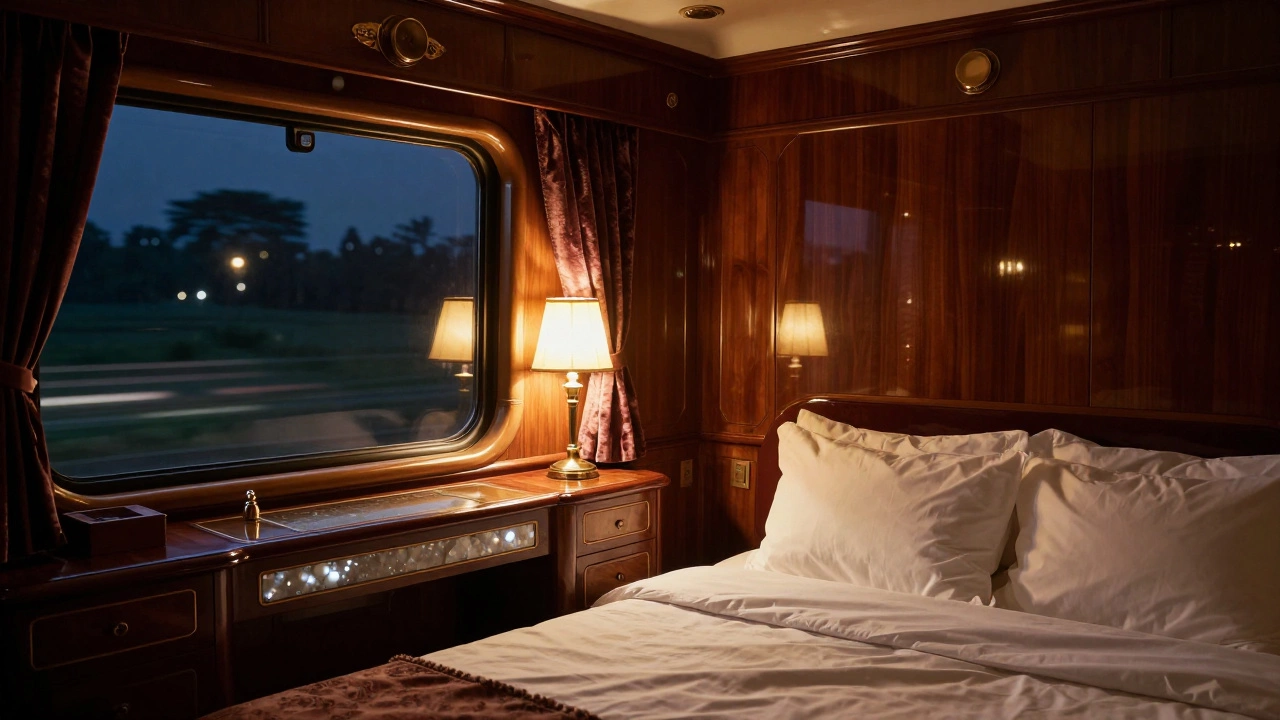
Think of a sleeper train like a hotel that moves. You don’t just get a cabin-you get room service, housekeeping, fine dining, and staff who remember your name. On the Maharaja Express, each cabin has a private bathroom, plush linens, and climate control. The staff-to-guest ratio is close to 1:2. That’s not a train crew. That’s a boutique hotel staffed by trained professionals, working 18-hour days while rolling across the countryside.
And here’s the catch: these trains don’t run every day. They operate on fixed schedules, often just a few times a week. That means the cost of maintaining 12 luxury cars, 40 staff members, and 300+ pieces of custom china and silverware gets spread across maybe 200 guests a month. Compare that to a hotel with 200 rooms that fills 80% of its beds nightly. The math doesn’t lie.
Everything Is Custom-Built
These aren’t refurbished commuter cars. Every sleeper train in the luxury tier is a rolling museum. The Venice Simplon-Orient-Express still uses original 1920s wood paneling, hand-laid carpets, and brass fixtures restored by specialists. Replacing a single dining table on the Maharaja Express costs more than $15,000 because it’s carved from teak, inlaid with mother-of-pearl, and finished by artisans in Jaipur.
Even the bedding is custom. The sheets on the Golden Chariot in India are 400-thread-count Egyptian cotton, washed daily in purified water. The pillows? Down-filled, hypoallergenic, and tailored to each guest’s preference. You don’t buy that at Walmart. You commission it. And that cost shows up in the ticket price.
Operational Costs Are Sky-High
Running a luxury train isn’t like running a bus. You need special permits to operate on national rail lines. In India, you pay millions in track access fees just to use the same rails that local trains ride for pennies. You also need security teams, customs clearance for international routes, and insurance that covers everything from theft to delays caused by monsoons.
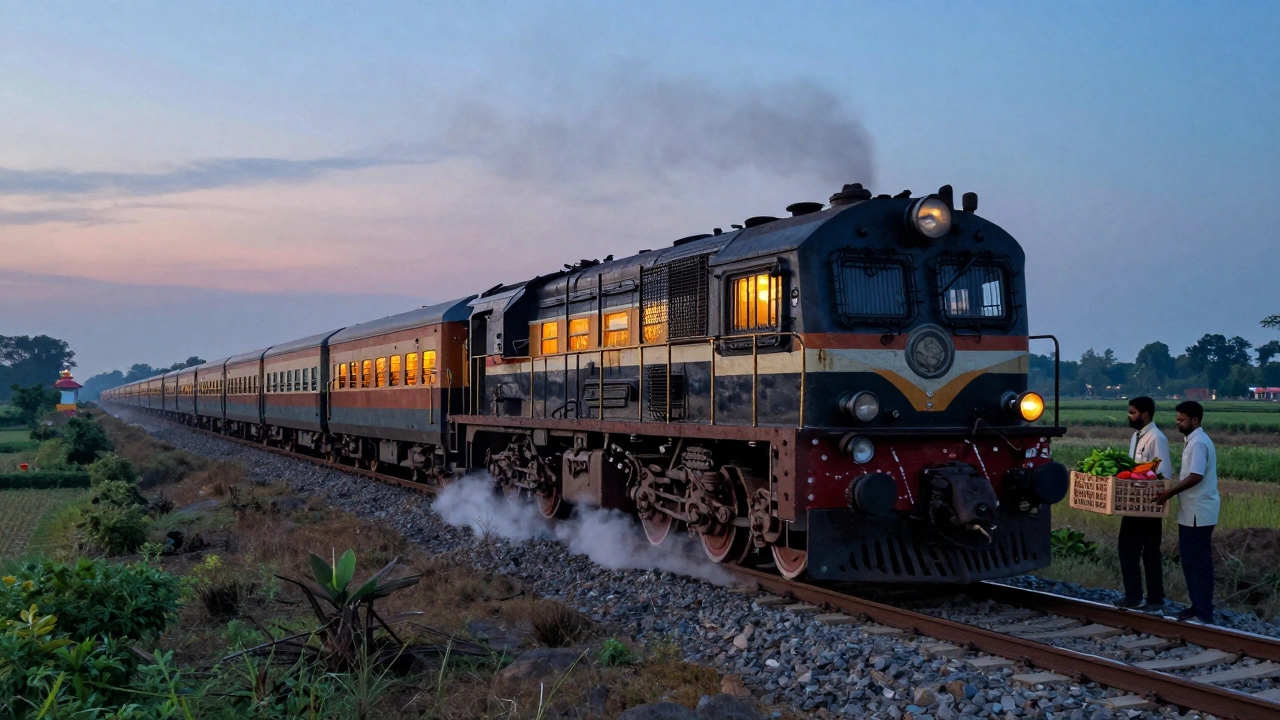
Then there’s fuel. Diesel isn’t cheap, and these trains are heavy. The Maharaja Express weighs over 600 tons. Moving that much metal, glass, and wood across 1,500 kilometers burns through thousands of liters of fuel. And you can’t just refuel anywhere-you need dedicated stations with trained personnel, which aren’t common.
Food Isn’t Just a Meal. It’s a Performance.
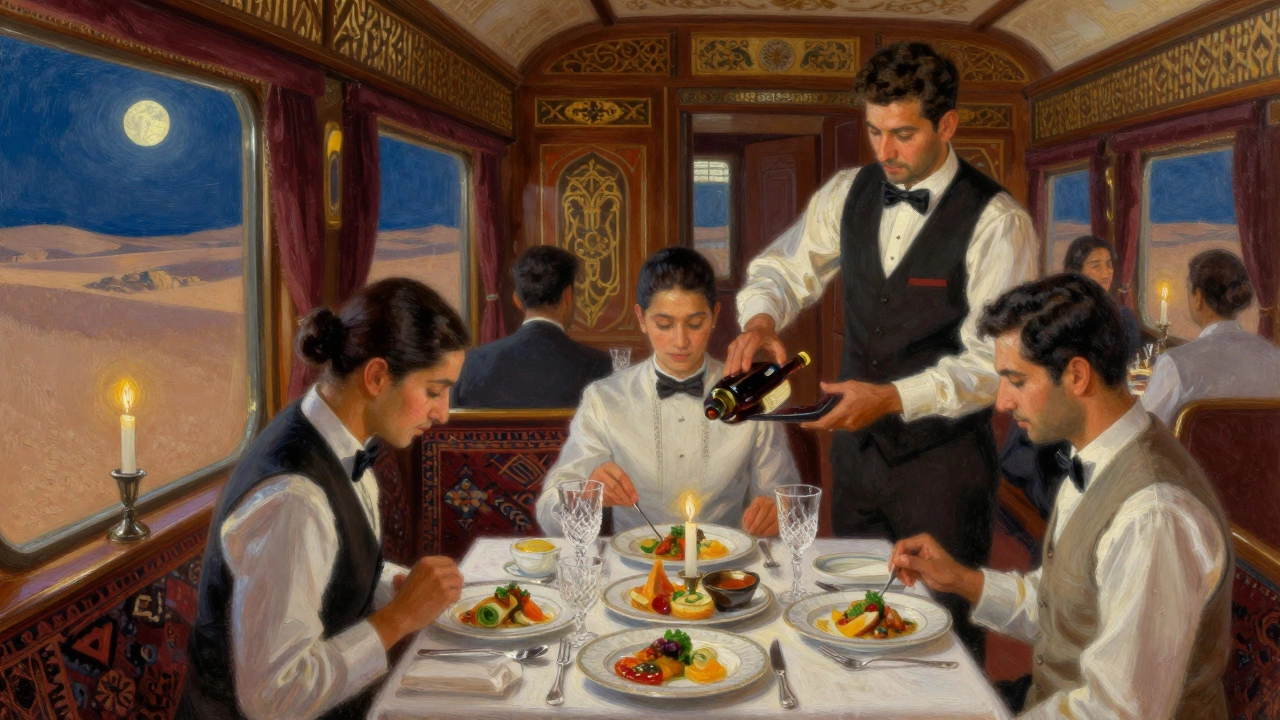
On most sleeper trains, dinner isn’t a sandwich and a soda. It’s a multi-course meal prepared by Michelin-starred chefs, served on fine china, paired with wine from the train’s cellar. The Maharaja Express has five different menus, each changing weekly based on regional ingredients. A single dinner might include lobster thermidor, truffle risotto, and a 20-year-old port-each ingredient sourced fresh, flown in if needed, and plated with precision.
That’s not just food. That’s logistics. A single luxury train can serve 100+ meals a night. Each one requires fresh produce, dry goods, wine, and staff. You’re not paying for a meal-you’re paying for a culinary experience that costs $200 just to prepare, even before labor and overhead.
Staff Are Trained, Not Hired
Forget the idea of a train attendant who just checks tickets. On luxury sleeper trains, staff are trained for months. They learn etiquette, wine pairing, local history, first aid, and how to handle VIP guests without being intrusive. Many come from five-star hotel backgrounds. Some speak three languages. They’re paid well, given benefits, and often live on the train for weeks at a time.
On the Belmond Royal Scotsman, staff undergo a 12-week training program that includes etiquette drills, emergency procedures, and cultural sensitivity training. That’s not a cost center. That’s an investment. And every trained staff member adds $5,000-$10,000 to the annual operating cost per person.
There’s No Volume. No Discounts. No Competition.
Here’s the brutal truth: there’s no real competition. There are maybe 15 luxury sleeper trains in the entire world. The market isn’t like airlines, where dozens of carriers fight for your dollar. These trains are exclusive. They don’t need to offer sales. They don’t need to cut prices. Demand outstrips supply by a factor of 5:1. Bookings open a year in advance-and sell out within hours.
There’s no economy class. No standing room. No budget option. You either pay the full price or you don’t ride. That’s not greed. That’s scarcity. And scarcity drives price.
What You’re Really Paying For
You’re not paying for a bed. You’re paying for time. For silence. For the sound of wheels on rails at 3 a.m., the glow of a reading lamp, the smell of fresh linen, and the feeling that you’ve stepped into a different era. You’re paying for the chance to see Rajasthan’s deserts or the Swiss Alps without the noise of airports, security lines, or rental cars.
It’s not transportation. It’s transformation. And that’s worth more than a plane ticket. It’s why people save for years to take one trip. Why they return. Why they tell their friends, “You have to feel it to understand it.”
Is It Worth It?
If you’re looking for the cheapest way to get from point A to point B? No. It’s not worth it. But if you want to travel like someone who values experience over efficiency? Then yes. It’s one of the few remaining ways to make a journey feel like an event.
Think of it this way: a flight from Delhi to Jaipur takes 90 minutes. A luxury train takes 12 hours. But during those 12 hours, you’re not stuck in a seat. You’re sipping tea, watching villages pass by, eating food cooked with spices from the region, and talking to people who’ve traveled the world to be there. That’s not a commute. That’s a memory.
And memories don’t come cheap. But they last forever.
Why are sleeper trains more expensive than flights?
Flights move hundreds of people quickly with minimal staff and basic amenities. Sleeper trains move far fewer guests with high-end service, custom interiors, gourmet meals, and trained staff-all while operating on expensive rail infrastructure. The experience is fundamentally different, and so is the cost structure.
Do sleeper trains offer any discounts?
Rarely. Luxury sleeper trains operate on fixed schedules with limited capacity. They don’t run daily, and demand always exceeds supply. Most operators don’t offer discounts because they don’t need to. Booking early is the only way to secure a spot, not save money.
Are sleeper trains safe?
Yes. Luxury trains have private cabins with locks, 24/7 staff presence, and security protocols that exceed those of most hotels. In countries like India, they operate on dedicated rail corridors with extra security checks. Theft is extremely rare.
Can you book a single cabin on a sleeper train?
Most luxury trains offer single occupancy cabins, but they cost nearly as much as a double. That’s because the train’s pricing is based on cabin use, not passenger count. You’re paying for the entire space, not just the bed.
Are sleeper trains eco-friendly?
Compared to flying, yes. A luxury train emits about 70% less CO2 per passenger than a short-haul flight over the same distance. But because they’re so heavily staffed and use premium materials, their per-passenger footprint is higher than a standard train. Still, they’re among the most sustainable ways to travel long distances in comfort.