Why Kerala Stands Out From Other Indian States
- Mar, 4 2026
- 0 Comments
- Aaron Blackwood
Kerala Travel Budget Calculator
Plan Your Kerala Journey
Your Kerala Trip Budget
Total Estimated Cost
₹0
Affordable
Cost Breakdown
Accommodation: ₹0
Food: ₹0
Transport: ₹0
Activities: ₹0
When people think of India, they often picture the bustling streets of Delhi, the marble grandeur of the Taj Mahal, or the spiritual haze of Varanasi. But if you’ve ever traveled to Kerala, you know it doesn’t feel like the rest of the country. It’s not just another destination. It’s a different rhythm, a different mood, a different way of being.
It’s not just green - it’s living green
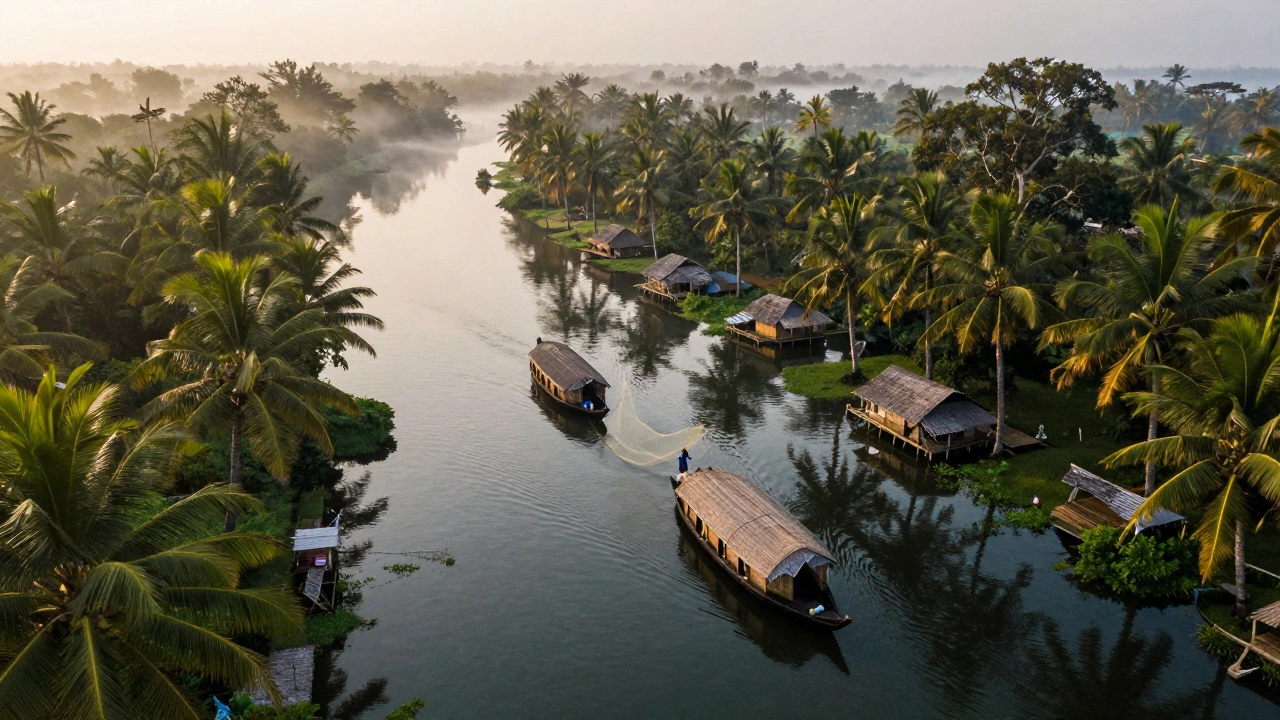
Kerala doesn’t just have trees. It’s built around them. Nearly 24% of the state is covered in forests - more than any other Indian state. But what makes it special isn’t just the numbers. It’s how people live with them. You won’t find huge resorts cutting into wildlife corridors here. Instead, you’ll find homestays tucked into rubber plantations, bamboo cottages floating on backwaters, and farmers who still use traditional methods to grow pepper, cardamom, and coconut. The state’s famous backwaters aren’t just tourist attractions - they’re lifelines. Families live on houseboats, kids row to school, and fishermen still use handcrafted nets passed down for generations.
The language you hear is the same everywhere
In most parts of India, you need to switch languages every few hundred kilometers. But in Kerala, Malayalam is spoken by nearly 97% of the population. That kind of linguistic unity is rare. It means signs, menus, and local news all feel familiar. You don’t need to guess what ‘paniyaram’ is - the menu says it plainly. You don’t need a translator to understand a temple priest’s chant. This consistency makes travel easier, but it also creates a deep cultural thread that ties communities together.
Education isn’t a goal - it’s a habit
Kerala has the highest literacy rate in India - 96.2%. That’s not a recent spike. It’s been above 90% since the 1980s. Why? Because education wasn’t just a policy. It was a social promise. Even in the 1950s, when most of India was still struggling with basic schooling, Kerala’s communist-led government built schools in every village. Teachers walked door-to-door. Women were encouraged to study. Today, you’ll find grandmothers reading newspapers in coffee shops, teenagers debating philosophy in bus stops, and farmers using apps to track crop prices. This isn’t about degrees. It’s about thinking. And it shows in how people run businesses, manage health, and even vote.
The health system works - really works
Kerala’s life expectancy is 77 years - higher than the U.S. average. Infant mortality? Lower than in many European countries. How? Because the state invested in public health long before it became trendy. Every village has a primary health center. Every town has a community hospital. Doctors don’t just wait for patients to come in - they go out. Health workers visit homes weekly to check blood pressure, track pregnancies, and hand out vitamins. When the pandemic hit, Kerala didn’t panic. It had contact tracers already in place. It had community kitchens feeding people. It had a system. And it worked.
Religion is everywhere - but it doesn’t divide
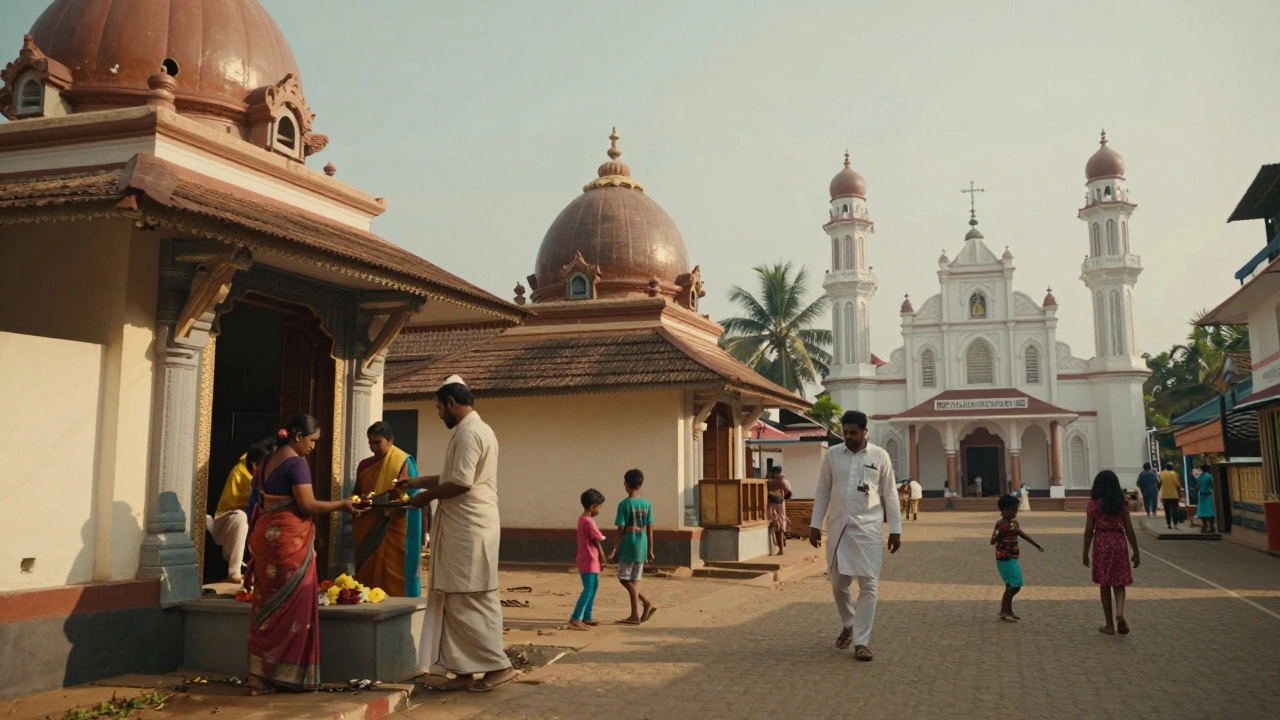
You’ll see a church, a mosque, and a Hindu temple within a five-minute walk of each other in almost any town. In Kochi, a 16th-century synagogue sits beside a Portuguese church. In Thrissur, a Muslim festival shares the same street as a Hindu temple parade. No one fights over it. Why? Because religion here isn’t about power - it’s about practice. People don’t convert because they’re pressured. They celebrate each other’s festivals. Christians join in Onam. Hindus light lamps for Eid. Muslims serve food during temple fairs. This isn’t tolerance. It’s belonging.
The pace isn’t slow - it’s intentional
North India moves fast. Delhi’s traffic, Mumbai’s trains, Jaipur’s markets - they’re all about getting somewhere. Kerala doesn’t care about getting somewhere. It cares about being where you are. You’ll see people sitting under banyan trees for hours, not because they’re lazy, but because they’ve learned that time isn’t something to spend - it’s something to live. Meals last two hours. Conversations don’t end at ‘goodbye.’ Even the trains run on ‘Kerala time’ - meaning they’re often late, but no one minds. The state doesn’t measure success by GDP growth. It measures it by how happy people feel when they wake up.
It’s not just tourism - it’s a way of life
Kerala doesn’t market itself as a destination. It doesn’t need to. Tourists come because they hear stories - from a friend who went to Munnar, from a blogger who stayed in a backwater homestay, from a yoga teacher who learned ayurveda in Thiruvananthapuram. The state doesn’t build luxury resorts. It lets families open their homes. It doesn’t sell experiences. It shares them. And that’s why people keep coming back - not for the beaches, not for the spices, not even for the temples. They come because for the first time, they feel like they’re not just visiting. They’re being welcomed.
What you won’t find in Kerala
You won’t find massive billboards shouting ‘Visit Kerala!’ You won’t find overcrowded temples where you have to pay to take photos. You won’t see vendors chasing you down the street. You won’t hear honking horns at 5 a.m. You won’t find a single five-star hotel that dominates the skyline. Kerala doesn’t need to prove it’s worth visiting. It just is.
Is Kerala safer than other Indian states for solo travelers?
Yes, Kerala is consistently ranked as one of the safest states in India for solo travelers, including women. Crime rates are low, public spaces are well-lit and patrolled, and locals are known for helping strangers. The state’s high literacy rate and strong community networks mean people look out for each other. You can walk around Kochi at night, take an early morning bus to Munnar, or rent a bike in Alleppey without worry - something that’s harder to say in many other parts of the country.
Why do Kerala’s beaches look different from Goa’s?
Goa’s beaches are built for parties - loud, crowded, lined with shacks and neon lights. Kerala’s beaches are built for peace. Think quiet stretches of golden sand, coconut trees swaying, fishermen mending nets, and no music blasting from speakers. Places like Kovalam and Varkala have a calm, almost spiritual vibe. You won’t find beach clubs here. You’ll find yoga sessions at sunrise, silent walks along the shore, and local cafes serving fresh coconut water. The difference isn’t just in scenery - it’s in intent.
Can I experience traditional Kerala culture without visiting tourist spots?
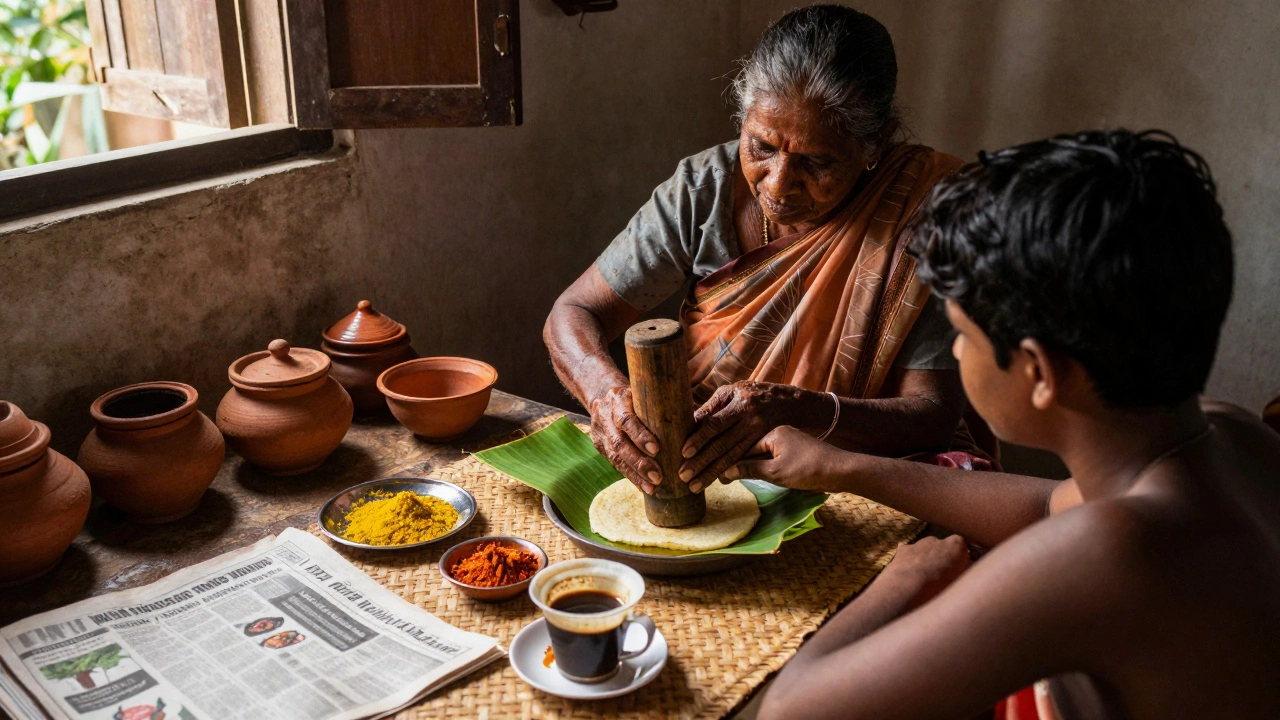
Absolutely. The real Kerala lives in villages, not in resorts. Head to places like Athirapally, Kumbalangi, or Wayanad’s rural hamlets. Stay in a homestay run by a family that’s been there for generations. Join a local cooking class where you learn to make puttu and kadala curry from a grandmother. Attend a temple festival where the whole village cooks together. These aren’t performances - they’re everyday life. Tourist spots show you what Kerala looks like. Rural areas show you what it feels like.
Is Kerala expensive compared to North India?
It depends on how you travel. If you stay in luxury resorts, yes - it can be pricier. But if you stick to homestays, local buses, and street food, Kerala is actually cheaper than many North Indian destinations. A decent homestay costs ₹800-₹1,200 a night. A full vegetarian meal at a local eatery is ₹100-₹150. A bus ride across the state? ₹300. In contrast, a similar budget trip in Rajasthan or Uttar Pradesh often means higher accommodation costs and more tourist fees. Kerala’s affordability comes from its strong public infrastructure - not from cheap labor.
What’s the best time to visit Kerala?
October to March is the best window. The monsoon rains end in September, so the landscape is lush and green. Temperatures stay mild - around 25-30°C - and humidity drops. This is also when festivals like Onam and Thrissur Pooram happen. Avoid April to June - it’s hot and humid. July to August is monsoon season, which means heavy rain, but also fewer crowds and lower prices. If you don’t mind getting wet and want to see Kerala at its most dramatic, this can be magical - just pack waterproof gear.
What’s next if you’re thinking of visiting?
If you’ve been to North India and felt overwhelmed by the noise, the crowds, the pressure to see everything - then Kerala is your reset. Start with a houseboat ride through the backwaters. Spend a day in a village learning how to make traditional Ayurvedic oil. Watch the sunset from a quiet beach with a cup of filter coffee. Don’t try to pack in five cities. Just let the place slow you down. You’ll leave not with photos, but with a quiet feeling - like you finally remembered how to breathe.