Angkor Wat: History, Visiting Tips, and Why It’s a Must-See in Southeast Asia
When you think of ancient temples, you might picture India’s stone carvings or Nepal’s pagodas—but Angkor Wat, a 12th-century Hindu-Buddhist temple complex in Cambodia and the largest religious monument on Earth. Also known as the heart of the Khmer Empire, it’s not just a ruin—it’s a living symbol of spiritual devotion, architectural genius, and cultural survival. Built by King Suryavarman II around 1150, Angkor Wat was designed to represent Mount Meru, the sacred center of the universe in Hindu cosmology. Its five lotus-like towers, endless bas-reliefs, and precise alignment with the sun during equinoxes show a level of planning that still stuns engineers today.
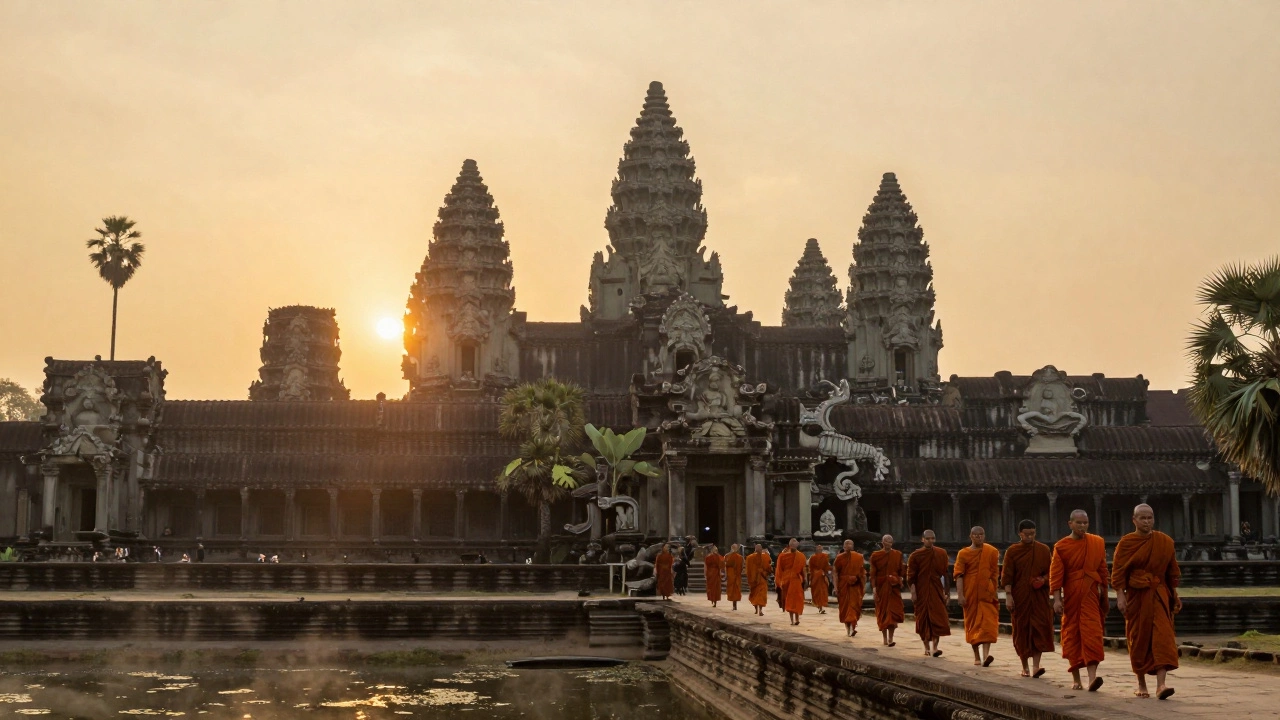
What makes Angkor Wat stand out isn’t just its size. It’s the way it blends religion, art, and nature. Unlike many Indian temples that remain active worship sites, Angkor Wat sits in a vast jungle complex where monks still chant at dawn and tourists walk silently past centuries-old carvings of gods and battles. It’s a place where Khmer architecture, a unique style of stone temple-building that influenced much of Southeast Asia meets the quiet power of meditation. You’ll see similarities to India’s temple layouts—like the central spire and concentric courtyards—but the scale, the stonework, and the sheer number of figures carved into every surface are unmatched. And while India’s Taj Mahal, a man-made wonder built for love draws crowds with its symmetry and marble glow, Angkor Wat pulls you in with mystery, mist, and the sound of monkeys in the trees.
Visiting Angkor Wat isn’t about ticking a box. It’s about timing. Go at sunrise to watch the first light hit the towers—no filter needed. Skip the midday heat, wear modest clothes (shoulders and knees covered), and bring water. A single pass lets you explore the whole complex for three days, so take your time. You’ll find smaller temples like Ta Prohm, where roots swallow stone walls, and Bayon, with its smiling faces watching over you. This isn’t just a temple. It’s a whole ancient city buried in jungle, and every path tells a story.
Many travelers who come for Angkor Wat end up comparing it to India’s heritage sites—and for good reason. Both regions share deep roots in Hindu-Buddhist traditions. The same deities, the same stories, the same devotion. But while India’s temples are often part of living communities, Angkor Wat feels like stepping into a dream frozen in time. You’ll leave not just with photos, but with a quiet awe that stays with you.
Below, you’ll find real stories from travelers who’ve stood where kings once walked, tips on beating the crowds, and insights into how this monument connects to the broader world of cultural travel—from the sacred sites of Varanasi to the hidden trails of Nepal. Whether you’re planning your first trip to Asia or you’ve already seen the Taj, Angkor Wat deserves a spot on your list.
- Dec, 1 2025
- 0 Comments
- Aaron Blackwood
Is Angkor Wat Buddhist or Hindu? The Real History Behind the Temple
Angkor Wat started as a Hindu temple dedicated to Vishnu but became a Buddhist site over time. Today, it's a living blend of both faiths, with Hindu carvings still visible alongside Buddhist worship.
Read More