Everest Base Camp Trek: Guide to Nepal’s Most Famous Hike
The Everest Base Camp trek, a high-altitude hiking route in Nepal that ends at the foot of Mount Everest, the world’s tallest mountain. Also known as EBC trek, it’s one of the most popular adventure journeys on Earth—not because it’s the hardest, but because it’s the most accessible way to stand where climbers prepare to summit the roof of the planet.
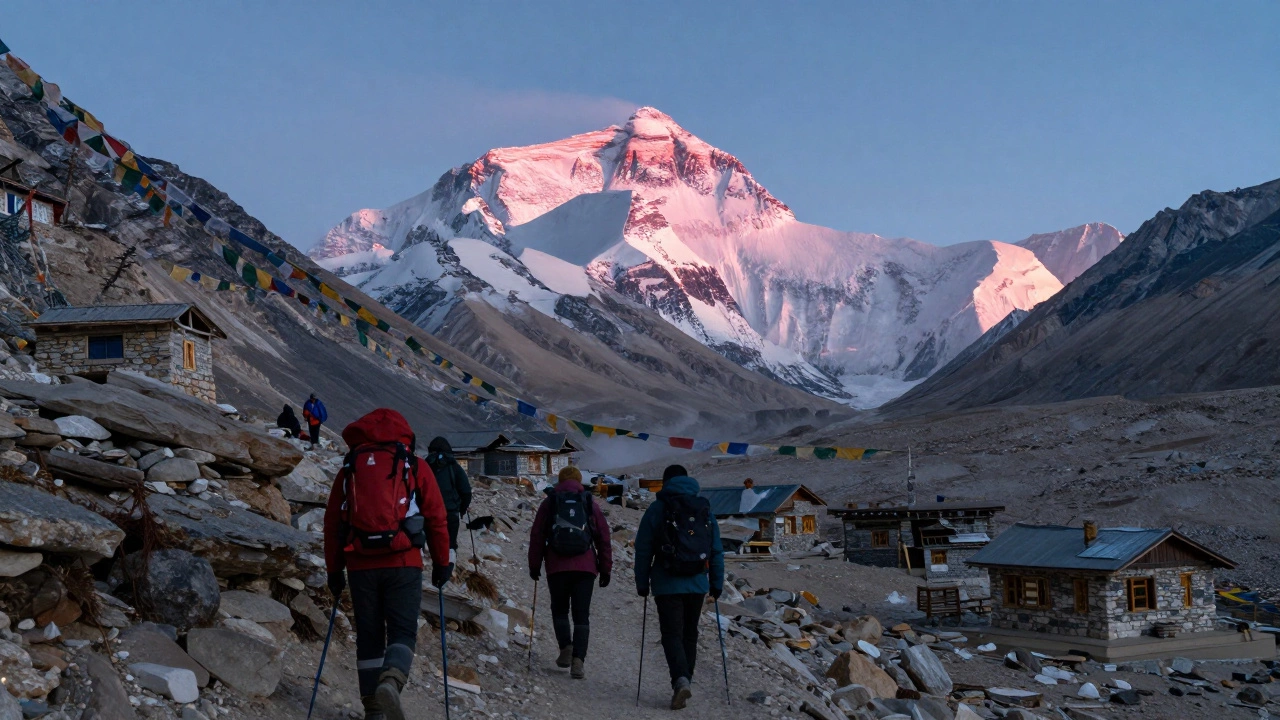
This trek isn’t about technical climbing. It’s about walking through villages where prayer flags flutter above stone houses, crossing suspension bridges over deep river gorges, and breathing thin air at over 5,000 meters. You’ll pass through Namche Bazaar, the bustling gateway town to the Everest region, where trekkers rest, acclimatize, and stock up on snacks and warm gear, and see Kala Patthar, a 5,545-meter peak that offers the clearest, most iconic view of Everest’s summit. The whole route takes 12 to 14 days, and while you don’t need ropes or crampons, you do need strong legs, patience for altitude, and a realistic idea of what you’re signing up for.
Most people do this trek between late February and May, or from late September to November. These are the only windows when the skies are clear, the trails aren’t muddy, and the temperatures don’t drop below freezing at night. The monsoon rains in July and August make the trails slippery and dangerous, while December to February brings extreme cold and snow-covered paths that even experienced hikers avoid unless properly equipped. If you’re trying to save money, aim for the shoulder months—early October or late April—when prices for lodges and flights are lower, and crowds are thinner.
You’ll find that the real cost isn’t just the flight to Kathmandu or the permit fees. It’s the gear you might need to buy, the altitude sickness medication you should carry, and the extra day you might need to rest if your body doesn’t adjust. Many trekkers underestimate how much water, snacks, and hot tea they’ll drink along the way—and how much that adds up. Some people spend $1,000. Others spend $4,000. It depends on whether you go solo, with a guide, or on a group tour.
And yes, you’ll see other people. Lots of them. But that’s not a bad thing. You’ll share tea with hikers from Brazil, Germany, Japan, and India. You’ll hear stories of people who lost their jobs to hike here, or who came after a breakup, or who just wanted to prove something to themselves. The trail connects more than mountains—it connects people.
What you’ll find in the posts below are real, practical insights from travelers who’ve done it: how to avoid altitude sickness without pills, which lodges have hot showers without the markup, why your guide’s coffee habit matters, and how to pick the best time to go based on your budget and stamina. There’s no fluff here—just what works, what doesn’t, and what no one tells you until you’re already on the trail.
- Dec, 1 2025
- 0 Comments
- Aaron Blackwood
Best Trekking Place in the World: Why Nepal’s Everest Base Camp Tops the List
Everest Base Camp is widely considered the best trekking place in the world due to its breathtaking scenery, cultural richness, and accessible high-altitude adventure. Unlike shorter treks in India, it offers a full 12-14 day journey through authentic Himalayan villages, with reliable infrastructure and stunning views of the world’s tallest peaks.
Read More