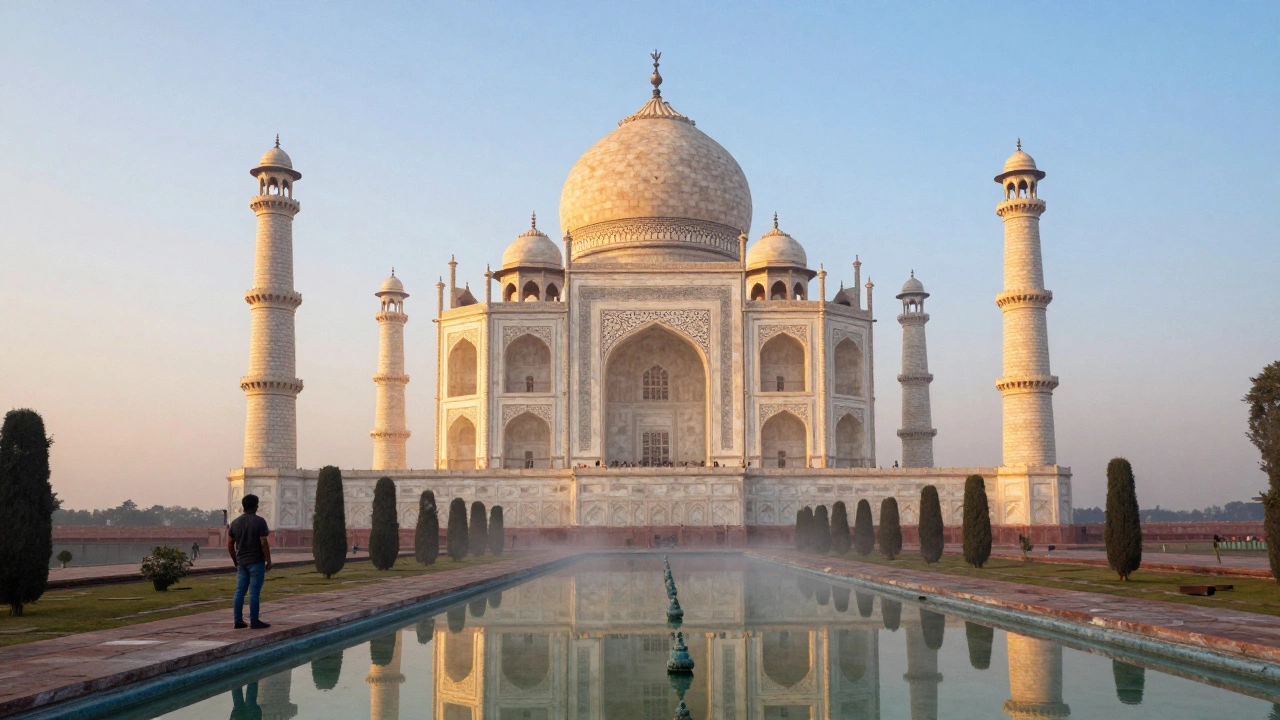
Taj Mahal sunrise
There’s something about the Taj Mahal, a white marble mausoleum built by Emperor Shah Jahan in memory of his wife Mumtaz Mahal. Also known as the Symbol of Love, it’s not just a monument—it’s a living piece of history that changes with the light. Few things match the quiet magic of watching it glow pink and gold as the sun rises over the Yamuna River. Millions visit the Taj Mahal every year, but only a fraction see it at sunrise—and that’s the difference between taking a photo and having a moment.
Planning a sunrise visit means knowing more than just the time. The gates open at 5:30 AM, and you need to be there before then to get in. No vehicles are allowed near the entrance, so you’ll walk the last 500 meters under stars and streetlights. Locals and guides will tell you the best spot is the far end of the reflecting pool, where the whole structure comes into view like a dream. It’s cold in the early hours, even in spring, so bring a jacket. No food, no large bags, and no tripods unless you pay for special permission. Phones are fine, but don’t expect to get the perfect shot without patience.
The Agra, the city where the Taj Mahal stands, isn’t just about this one building. It’s a place where Mughal history lives in every street corner, from the red sandstone of Agra Fort to the quiet tombs of Itmad-ud-Daulah. If you’re coming from Delhi, most travelers take the 3-hour train or drive at dawn to catch the sunrise. Many book hotel rooms near the Taj to avoid the rush. The sunrise at Taj Mahal, a daily natural event that transforms the monument’s appearance is more than a photo op—it’s a cultural ritual. Indian families come to pray, photographers wait for the perfect light, and couples sit silently, just watching. It’s not crowded like midday, and the air is still. You can hear birds, footsteps, and your own breath.
Some say the Taj Mahal looks different at sunrise, at noon, and at sunset. That’s true. But only sunrise gives you the chance to experience it before the world wakes up. You’ll see the marble shift from pale pink to bright white, the minarets stretch long shadows across the garden, and the water mirror the whole scene like glass. No filter needed. No crowds blocking your view. Just you, the monument, and the quiet start of a new day.
What you’ll find in the posts below are real stories from people who’ve stood there at dawn, tips on how to avoid the tourist traps, and why this moment keeps bringing people back—even after they’ve seen it once. Whether you’re planning your first trip or your tenth, this is the one thing you don’t want to miss.
- Dec, 1 2025
- 0 Comments
- Aaron Blackwood
Best Time to Visit the Taj Mahal for Budget Travelers in 2025
The best time to visit the Taj Mahal for budget travelers is early morning in winter, avoiding weekends and holidays. Save money with local trains, skip guided tours, and beat the crowds for a truly peaceful experience.
Read More